
www.aero-defence.tech
11
'23
Written on Modified on
CASTROL JOINS MASSACHUSETTS INSTITUTE OF TECHNOLOGY’S MEDIA LAB TO SUPPORT RESEARCH ON LUNAR LANDINGS
Castrol membership supports the AstroAnt Payload Program—a miniature robotic swarm designed to perform tasks on the surfaces of spacecraft, rovers, and landers.
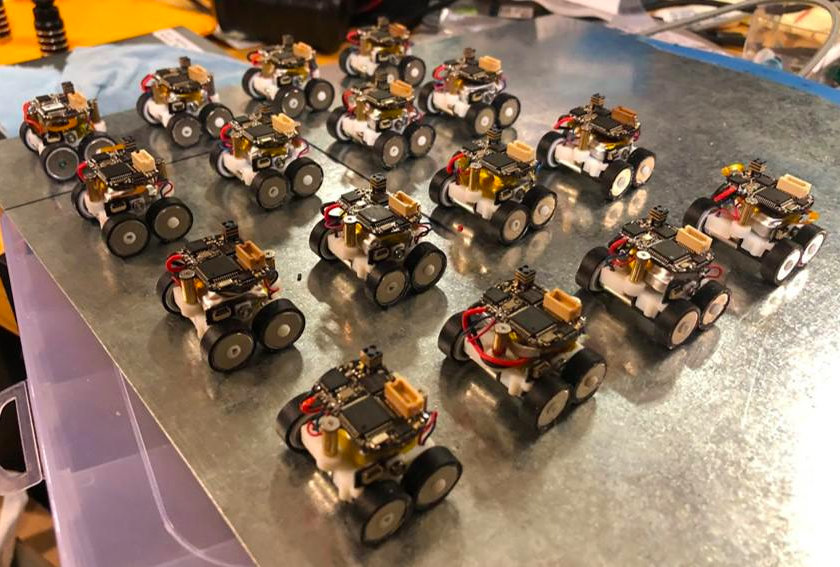
AstroAnts robotic swarm (Credit: MIT Media Lab: Fangzheng Liu)
AstroAnts constitute a miniature robotic swarm designed to perform inspections and diagnostic tasks on the external surfaces of spacecraft, rovers, and landers. Each robot features a modular design; the sensor payloads can be tailored based on different inspection missions, and the data collected from the robots can be used to monitor operations in space. Working with Lunar Outpost, the AstroAnt robot will be sent to the Moon for a technology demonstration test.
Through this research collaboration, Castrol will work closely with The MIT Media Lab’s Space Exploration Initiative and Responsive Environments research groups to test space-grade lubricants to withstand the extreme environment of the lunar surface enabling the AstroAnt robot’s motors to function as it collects thermal data and measurements of the Lunar Outpost MAPP Rover.
To the Moon to Stay brings together the MIT community and program partners, including Castrol, to reimagine humanity’s return to the Moon. Payloads will be deployed on a Lunar Outpost MAPP rover to the Lunar South Pole. The MAPP rover is carried by an Intuitive Machines Nova-C lander, which in turn rides aboard a SpaceX Falcon 9 rocket.
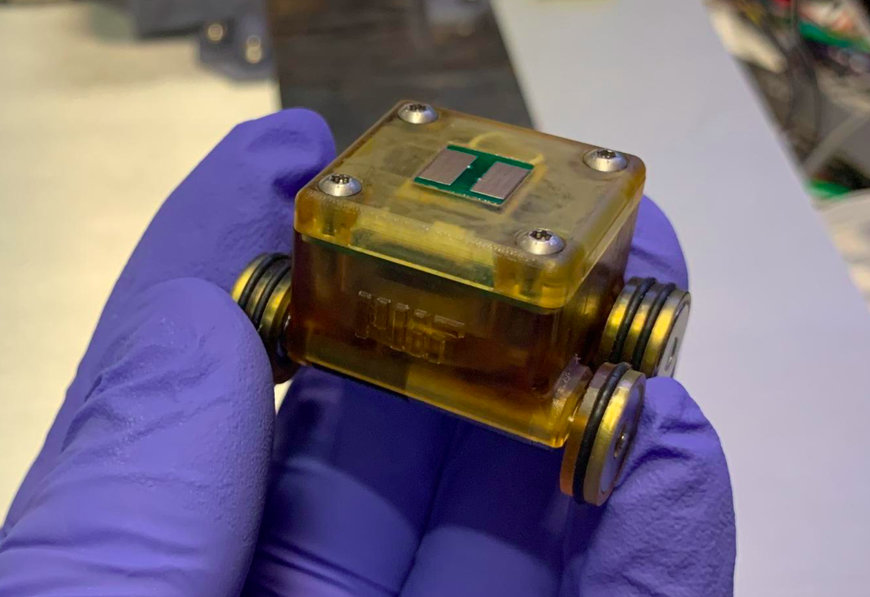
A tiny AstroAnt robot will be sent to the moon. (Credit: MIT Media Lab: Fangzheng Liu)
“We are delighted to have this opportunity to send cutting-edge experiments to the surface of the moon on a historic mission and as part of MIT’s To the Moon to Stay program,” states Dr. Ariel Ekblaw, Director of the MIT Media Lab’s Space Exploration Initiative, and Primary Investigator for MIT’s lunar mission with Lunar Outpost. “Our payloads represent core tenets of our research, from autonomous swarm robotics to supporting future VR-mediated exploration by lunar astronauts, to democratizing access to space through the messages we carry with us. This mission, enabled by NASA CLPS, also marks a major milestone for researchers–we can now reach the moon faster and more economically than ever before.
AstroAnts constitute a miniature robotic swarm designed to perform inspections and diagnostic tasks on the external surfaces of spacecraft, rovers, and landers. Each robot features a modular design; the sensor payloads can be tailored based on different inspection missions, and the data collected from the robots can be used to monitor operations in space. Working with Lunar Outpost, the AstroAnt robot will be sent to the Moon for a technology demonstration test.
Through this research collaboration, Castrol will work closely with The MIT Media Lab’s Space Exploration Initiative and Responsive Environments research groups to test space-grade lubricants to withstand the extreme environment of the lunar surface enabling the AstroAnt robot’s motors to function as it collects thermal data and measurements of the Lunar Outpost MAPP Rover.
To the Moon to Stay brings together the MIT community and program partners, including Castrol, to reimagine humanity’s return to the Moon. Payloads will be deployed on a Lunar Outpost MAPP rover to the Lunar South Pole. The MAPP rover is carried by an Intuitive Machines Nova-C lander, which in turn rides aboard a SpaceX Falcon 9 rocket.
A tiny AstroAnt robot will be sent to the moon. (Credit: MIT Media Lab: Fangzheng Liu)
“We are delighted to have this opportunity to send cutting-edge experiments to the surface of the moon on a historic mission and as part of MIT’s To the Moon to Stay program,” states Dr. Ariel Ekblaw, Director of the MIT Media Lab’s Space Exploration Initiative, and Primary Investigator for MIT’s lunar mission with Lunar Outpost. “Our payloads represent core tenets of our research, from autonomous swarm robotics to supporting future VR-mediated exploration by lunar astronauts, to democratizing access to space through the messages we carry with us. This mission, enabled by NASA CLPS, also marks a major milestone for researchers–we can now reach the moon faster and more economically than ever before.
Find out more
www.castrol.com
