
www.aero-defence.tech
06
'23
Written on Modified on
GEA EXPANDS MARINE PORTFOLIO WITH GEA NOX SEPARATOR AND GEA BILGEGR SOLUTION
GEA is expanding its portfolio for scrubbing water treatment in exhaust gas recirculation in the marine sector.
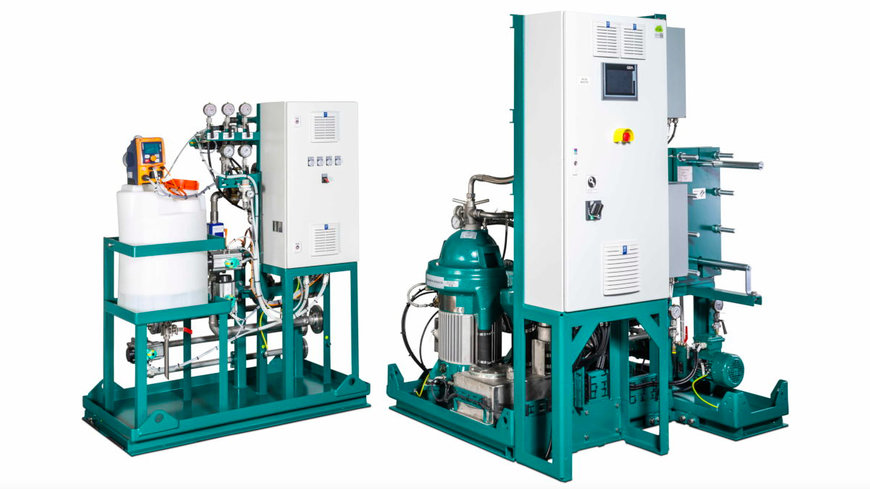
GEA presents the new GEA NOx Separator rl.) and GEA bilgEGR Solution l.) The Global Marine Business thus expands its portfolio for the treatment of scrubbing water in exhaust gas recirculation in the marine sector. (Photo: GEA)
Based on the GEA NOx Separator concept for nitrogen oxides (NOx), GEA now offers a complete series of exhaust gas recirculation (EGR) modules for engine outputs up to 200 MW. This EGR technology is used to reduce emissions of NOx produced by the combustion of marine fuels. GEA has already delivered and successfully commissioned the first systems of the new GEA NOx Separator variant to selected customers.
With its wash water treatment systems and the new GEA NOx Separator, GEA offers its customers in the marine industry a technological solution to meet the NOx reduction requirements for the EGR process of the International Maritime Organization (IMO) Tier II and III regulations. These regulations were enacted in 2011 and 2016 in the Emission Control Areas. Corresponding NOx limits apply to Tier II and Tier III vessels operating on low-sulfur (<0.1%) and high-sulfur (>0.5%) fuels outside and inside NOx emission control areas. For operation within NOx emission control areas, a marine engine must be able to convert operations to comply with Tier III controls.
A clear plus for exhaust gas recirculation
When an engine is operated with exhaust gas recirculation (EGR), the amount of water recirculated to cool and clean the EGR gas increases due to the condensation of water produced in the combustion process. The recirculated water absorbs particles from the exhaust gas that are dissolved in the water as suspended particles. Due to the relatively low particle concentration in engines running on low-sulfur fuels and the excess water generated by the combustion process, the internal recirculation of EGR water does not need to be purified to maintain sufficient quality in the engine. The excess water is discharged through an overflow from the EGR circuit as drain water into a drain tank treated by a GEA NOx Separator and discharged to the sea. For this operation, the relevant international requirements for the discharge of EGR wastewater must be met.
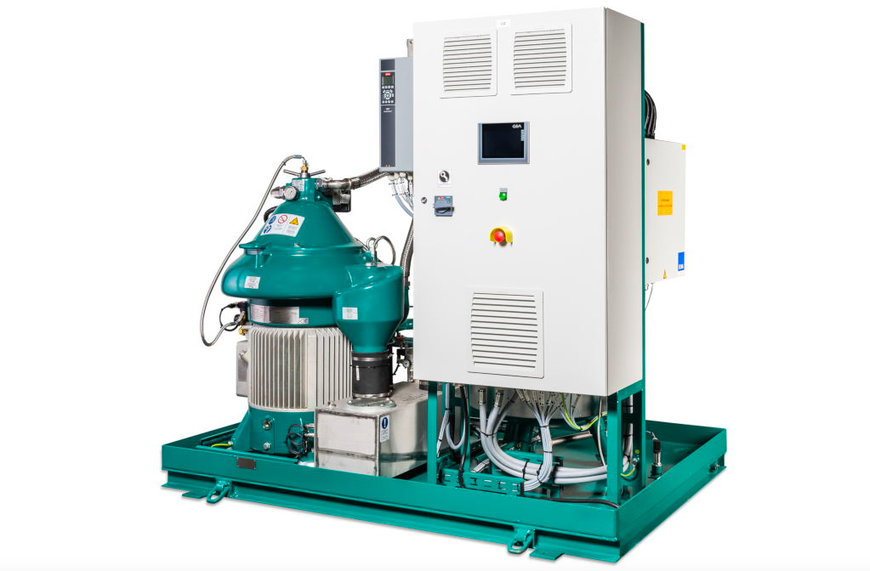
GEA has already delivered and successfully commissioned the first systems of the new GEA NOx Separator variant to selected customers. (Photo: GEA)
Why NOx reduction is important
Engine manufacturers offer their customers engines with EGR systems for heavy fuel oil (HFO), low sulfur fuels, liquefied natural gas (LNG), and IMO Tier II and Tier III methanol. EGR is a NOx emission reduction technology that ensures IMO Tier III compliance in both diesel and gas operations. This means that the GEA NOx Separator is designed for a single task. The system purifies the bleed water prior to discharge in compliance with MEPC EGR guidelines. The design is similar to that of a bilge water system, combining a centrifugal separator with an oil monitor and a three-way valve. Major engine manufacturers in the maritime industry also report that EGR will enable the latest LNG engines to reduce specific gas consumption by ~3%, and specific fuel-oil consumption by 5%. It will also significantly reduce methane slip by 30 to 50% and solve the issue related to pre-ignition on Otto-cycle engines.
There are strict criteria and an extensive approval process for wash water treatment systems to be approved by main engine manufacturers. GEA works with customers to customize configurations according to the appropriate requirements, finding a suitable solution for each type of vessel and application.
Work on further developments leads to GEA bilgEGR Solution
Together with industry partners, GEA has further developed the innovative GEA NOx Separator with a direct drive to meet future, even stricter environmental protection requirements and the needs of ship operators. However, the GEA NOx Separator does not limit the further development of a combined water treatment system. A combined EGR/OBW (oily bilge water) system, GEA bilgEGR Solution, is a practical installation to minimize equipment and installation costs associated with the discharge of EGR effluent water and the discharge of bilge water on the vessel. This can be achieved with proper design and control of the combined system. The arrangement of a combined discharge system is already approved by DNV class to ensure separate handling of the discharge. The optional function of a combined EGR/OBW system ensures that EGR discharge water and bilge water are treated separately for discharge to the sea.
Vessel downtime kept to a minimum
In addition to meeting IMO criteria and thus protecting the environment and the world's oceans, the updated GEA marine portfolio offers other significant advantages compared with its market competitors. These include a minimal space requirement in the engine room and lower operating costs for most ships compared to other NOx +OBW abatement technologies. Costs can already be saved during installation, as the parts are modular and easy to connect. Cleaning of the system is fully automatic and communicates with the engine control system. The amount of sludge produced is less than with other technologies. Finally, GEA has a worldwide service and spare parts supply. Optimal coordination and planning of the installation ensures that vessel downtime is kept to a minimum.
Based on the GEA NOx Separator concept for nitrogen oxides (NOx), GEA now offers a complete series of exhaust gas recirculation (EGR) modules for engine outputs up to 200 MW. This EGR technology is used to reduce emissions of NOx produced by the combustion of marine fuels. GEA has already delivered and successfully commissioned the first systems of the new GEA NOx Separator variant to selected customers.
With its wash water treatment systems and the new GEA NOx Separator, GEA offers its customers in the marine industry a technological solution to meet the NOx reduction requirements for the EGR process of the International Maritime Organization (IMO) Tier II and III regulations. These regulations were enacted in 2011 and 2016 in the Emission Control Areas. Corresponding NOx limits apply to Tier II and Tier III vessels operating on low-sulfur (<0.1%) and high-sulfur (>0.5%) fuels outside and inside NOx emission control areas. For operation within NOx emission control areas, a marine engine must be able to convert operations to comply with Tier III controls.
A clear plus for exhaust gas recirculation
When an engine is operated with exhaust gas recirculation (EGR), the amount of water recirculated to cool and clean the EGR gas increases due to the condensation of water produced in the combustion process. The recirculated water absorbs particles from the exhaust gas that are dissolved in the water as suspended particles. Due to the relatively low particle concentration in engines running on low-sulfur fuels and the excess water generated by the combustion process, the internal recirculation of EGR water does not need to be purified to maintain sufficient quality in the engine. The excess water is discharged through an overflow from the EGR circuit as drain water into a drain tank treated by a GEA NOx Separator and discharged to the sea. For this operation, the relevant international requirements for the discharge of EGR wastewater must be met.
GEA has already delivered and successfully commissioned the first systems of the new GEA NOx Separator variant to selected customers. (Photo: GEA)
Why NOx reduction is important
Engine manufacturers offer their customers engines with EGR systems for heavy fuel oil (HFO), low sulfur fuels, liquefied natural gas (LNG), and IMO Tier II and Tier III methanol. EGR is a NOx emission reduction technology that ensures IMO Tier III compliance in both diesel and gas operations. This means that the GEA NOx Separator is designed for a single task. The system purifies the bleed water prior to discharge in compliance with MEPC EGR guidelines. The design is similar to that of a bilge water system, combining a centrifugal separator with an oil monitor and a three-way valve. Major engine manufacturers in the maritime industry also report that EGR will enable the latest LNG engines to reduce specific gas consumption by ~3%, and specific fuel-oil consumption by 5%. It will also significantly reduce methane slip by 30 to 50% and solve the issue related to pre-ignition on Otto-cycle engines.
There are strict criteria and an extensive approval process for wash water treatment systems to be approved by main engine manufacturers. GEA works with customers to customize configurations according to the appropriate requirements, finding a suitable solution for each type of vessel and application.
Work on further developments leads to GEA bilgEGR Solution
Together with industry partners, GEA has further developed the innovative GEA NOx Separator with a direct drive to meet future, even stricter environmental protection requirements and the needs of ship operators. However, the GEA NOx Separator does not limit the further development of a combined water treatment system. A combined EGR/OBW (oily bilge water) system, GEA bilgEGR Solution, is a practical installation to minimize equipment and installation costs associated with the discharge of EGR effluent water and the discharge of bilge water on the vessel. This can be achieved with proper design and control of the combined system. The arrangement of a combined discharge system is already approved by DNV class to ensure separate handling of the discharge. The optional function of a combined EGR/OBW system ensures that EGR discharge water and bilge water are treated separately for discharge to the sea.
Vessel downtime kept to a minimum
In addition to meeting IMO criteria and thus protecting the environment and the world's oceans, the updated GEA marine portfolio offers other significant advantages compared with its market competitors. These include a minimal space requirement in the engine room and lower operating costs for most ships compared to other NOx +OBW abatement technologies. Costs can already be saved during installation, as the parts are modular and easy to connect. Cleaning of the system is fully automatic and communicates with the engine control system. The amount of sludge produced is less than with other technologies. Finally, GEA has a worldwide service and spare parts supply. Optimal coordination and planning of the installation ensures that vessel downtime is kept to a minimum.
www.gea.com
