
www.aero-defence.tech
02
'26
Written on Modified on
GEA Unveils Methanol Fuel2Engine System at SMM 2026
Integrated fuel processing and injection technology supports methanol-ready newbuilds and retrofits, addressing safety, control and maritime decarbonization requirements.
www.gea.com
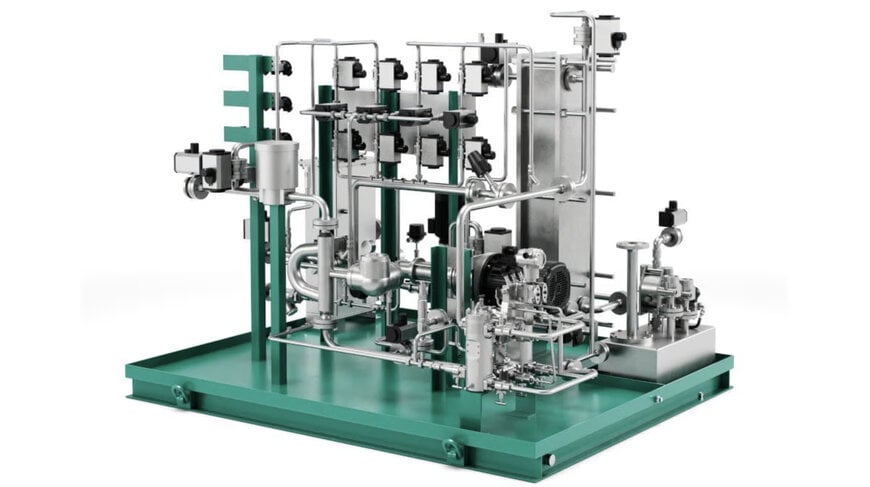
GEA methanol Booster Unit: Conditions and pressurizes methanol to the precise pressure and temperature required for engine injection. (Photo: GEA)
GEA is advancing alternative marine fuels with the introduction of its methanol Fuel2Engine System, developed to manage the complete fuel supply process from processing to engine injection for commercial vessels. As part of this rollout, GEA has partnered with the shipping company John T. Essberger in a pilot project to implement this integrated fuel handling solution on a new generation of chemical tankers.
Regulatory Drivers for Alternative Marine Fuels
The maritime industry faces stringent emissions regulations and metrics such as the Carbon Intensity Indicator, forcing operators to realign propulsion strategies. While fossil marine fuels still dominate the global merchant fleet, the classification society Det Norske Veritas (DNV) lists over 450 methanol-capable vessels in service or on order, including container ships and bulk carriers. Methanol can be stored at ambient temperatures, reducing infrastructure demands compared to cryogenic alternatives, but requires precise fluid control to ensure safe engine delivery. GEA is presenting its maritime solutions, including this new system, at the SMM 2026 trade fair, which takes place from September 1 to 4, 2026, in Hamburg, Germany.
Mechanical Architecture of the Fuel Conditioning Module
The GEA methanol Fuel2Engine System addresses fluid delivery requirements through two primary components: the GEA methanol Booster Unit and the GEA methanol Valve Train. The booster unit conditions the liquid to the exact pressure and temperature parameters necessary for continuous maritime operation. It incorporates methanol-compatible materials, continuous safety monitoring technology, and fluid control mechanisms to maintain a stable flow rate to the injection system.
Valve Train Integration and Nitrogen Purging
The valve train functions as the dedicated control interface between the fuel conditioning module and the engine. Engineered in collaboration with Everllence, this component regulates fuel delivery tailored to specific engine demands while integrating a direct nitrogen purging mechanism for both the engine and the booster unit. The valve train is certified by DNV and is compatible with two-stroke and four-stroke marine engines. Vipin Joy, Product Manager Marine at GEA, notes that the system addresses a central mechanical challenge in methanol shipping by securing the fluid pathway from the initial treatment stage directly to the injection point.
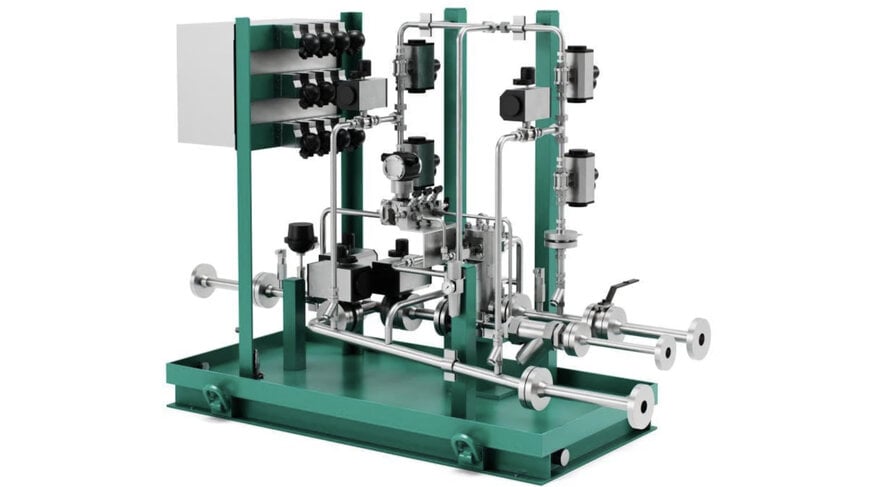
GEA methanol Valve Train: Precisely controls and meters methanol at the interface between fuel conditioning and engine injection. (Photo: GEA)
Operational Pilot and Deployment Timeline
Shipyards and vessel operators can implement these modules as an integrated package or individually for newbuild and retrofit projects. By consolidating the fuel handling infrastructure, operators reduce engineering complexity and simplify integration into varying ship designs. The pilot project with John T. Essberger will validate the system under operational conditions. GEA will deliver the coordinated booster and valve train solution by autumn 2026, enabling the chemical tanker fleet to adapt to evolving fuel availability without relying exclusively on a single energy source.
Additional Context:
This section details technical specifications and competitive benchmarking not included in the original product announcement
Within the low-flashpoint fuel supply system sector, the GEA methanol Fuel2Engine System competes with established architectures such as the Alfa Laval FCM Methanol and Auramarine’s methanol fuel supply system. Alfa Laval’s FCM Methanol utilizes a single-stage pressurized system controlled via a Modbus serial link, featuring a double block and bleed fine filter to permit maintenance without complete module purging. Auramarine offers modular supply units that handle fuel transfer from the bunkering station to engine delivery for both two-stroke and four-stroke configurations. GEA differentiates its architecture by deeply integrating the booster unit with a dedicated valve train that acts as the primary safety interface, utilizing direct nitrogen purging to secure the fluid pathway. While all three systems comply with DNV safety parameters, GEA’s specific collaboration with Everllence ensures native compatibility with their engine variants, aiming to streamline shipyard integration by reducing the need for disparate fuel conditioning and valve control suppliers.
Edited by Natania Lyngdoh, Induportals editor, assisted by AI.
www.gea.com
GEA is advancing alternative marine fuels with the introduction of its methanol Fuel2Engine System, developed to manage the complete fuel supply process from processing to engine injection for commercial vessels. As part of this rollout, GEA has partnered with the shipping company John T. Essberger in a pilot project to implement this integrated fuel handling solution on a new generation of chemical tankers.
Regulatory Drivers for Alternative Marine Fuels
The maritime industry faces stringent emissions regulations and metrics such as the Carbon Intensity Indicator, forcing operators to realign propulsion strategies. While fossil marine fuels still dominate the global merchant fleet, the classification society Det Norske Veritas (DNV) lists over 450 methanol-capable vessels in service or on order, including container ships and bulk carriers. Methanol can be stored at ambient temperatures, reducing infrastructure demands compared to cryogenic alternatives, but requires precise fluid control to ensure safe engine delivery. GEA is presenting its maritime solutions, including this new system, at the SMM 2026 trade fair, which takes place from September 1 to 4, 2026, in Hamburg, Germany.
Mechanical Architecture of the Fuel Conditioning Module
The GEA methanol Fuel2Engine System addresses fluid delivery requirements through two primary components: the GEA methanol Booster Unit and the GEA methanol Valve Train. The booster unit conditions the liquid to the exact pressure and temperature parameters necessary for continuous maritime operation. It incorporates methanol-compatible materials, continuous safety monitoring technology, and fluid control mechanisms to maintain a stable flow rate to the injection system.
Valve Train Integration and Nitrogen Purging
The valve train functions as the dedicated control interface between the fuel conditioning module and the engine. Engineered in collaboration with Everllence, this component regulates fuel delivery tailored to specific engine demands while integrating a direct nitrogen purging mechanism for both the engine and the booster unit. The valve train is certified by DNV and is compatible with two-stroke and four-stroke marine engines. Vipin Joy, Product Manager Marine at GEA, notes that the system addresses a central mechanical challenge in methanol shipping by securing the fluid pathway from the initial treatment stage directly to the injection point.
GEA methanol Valve Train: Precisely controls and meters methanol at the interface between fuel conditioning and engine injection. (Photo: GEA)
Operational Pilot and Deployment Timeline
Shipyards and vessel operators can implement these modules as an integrated package or individually for newbuild and retrofit projects. By consolidating the fuel handling infrastructure, operators reduce engineering complexity and simplify integration into varying ship designs. The pilot project with John T. Essberger will validate the system under operational conditions. GEA will deliver the coordinated booster and valve train solution by autumn 2026, enabling the chemical tanker fleet to adapt to evolving fuel availability without relying exclusively on a single energy source.
Additional Context:
This section details technical specifications and competitive benchmarking not included in the original product announcement
Within the low-flashpoint fuel supply system sector, the GEA methanol Fuel2Engine System competes with established architectures such as the Alfa Laval FCM Methanol and Auramarine’s methanol fuel supply system. Alfa Laval’s FCM Methanol utilizes a single-stage pressurized system controlled via a Modbus serial link, featuring a double block and bleed fine filter to permit maintenance without complete module purging. Auramarine offers modular supply units that handle fuel transfer from the bunkering station to engine delivery for both two-stroke and four-stroke configurations. GEA differentiates its architecture by deeply integrating the booster unit with a dedicated valve train that acts as the primary safety interface, utilizing direct nitrogen purging to secure the fluid pathway. While all three systems comply with DNV safety parameters, GEA’s specific collaboration with Everllence ensures native compatibility with their engine variants, aiming to streamline shipyard integration by reducing the need for disparate fuel conditioning and valve control suppliers.
Edited by Natania Lyngdoh, Induportals editor, assisted by AI.
www.gea.com
