
www.aero-defence.tech
26
'26
Written on Modified on
Turboprop Engine Architecture Advances With Certified PT9 Centerline Design
Pratt & Whitney Canada secures Transport Canada certification for its PT9 engine to advance high-altitude turboprop power and fuel efficiency.
www.rtx.com
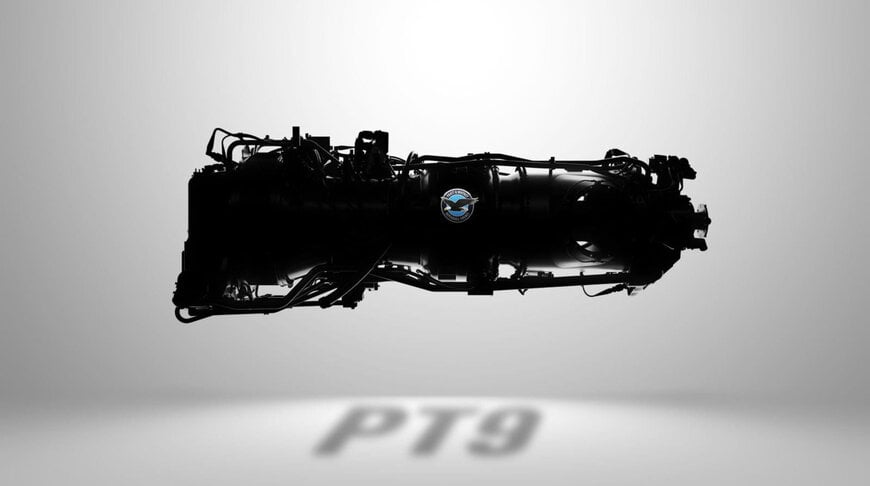
Regional aviation and utility airframe manufacturers increasingly face operational demands for higher cruising altitudes and lower operating costs without compromising thermal efficiency. To address these payload and propulsion challenges, Pratt & Whitney Canada, an RTX business, introduced its PT9 centerline turboprop engine, developed to provide scalable power delivery and support hybrid-electric aviation configurations across next-generation airframes.
Centerline Propulsion Architecture and Core Aerodynamic Design
Developing powerplants for utility, regional, and business aviation involves engineering trade-offs between thermal efficiency, installation drag, and weight. Traditional derivative upgrades of legacy powerplants often encounter aerodynamic limits within existing nacelle dimensions. To overcome these constraints, Pratt & Whitney Canada engineered the PT9 as a clean-sheet centerline design rather than a modified derivative. The core architecture targets the 1,700 to 2,300 shaft horsepower bracket, effectively bridging the performance spectrum between high-end PT6 variants and the heavier PW100 commercial regional engine series.
The physical architecture retains an aerodynamically efficient reverse-flow combustor configuration while incorporating modern rotor aerodynamics and advanced metallurgy. This arrangement maintains a compact frontal cross-section to minimize aerodynamic drag on single- and multi-engine airframes. By restructuring the internal gas path and pressure stages, the powerplant delivers 33 percent more output power at altitude while reducing specific fuel consumption by 20 percent relative to earlier-generation propulsion units. The design completed over 14,000 development hours before securing official type certification from Transport Canada.
Integrated Digital Control and System Scalability
Modern aircraft systems increasingly demand automated powerplant management to optimize turbine operating cycles and ease pilot workload. The PT9 architecture incorporates digital intelligence through dual-channel electronic engine and propeller controls managed via a unified single-lever throttle interface. The electronic control units continuously record and compute multi-parameter telemetry to prevent thermal exceedances, calibrate real-time fuel-air metering, and streamline maintenance scheduling through predictive diagnostics.
Satheeshkumar Kumarasingam, president of Pratt & Whitney Canada, stated that the powerplant architecture provides adaptability for modern aviation requirements through advanced digital controls and structural provisions for hybridization, enabling integration across diverse airframes.
Airframe Adaptability and Hybridization Pathways
The modular construction isolates primary turbomachinery modules to facilitate servicing and airframe integration. This mechanical isolation enables the platform to act as a core thermal unit in hybrid-electric propulsion configurations, where mechanical drive shafts can interface with electric motor-generators.
Series manufacturing will be based in Lethbridge, Alberta, Canada, utilizing existing manufacturing infrastructure developed for the PT6 turboprop line. The mechanical architecture is engineered to match both pressurized business turboprops and high-utilization utility aircraft requiring short-field performance and extended climb capabilities under adverse meteorological conditions.
Additional Context:
This section details technical specifications and competitive benchmarking not included in the original product announcement.
The 1,700 to 2,300 shaft horsepower class reflects an industry shift toward filling the capacity gap between mid-tier single-engine utility turboprops and twin-engine regional commuters. For decades, the higher end of general aviation turboprop propulsion relied on mature platforms such as the Pratt & Whitney Canada PT6A-67 series (rated around 1,200 to 1,424 mechanical shaft horsepower) and the Honeywell TPE331-14 series (rated around 1,650 shaft horsepower).
The primary technological benchmark in clean-sheet turboprop development within adjacent power segments is the GE Aerospace Catalyst engine, developed in the 850 to 1,600 shaft horsepower envelope. The Catalyst introduced high overall pressure ratios (16:1) alongside full authority digital engine and propeller control (FADEC) to conventional utility aircraft. In contrast, Pratt & Whitney Canada designed the PT9 for a higher baseline power category, providing airframe developers with a modern centerline engine capable of scaling into light regional transports and heavy multi-mission utility airframes while offering baseline mechanical coupling for hybrid-electric systems.
Edited by Natania Lyngdoh, Induportals editor, with AI assistance.
www.rtx.com
