
www.aero-defence.tech
14
'26
Written on Modified on
Raytheon Completes Coyote Upgrade Testing
Raytheon Advances Coyote Block 2C+RM Upgrades for Counter-Drone Missions.
www.rtx.com
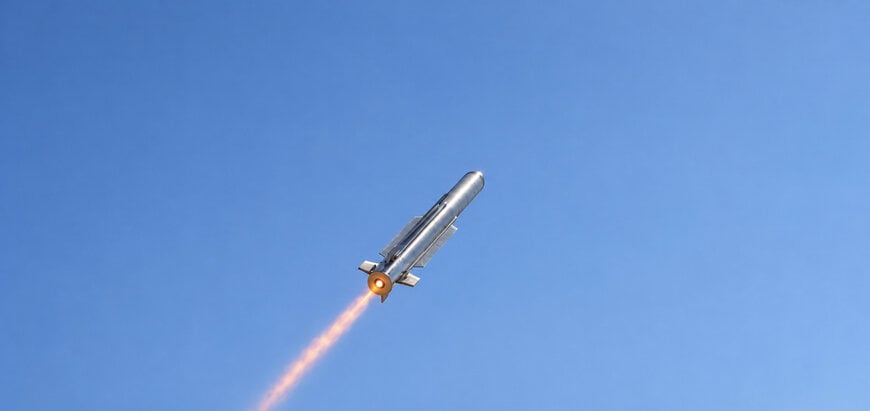
Modern defense operations face significant challenges from the rapid proliferation and tactical evolution of uncrewed aerial systems, commonly known as drones. As adversaries employ increasingly sophisticated and varied drone classes across modern battlefields, military forces require counter-uncrewed aerial system solutions capable of rapid target engagement, high reliability, and seamless integration with existing defense architectures. Traditional interceptor systems frequently face operational limitations regarding speed, engagement windows, and the versatility required to neutralize diverse aerial threats effectively.
To address these evolving operational demands, Raytheon, an RTX business, has completed three successful developmental testing events for its new Coyote Block 2C+RM interceptor upgrades. Conducted in Tucson, Arizona, and announced on October 12, 2026, the recent testing program advanced the weapon system from initial concept to physical flight evaluation in 15 months. The company-funded initiative aims to reinforce the combat-proven performance of existing Coyote variants, which have logged hundreds of operational drone intercepts in active service environments.
Engineering Mechanism and System Architecture
The Coyote Block 2C+RM upgrade introduces substantial modifications to the baseline interceptor architecture while maintaining compatibility with the established counter-drone command-and-control framework. The primary engineering enhancement involves the integration of a tactical rocket motor designed to accelerate both launch sequences and mid-flight velocity. By replacing or augmenting previous propulsion methods with a high-performance rocket motor, the system significantly shortens threat engagement times and permits faster successive launch intervals against multiple incoming targets.
In addition to the propulsion upgrade, the Coyote Block 2C+RM incorporates a redesigned seeker and a specialized warhead. The new seeker architecture optimizes target acquisition and tracking against complex radar cross-sections typical of modern small drones, while the advanced warhead configuration is engineered to neutralize diverse drone classes spanning multiple weight and speed tiers. The system relies on a common structural backbone shared across the Coyote family, enabling rapid scalability and reducing logistical friction during field deployment.
Industrial Workflows and Deployment Integration
The initial test series validated several critical milestones within the broader defense infrastructure, confirming initial functional integration with current counter-drone architecture. Furthermore, the tests verified the structural and aerodynamic integrity of the new tactical rocket motor during live-fire sequences. These upgrades fit directly into mobile and stationary ground-based air defense workflows, supporting joint U.S. military missions tasked with protecting forward operating bases, critical infrastructure, and tactical units from low-altitude aerial threats.
By improving time-to-target metrics and enabling high-cadence firing capabilities, the upgraded interceptors allow defense operators to manage saturation attacks more effectively. The shared common backbone ensures that units already trained on legacy Coyote variants can adopt the Block 2C+RM iteration with minimal retraining, streamlining operational adoption across varied service branches.
Additional Context:
This section details technical specifications and competitive benchmarking not included in the original product announcement.
The counter-uncrewed aerial systems market has experienced accelerated technological evolution due to asymmetric warfare trends observed in recent global conflicts. Traditional kinetic interceptors often incur high cost-per-engagement ratios when deployed against low-cost commercial and military-adapted drones. Raytheon’s ongoing development of the Coyote series reflects an industry-wide shift toward modular interceptors that combine the precision of guided missiles with the economic efficiency required to defeat massed drone incursions.
Compared to traditional surface-to-air missile systems designed primarily for high-altitude aircraft or tactical ballistic missiles, low-tier counter-drone effectors like the Coyote prioritize high maneuverability at low altitudes, rapid reaction times, and portability. The integration of rocket propulsion in the Block 2C+RM variant addresses historical velocity constraints associated with turbine-powered or alternative low-speed effectors, narrowing the performance gap between short-range kinetic interceptors and high-speed tactical missiles. Recognized engineering standards for defense electronics and guided munitions govern the seeker and communication links within the Coyote architecture, ensuring interoperability with joint tactical networks and standardized radar warning and acquisition assets.
Edited by Sucithra Mani, Induportals editor – adapted by AI.
www.rtx.com
