
www.aero-defence.tech
16
'26
Written on Modified on
Network-Centric Mission Management for Autonomous Swarms
Baykar collaborated with Turkish Armed Forces to deploy interconnected unmanned aerial systems during Exercise Ates Serbest-2026, addressing complex multi-echelon targeting integration.
baykartech.com
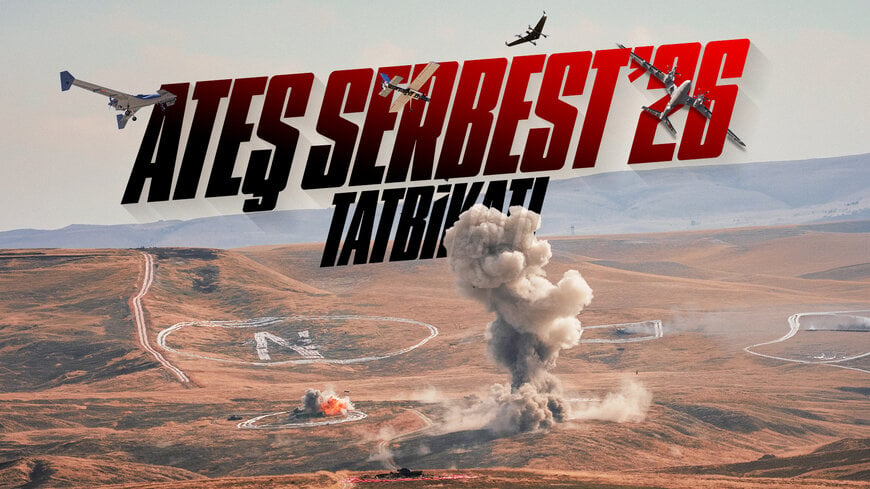
Baykar and the Turkish Armed Forces deployed integrated unmanned aerial platforms to validate multi-tier tactical interoperability in electronic and kinetic operational environments. The engagement evaluated synchronized data networks, autonomous coordination, and tiered kinetic engagement capabilities across defense and aerospace operations.
Industrial and Operational Integration
Coordinated unmanned operations require resilient digital infrastructure to bridge command nodes, aerial platforms, and munitions. Baykar served as the system architect and platform manufacturer, while the Turkish Armed Forces provided operational command integration and field deployment assets. The cooperation addressed the operational challenge of orchestrating heterogeneous aerial platforms over a shared tactical network without communication latency or targeting interference. Combining manufacturer flight algorithms with military inventory aircraft allowed engineers to test edge-computed routing, command handoffs, and payload integration under field conditions.
Autonomous Swarm Architecture and Sensor Operations
The technical architecture established localized communication links connecting tactical control stations, parent control aircraft, and expendable loitering munitions. Five K2 Kamikaze unmanned aerial vehicles established ground control data links while simultaneously maintaining an airborne mesh link to control a swarm of 20 SIVRISINEK smart loitering munitions. The onboard mission computer executed autonomous formation protocols, allowing a sub-group of 10 SIVRISINEK munitions to separate dynamically and conduct synchronized salvo dives onto designated coordinates.
Target acquisition relied on modular sensor payloads integrated across complementary airframes. The Bayraktar KALKAN vertical take-off and landing platform executed persistent target detection and tracking utilizing the three-axis stabilized BG-180 3E electro-optical sensor system. Concurrently, an AKINCI platform operating an active electronically scanned array MURAD radar performed wide-area air and ground target discrimination, transferring real-time coordinates to engagement assets over the shared network architecture.
Multi-Tier Deployment and Kinetic Verification
Field deployment occurred in operational test ranges, linking active military inventory assets with manufacturer flight test airframes. A military-inventory AKINCI executed precision strikes using TEBER, TOLUN, MAM-L TV, and MAM-T guidance-kit munitions based on verified sensor tracks. In parallel, a Bayraktar TB2 platform deployed the KEMANKEŞ 1 artificial-intelligence-assisted mini cruise missile, verifying stand-off terminal guidance logic.
The architecture demonstrated synchronized sensor-to-shooter loops across micro, tactical, and heavy-payload unmanned systems. By offloading target acquisition from strike assets to dedicated radar and optical reconnaissance platforms, the network reduced target engagement cycle times while maintaining redundant data paths. The verification proved that standardized airborne datalinks allow mixed-tier platforms to execute distributed targeting, coordinated salvo engagements, and resilient mission management in contested environments.
Edited by Evgeny Churilov, Induportals Media - Adapted by AI.
www.baykartech.com
