
www.aero-defence.tech
30
'26
Written on Modified on
Integration of Turreted Wheeled Combat Vehicles for European Forces
Artec GmbH, a joint venture between Rheinmetall and KNDS Deutschland, supplies modular 8x8 platforms to standardize defense infrastructure for allied mechanized infantry units.
www.rheinmetall.com
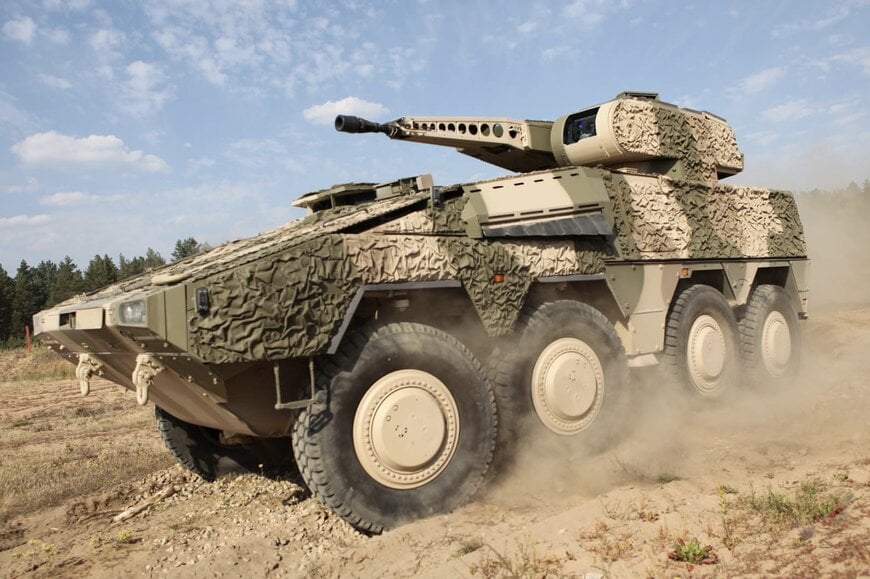
Artec GmbH, a joint venture between Rheinmetall and KNDS Deutschland, is delivering additional 8x8 wheeled infantry fighting vehicles to the German and Dutch armed forces to standardize tactical platforms. This procurement, commissioned by the European defence organisation OCCAR, enhances cross-border interoperability and operational mobility for medium-weight military units.
Industrial Collaboration and Operational Requirements
Artec GmbH functions as the prime contractor for the vehicle platform. The German Bundeswehr and the Royal Dutch Land Forces required a unified system to replace legacy assets and enable medium forces to cover long distances independently. By consolidating procurement through OCCAR, the participating nations achieve supply chain integration, reduce lifecycle costs, and streamline cross-border logistics. The activation of contract options by the German Parliament in June 2026 adds 35 vehicles for Germany and 34 for the Netherlands, increasing the total scheduled fleet to 291 units.
System Architecture and Technical Specifications
The Schakal platform integrates the 8x8 chassis of the existing Boxer armored vehicle with the turret system of the Puma tracked infantry fighting vehicle. Rheinmetall manufactures the primary weapon system, an MK 30-2/ABM machine gun, which is integrated alongside a MELLS anti-tank guided missile launcher. The vehicle architecture incorporates digital networking interfaces and automated fire control technology to process targeting data in dynamic environments. Artec GmbH oversees the final integration of these modules, ensuring the vehicles meet European standards for ballistic protection and modular mobility while accommodating a fully equipped infantry squad.
Deployment and Infrastructure Integration
Deliveries for the newly commissioned fleet are scheduled between May 2032 and November 2033. Because the Schakal shares a structural baseline with the broader Boxer vehicle family, integration into existing military infrastructure requires minimal modification to current maintenance, logistics, and training protocols. Production is distributed across specialized sites in Germany, utilizing components from Rheinmetall, KNDS Deutschland, MTU, and Hensoldt to maintain regional industrial capacity.
Strategic Impact and Supply Chain Stability
The expanded procurement stabilizes the manufacturing supply chain, allowing primary contractors and secondary suppliers to allocate resources for long-term production cycles. The joint deployment ensures that both national forces operate with identical technical parameters, facilitating joint deployments and standardized maintenance routines.
"The activation of additional options gives us greater insurance for us as an industry and for our suppliers concerning the planning," stated Dr Björn Bernhard, Head of Rheinmetall's Vehicle Systems Division. "Together with our partners, we are contributing significantly to the modernisation of European land forces and are strengthening industrial capacity in Europe."
Edited by Aishwarya Mambet, Induportals Editor, with AI assistance.
www.rheinmetall.com
