
www.aero-defence.tech
14
'26
Written on Modified on
Autonomous Aerial Systems Integration for Long-Range Precision Guided Munitions
Baykar and Roketsan coordinated technical interfaces to validate stand-off ballistic munition deployment from unmanned aerospace platforms for defense applications.
baykartech.com
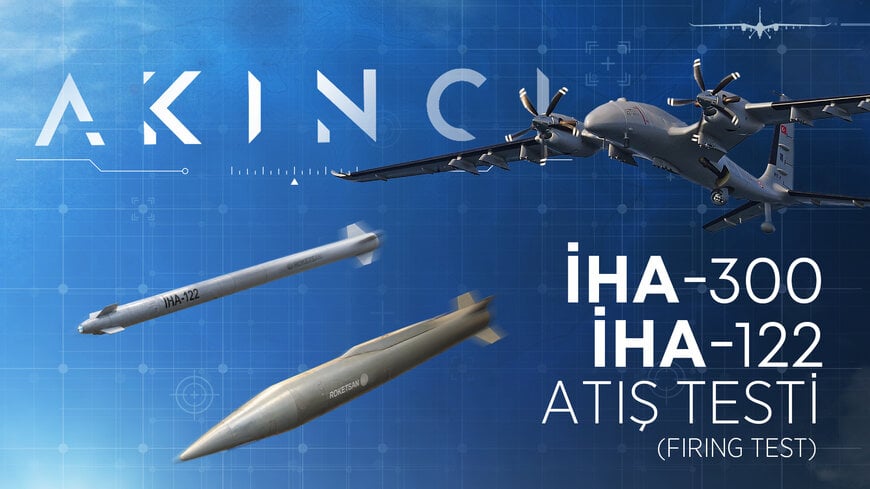
Baykar and Roketsan collaborated to integrate and test airborne supersonic ballistic munitions on unmanned combat aerial vehicles. The initiative addresses technical interoperability requirements within the aerospace and defense sector to extend precision engagement envelopes against maritime and surface targets.
Technical Cooperation and Operational Scope
The engineering cooperation pairs the heavy-payload Baykar AKINCI unmanned aerial platform with the specialized munition engineering of Roketsan. Operating unmanned platforms in contested environments requires extended standoff range to isolate the host aircraft from surface-based air defense envelopes. Addressing this operational challenge required close mechanical, avionic, and datalink integration to ensure secure weapon separation, inflight communication, and telemetry coordination between the unmanned airframe and high-speed armaments.
Munition Architecture and Systems Integration
The integrated configuration consists of the Roketsan UAV-300 supersonic ballistic missile mated to the hardpoints and mission computers of the unmanned combat aerial vehicle. Engineering responsibilities required Baykar to adapt store management logic, flight stabilization profiles, and release sequencing, while Roketsan provided the targeting transfer algorithms, propulsion interfaces, and guidance systems for high-speed terminal phases. The system relies on synchronized avionic data bus architectures to transfer pre-launch target coordinates from the aircraft sensor suite to the munition navigation package before launch.
Testing Procedures and Mission Execution
Validation occurred during an operational test flight departing from the Flight Training and Test Center in Çorlu, Tekirdağ, to an offshore range in Sinop over the Black Sea. Following transit along preprogrammed flight profiles, the platform released the munition against a fixed maritime target located at a distance exceeding 250 kilometers. The weapon achieved a direct hit, verifying aerodynamic release dynamics, inflight ballistic trajectory stability, and terminal seeker tracking under maritime testing conditions. Following munition deployment, the aerial platform completed its transit loop back to the base facility.
Strategic Impact and Layered Strike Capability
This operational validation expands the multi-tier payload capability of the host platform, which previously concluded integration testing with the UAV-122 and UAV-230 missile series. By verifying supersonic munition launch dynamics, the partnership provides an operational architecture where heavy-payload unmanned systems carry diverse guidance categories, ranging from standard laser-guided glide bombs to standoff supersonic strike assets. This technical synergy improves survivability, expands operational engagement envelopes, and minimizes platform vulnerability across extended surveillance and interdiction mission profiles.
Edited by Evgeny Churilov, Induportals Media - Adapted by AI.
www.baykartech.com
