
www.aero-defence.tech
17
'26
Written on Modified on
ABB Integrated Systems Selected for Two Orange Marine Repair Vessels
ABB will provide advanced hybrid-electric propulsion and automation technology for two new cable repair ships to enhance operational efficiency and reduce emissions.
global.abb
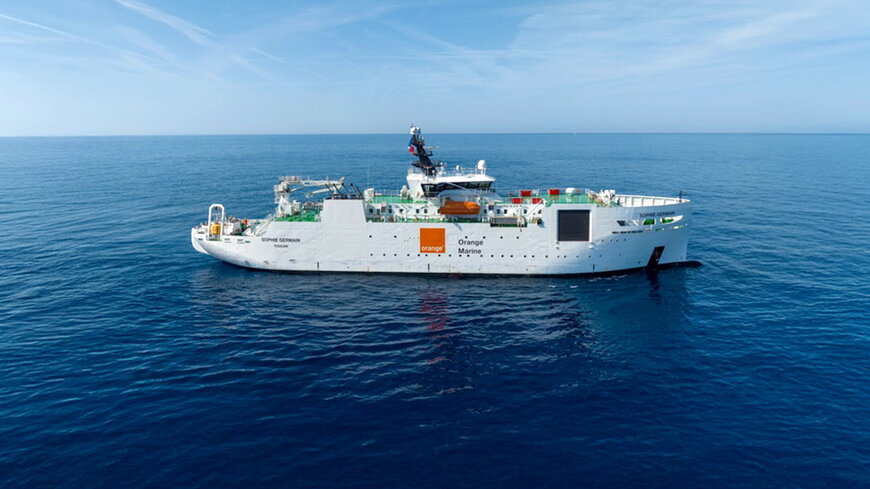
As the global demand for subsea data infrastructure surges, the maritime industry is shifting toward highly specialized, hybrid-electric vessels to maintain the world’s fiber-optic backbone. A recent agreement between ABB, Colombo Dockyard PLC, and Orange Marine highlights how integrated power and automation systems are differentiating modern cable ships from an aging global fleet. By combining maneuverability with energy storage, these newbuilds address the critical need for precision in harsh environments while significantly lowering the carbon footprint of subsea interventions.
Overcoming the Global Subsea Maintenance Crisis
The urgency for advanced cable repair technology is driven by a widening gap between infrastructure growth and fleet capacity. With subsea cable mileage expected to increase by 48 percent by 2040, the industry faces a looming shortage of capable vessels. Currently, approximately two-thirds of the existing maintenance fleet is approaching the end of its service life. The two new vessels commissioned by Orange Marine for delivery in 2028 and 2029 are designed to fill this void, providing reliable maintenance across the Atlantic, Indian, Mediterranean, and Red seas.
Precision Engineering with Azipod® Technology
The primary differentiator for these vessels is the transition from traditional shaftline propulsion to the ABB Azipod® DO system. In cable repair, where ships must remain perfectly stationary or move with extreme precision over a specific point, the 360-degree steerable thrusters offer a level of maneuverability that traditional rudders cannot match. This gearless design not only enhances thrust performance but also eliminates a significant amount of lubrication oil, reducing maintenance requirements and operational costs compared to mechanical competitors.
Maximizing Efficiency through Hybrid-Electric Integration
Beyond physical movement, the true competitive edge lies in the "brain" of the ship. These vessels utilize a fully integrated Energy Storage System (ESS) paired with a Power and Energy Management System (PEMS™). This setup allows the ships to switch to battery power during peak loads or low-speed operations, drastically reducing fuel consumption and greenhouse gas emissions. All onboard systems are synchronized through a single user environment, the ABB Ability™ 800xA, which simplifies complex operations for the crew and ensures that power resources are used optimally at all times.
Future-Proofing Digital Infrastructure
The collaboration between ABB and Colombo Dockyard represents a shift toward "future-ready" vessels that can support the global digital economy. By incorporating remote diagnostic systems, the vessels gain 24/7 technical support, increasing uptime and operational safety. This integrated approach — covering everything from generators and switchboards to advanced automation—ensures that the next generation of cable ships can meet the rigorous demands of subsea network resilience while adhering to increasingly strict environmental regulations.
Edited by an industrial journalist, Evgeny Churilov.
www.abb.com
