
www.aero-defence.tech
09
'26
Written on Modified on
Industry–Academia Cooperation for Composite Skills Development
RAMPF Group and academic partners collaborate to align industrial composite manufacturing requirements with hands-on education and applied training programs.
www.rampf-group.com
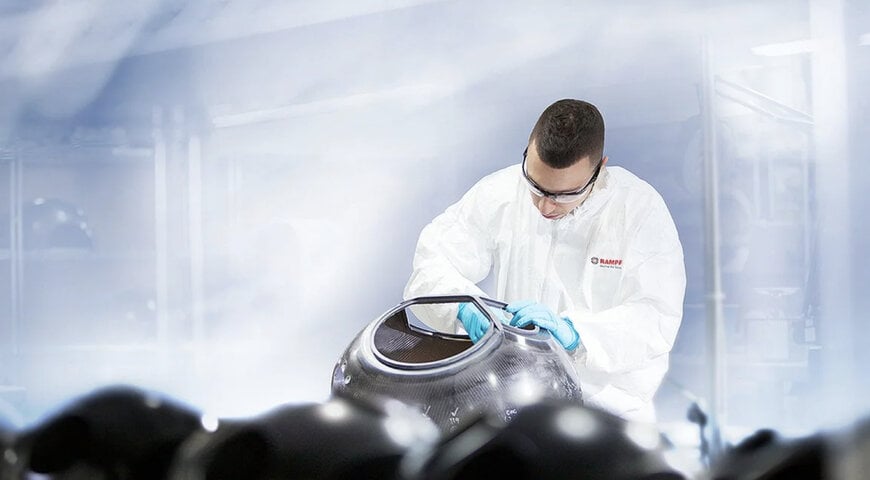
RAMPF Group is cooperating with selected universities and technical institutions to support practical education in composite materials, focusing on industrial processing methods, tooling, and application-oriented manufacturing skills.
Context of the Cooperation
RAMPF Group is an international supplier of polymer-based materials, tooling systems, and engineering solutions for composite-intensive industries such as aerospace, automotive, mechanical engineering, and industrial automation. The company works with academic partners including Ulm University and Augsburg University of Applied Sciences to address a growing skills gap between academic composite education and industrial production requirements.
Manufacturers increasingly rely on advanced fiber-reinforced plastics for lightweight, high-strength components. However, industrial composite production demands detailed understanding of tooling design, material behavior, and process stability—areas that are often underrepresented in theoretical curricula. The cooperation aims to close this gap through applied learning and industrial-grade training content.
Technical Solution and Responsibilities
Within the cooperation framework, RAMPF provides epoxy tooling boards, liquid resins, and composite system materials that are identical to those used in industrial environments. These materials are integrated into laboratory courses, prototype tooling exercises, and applied research projects.
Academic partners are responsible for curriculum integration, experimental design, and skills assessment. RAMPF contributes technical documentation, processing guidelines, and application-specific know-how related to CNC machining, mold construction, resin infusion, and surface quality control. This division of responsibilities ensures that educational activities follow industrial standards rather than simplified laboratory assumptions.
Deployment and Implementation
The cooperation is implemented through material supply for teaching laboratories, joint project work, and supervised student assignments. Composite tooling boards are used for machining molds and fixtures, allowing students to work with real-world tolerances, thermal stability requirements, and surface finishing processes.
The materials and methods are integrated into existing laboratory infrastructure without requiring dedicated pilot lines. This approach ensures compatibility with standard CNC equipment and composite processing tools typically available at technical universities.
Applications and Use Cases
Target application areas include aerospace tooling, automotive prototype molds, lightweight structural components, and industrial automation fixtures. Use cases focus on tooling accuracy, repeatability, and material behavior under mechanical and thermal loads—key factors in composite manufacturing environments.
Expected Impact
Rather than introducing new products, the cooperation supports workforce qualification through applied industrial exposure. By aligning academic training with real manufacturing conditions, the initiative improves graduates’ readiness for composite-intensive industries and supports long-term process reliability and maintainability in industrial composite production.
www.rampf-group.com
