
www.aero-defence.tech
04
'26
Written on Modified on
Integrated Composite Engineering for Aerospace Mobility and Marine Sectors
RAMPF is displaying end-to-end composite manufacturing systems at the Xponential event in Detroit, MI, to improve production efficiency and lead times.
www.rampf-group.com
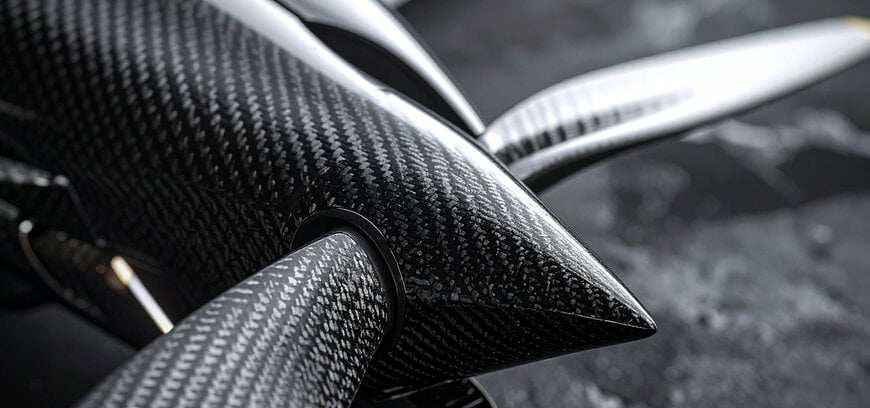
The aerospace, mobility, and marine manufacturing sectors require lightweight, high-strength composite components that satisfy stringent safety and performance standards, such as Flame, Smoke, and Toxicity (FST) and Federal Aviation Regulation (FAR) compliance. RAMPF Group is presenting an integrated engineering methodology at the Xponential exhibition in Detroit, MI, from May 12 to 14 at Booth 29027. This approach facilitates shorter development cycles and reduces manufacturing costs by combining materials science with precision fabrication.
Tooling Materials for Composite Production
The dimensional stability and thermal resistance of tooling are critical factors in high-performance composite manufacturing. RAMPF utilizes specialized epoxy boards and close contour technologies to support processes including autoclave molding, resin transfer molding (RTM), and infusion. Epoxy boards are used to create models and molds with complex geometries. These materials facilitate high-quality surface finishes, which reduces the manual labor required for post-processing and shortens production schedules.
Precision Mold Fabrication and Waste Reduction
To improve cost efficiency in large-scale production, near-net-shape molds are manufactured using close contour casting. This technique produces monolithic, seamless components that significantly reduce the volume of material waste during the milling stage. Additionally, the use of close contour pastes allows for the automated build-up of dimensionally stable molds. These pastes support efficient machining, ensuring that complex parts meet precise structural requirements.
Resin Systems and Regulatory Compliance
The mechanical integrity of a composite structure depends on effective fiber wet-out and the thermal properties of the resin system. Infusion and laminating resins are engineered to maintain performance under demanding thermal conditions. Structural resins with high glass transition temperatures (Tg) are employed to ensure durability in hot and wet environments. Some systems allow for low-temperature processing and cure times under one hour, making them compatible with prototype tooling while adhering to FAR 23.1193 and FAR 25.853 fire safety standards.
Integrated Fabrication and Assembly
The transition from early-stage development to series production is supported by various fabrication techniques. Methods such as Vacuum-Assisted Resin Transfer Molding (VARTM), resin infusion, and Tailored Fiber Placement (TFP) are utilized to achieve tight tolerances and repeatable part quality. TFP allows for the precise placement of fibers to optimize local strength based on the anticipated mechanical loads. These capabilities, alongside metallization and subassembly services, enable the production of aircraft, unmanned aerial vehicles, and naval systems within a unified workflow.
Technical Discussion on Sustainable Development
Technical frameworks for scaling composite production were discussed at the event. Larry Fitzgerald and Max Schultes from RAMPF Composite Solutions scheduled a presentation for May 13 at the theater venue. The session focused on how integrated engineering capabilities allow manufacturers to manage development risks and cost structures while pursuing carbon-neutral aviation goals.
Edited by an industrial journalist, Lekshman Ramdas, with AI assistance.
www.rampf-group.com
