
www.aero-defence.tech
16
'26
Written on Modified on
Digital Radar Modernization for Aerospace Defense Infrastructure
Raytheon and the U.S. Space Force implement the Ground-Based Radar Digitization program to upgrade legacy early warning sensors with open architecture.
www.rtx.com
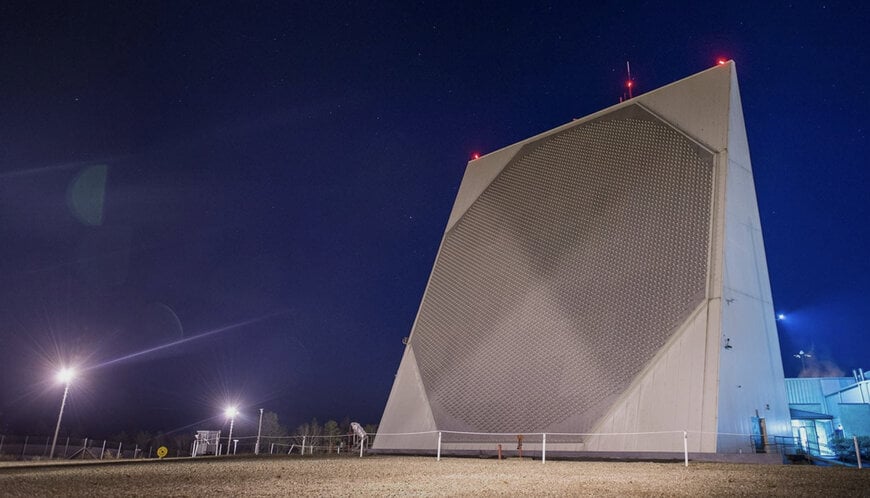
Raytheon, an RTX business, and the U.S. Space Force are collaborating under the Ground-Based Radar Digitization (GBRD) program to upgrade strategic ground-based early warning radar installations. The cooperation replaces legacy analog and proprietary components with digitized, open-architecture systems for aerospace defense and space domain awareness.
Defense Applications and Operational Challenges
The primary application areas are ballistic missile defense and orbital space surveillance, where strategic ground-based radar arrays function as the outermost sensor layer of the national security architecture. Concrete technical use cases include early warning detection of missile launches, physical characterization of airborne and exo-atmospheric objects, and continuous trajectory tracking of space activity. Maintaining long-serving radar installations presents operational challenges regarding component obsolescence, signal processing limitations, and complex hardware sustainment. Collaboration between the U.S. Space Force, Raytheon, and industry partners is required to transition these distributed, mission-critical sensor sites to a unified digital infrastructure without disrupting continuous surveillance operations.
Technical Solution and Partner Responsibilities
The technical solution centers on the GBRD digital radar architecture, which establishes a foundational technical baseline across the strategic sensor portfolio. By replacing hardware-defined subsystems with digital signal processing and a common open system architecture, the upgrade eliminates proprietary interfaces and prevents vendor lock-in. At a system level, this modular architecture decouples software functions from underlying hardware, allowing engineers to integrate updated tracking algorithms and detection capabilities without complete hardware overhauls. Within the partnership, Raytheon provides the high-maturity digital radar technology and leads systems engineering, while the U.S. Space Force defines operational requirements, oversees defense infrastructure integration, and coordinates multi-vendor industry alignment.
Phased Deployment and Infrastructure Integration
System implementation follows a two-stage engineering workflow across existing U.S. Space Force radar installations in Woburn, Massachusetts, and global strategic sites. In the initial phase, Raytheon develops, integrates, and validates prototype digital solutions within existing physical radar structures to verify compatibility with legacy power, cooling, and antenna arrays. Following prototype verification, the program transitions to the second phase, executing rapid fielding and standardized integration across the remaining radar locations.
Expected Operational Impact
Transitioning to a standardized, open-architecture digital baseline directly improves system reliability, maintainability, and long-term lifecycle sustainment. Standardized interfaces across multiple radar sites reduce logistical complexity for spare parts and simplify software maintenance protocols. Furthermore, the modular digital baseline shortens the engineering cycle required to deploy future sensor upgrades, extending the operational service life of the existing ground-based radar network. As Sam Deneke, president of Air and Space Defense Systems at Raytheon, stated: "Raytheon's technical approach enables faster deployment of new capabilities that will support the Space Force's effort to extend the performance and mission utility of these strategically important sites."
Edited by Sucithra Mani, Induportals editor – adapted by AI.
www.rtx.com
