
www.aero-defence.tech
29
'26
Written on Modified on
Low-Emission Heat Exchangers for Next-Generation Cruise Ships
Royal Caribbean Group selects Alfa Laval Concept Zero™ heat exchangers for a new cruise vessel under construction in Finland.
www.alfalaval.com
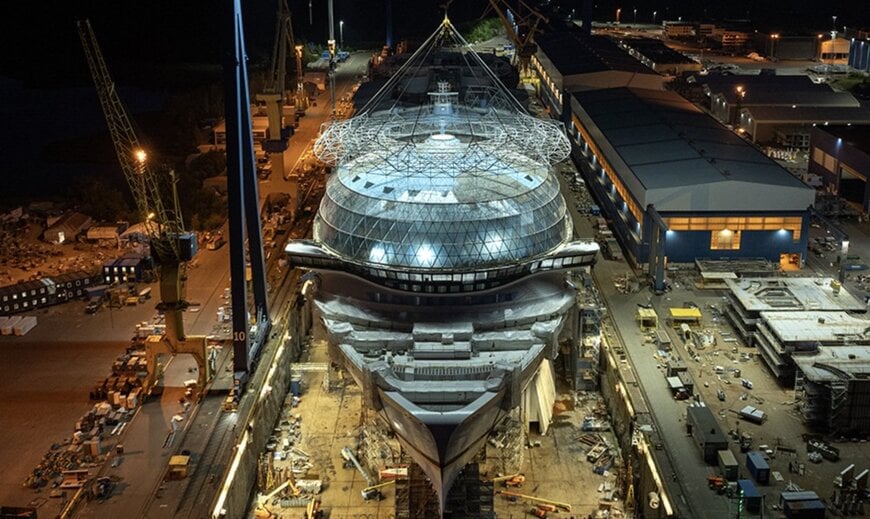
Royal Caribbean Group is equipping its new cruise ship, Legend of the Seas, with Alfa Laval’s Concept Zero™ gasketed plate heat exchangers manufactured using low-emission steel, marking an early marine deployment of this technology as part of a broader strategy to reduce lifecycle carbon emissions.
Decarbonization requirements in cruise shipbuilding
The cruise industry faces growing regulatory and market pressure to reduce greenhouse gas emissions while maintaining high standards of safety, reliability, and passenger comfort. Beyond operational efficiency at sea, shipowners are increasingly addressing emissions embedded in materials and equipment used during construction.
For newbuild projects, this shifts attention toward technologies that reduce both operational energy consumption and the carbon footprint of the supply chain. Royal Caribbean Group has positioned Legend of the Seas, the third ship in its Icon class, as a platform to advance this dual objective.
Concept Zero™ heat exchangers and material selection
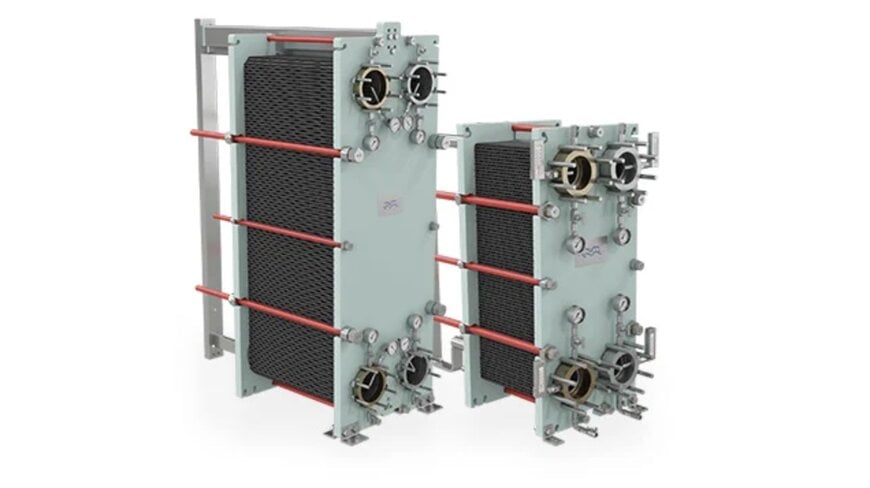
For Legend of the Seas, Alfa Laval is supplying Concept Zero™ gasketed plate heat exchangers (GPHEs). These units are based on Alfa Laval’s established T10 GPHE design, known for high thermal efficiency, compact dimensions, and serviceability in marine environments.
The differentiating factor of the Concept Zero™ variant is material selection. The frame and pressure plate are manufactured using SSAB Zero™ steel, a low-emission steel produced using fossil-free electricity and biogenic raw materials. According to Alfa Laval, this reduces the embedded carbon footprint of the heat exchanger unit by approximately 28% compared with conventional steel, without altering mechanical performance or durability.
Integration into a 2026 newbuild project
The heat exchangers will be installed on Legend of the Seas, scheduled for delivery in 2026 from the Meyer Turku shipyard in Finland. The project is among the first marine applications of Concept Zero™ heat exchangers, positioning it as a reference for low-emission equipment adoption in large passenger vessels.
The GPHEs will support onboard thermal management systems, where efficiency directly affects fuel and energy consumption. High heat transfer efficiency allows auxiliary systems to operate with lower energy demand, contributing to overall vessel efficiency alongside the material-related carbon savings.
Performance consistency with reduced embedded emissions
A key requirement for marine operators is that sustainability-driven material changes do not compromise operational reliability. Alfa Laval states that SSAB Zero™ steel offers equivalent mechanical properties and performance to conventional steel grades used in marine heat exchangers.
This enables shipowners to adopt lower-emission materials without altering design margins, maintenance practices, or expected service life. In practical terms, the Concept Zero™ units are intended to be interchangeable with standard GPHEs from an installation and operation perspective.
Supply chain emissions and Scope 3 focus
The Concept Zero™ initiative is part of Alfa Laval’s broader effort to reduce Scope 3 emissions, which account for a significant share of total lifecycle emissions in industrial equipment manufacturing. The company has set a target to reduce Scope 3 emissions by 50% by 2030.
Delivering a Concept Zero™ unit to a first marine customer represents a milestone in translating supply chain decarbonization strategies into deployed products. For Royal Caribbean Group, the selection aligns with its aim to move toward net-zero cruising by addressing emissions not only from ship operation but also from construction and equipment sourcing.
Application context
The deployment of low-emission heat exchangers on Legend of the Seas illustrates how incremental changes in materials and component design can contribute to broader decarbonization goals in shipbuilding. While the carbon reduction per unit may be modest in isolation, scaling such technologies across fleets and supply chains can deliver measurable impact.
For the cruise sector and wider maritime industry, the project demonstrates a practical pathway to integrating lower-carbon materials into proven, high-efficiency systems without compromising operational performance or safety.
www.alfalaval.com
