
www.aero-defence.tech
17
'25
Written on Modified on
Integrated LNG Fuel Supply Systems for Marine Applications
Alfa Laval introduces a cryogenic LNG fuel supply solution to support shipowners adopting LNG as a transitional marine fuel.
www.alfalaval.com
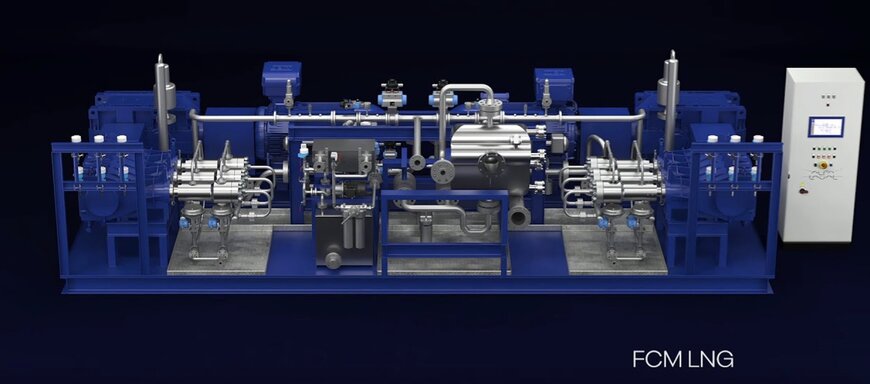
Alfa Laval has launched a new LNG fuel supply system, FCM LNG, expanding its alternative fuels portfolio with an integrated solution designed to support LNG-powered vessels through reliable, cryogenic fuel handling and delivery.
Responding to LNG’s role in maritime decarbonization
As the maritime sector works toward lower greenhouse gas emissions, LNG has become a widely adopted transitional fuel. It enables measurable reductions in emissions using established global infrastructure, while large-scale deployment of fuels such as methanol and ammonia continues to develop. This shift has increased demand for fuel supply systems that combine operational reliability with regulatory compliance and cost control.
The FCM LNG system was introduced at Marintec 2025 in response to this market demand. It is intended to support shipowners seeking predictable performance and safety when integrating LNG into newbuilds or retrofits.
Cryogenic integration and system design
The new system integrates cryogenic technology from Fives Cryogenics, acquired by Alfa Laval in 2025, with Alfa Laval’s existing expertise in marine fuel supply and heat transfer. The cryogenic scope includes centrifugal and reciprocating pumps designed for operation at very low temperatures and high pressures.
This integration enables a single, coordinated fuel line solution rather than a collection of separate components. The system is engineered to support high-pressure gas injection in marine diesel engines, addressing one of the core technical requirements for LNG propulsion.
Performance, flexibility, and safety considerations
FCM LNG is designed to operate across a wide range of capacities and pressure levels, allowing it to be adapted to different vessel types and engine configurations. The system is engineered for continuous operation under extreme cryogenic conditions, with an emphasis on minimizing thermal losses and maintaining stable fuel delivery.
Operational reliability and safety are central design objectives, particularly given the handling requirements of cryogenic LNG. By combining pump technology, heat transfer, and fuel line design within a single system architecture, the solution aims to reduce interface complexity and support predictable lifecycle performance.
Development timeline and deployment
According to Alfa Laval, the first test benches for the FCM LNG system are scheduled for delivery in 2026. Marine deliveries are planned to begin in 2027, following validation and qualification activities.
This staged rollout reflects typical development cycles for new marine fuel systems, where extensive testing is required to verify performance, safety, and compliance before fleet-wide adoption.
Position within a multi-fuel portfolio
The launch of FCM LNG complements Alfa Laval’s broader portfolio of alternative fuel solutions, which includes established systems for methanol and LPG as well as ongoing development work in ammonia. By covering multiple fuel pathways, the company positions itself to support shipowners and shipyards as fuel strategies evolve over time.
Within this context, FCM LNG represents a targeted response to current LNG demand while aligning with longer-term decarbonization strategies. It illustrates how integrated fuel supply systems are being developed to balance near-term emission reductions with flexibility for future fuel transitions in the maritime sector.
www.alfalaval.com
