
www.aero-defence.tech
04
'25
Written on Modified on
DLR achieves megawatt-scale fuel cell breakthrough in BALIS test project
DLR operated fuel cells and electric motor above 1 megawatt each, coupling 12 modules with 400+ cells, reaching 1.5 MW capacity.
www.dlr.de
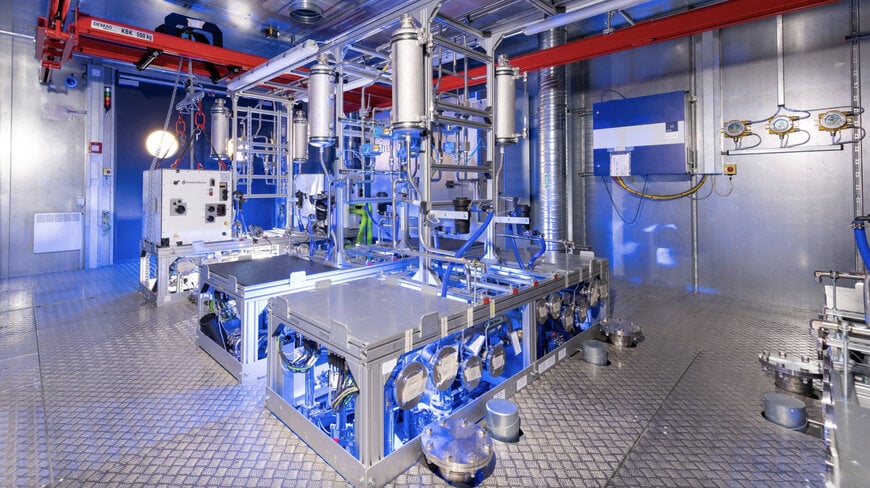
The BALIS facility focuses on developing novel propulsion systems based on hydrogen fuel cells with a power output in the megawatt range.
In the BALIS project, the German Aerospace Center (Deutsches Zentrum für Luft- und Raumfahrt; DLR) is building a unique test field to develop and test components of fuel cell electric propulsion systems for vehicles with power outputs of up to 1.5 megawatts. For the first time, researchers have succeeded in operating two of the most important components – the fuel cells and the electric motor – at more than one megawatt each.
Milestone in development of next-gen fuel cell systems
"This is an important milestone in the set-up and commissioning of the test facility and the first generation of the fuel cell test system," explains project leader Cornelie Bänsch from the DLR Institute of Engineering Thermodynamics. Systems of this power class are not yet available on the market – the technical challenge lies in developing and integrating all the components so that they operate stably at high outputs of one megawatt or more. For this, DLR researchers electrically couple a total of twelve fuel cell modules, which all exchange information and interact. Each of these modules, in turn, consists of more than 400 individual fuel cells.
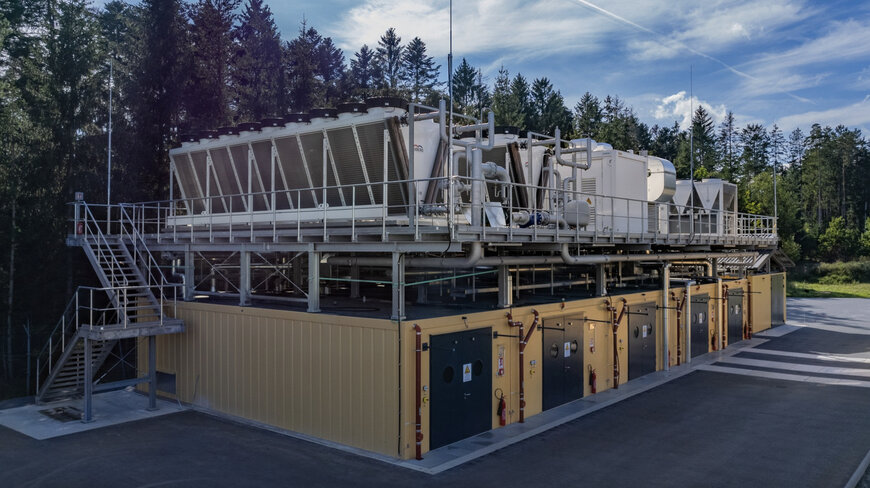
The flexible and modular BALIS test facility allows individual components as well as entire powertrains to be thoroughly evaluated. These include the fuel cell system itself, electric motors, refuelling infrastructure and control and regulation technology.
"To control this complex setup, we are developing sophisticated operating strategies," continues Bänsch. "Step by step, we want to operate the test system stably for longer periods and increase the output further above one megawatt. Once that is achieved, we will also run dynamic profiles – operating at varying high power outputs for different lengths of time, just as in real-world conditions."
Powertrains for mobile, power-intensive applications
Fuel cell systems, such as those developed and tested by DLR with BALIS, could one day power ships, heavy-duty road vehicles or aircraft. Fuel cells running on hydrogen from renewable sources – 'green hydrogen' – could enable carbon dioxide-free and thus climate- and environmentally-compatible mobility. This technology could also reduce dependence on fossil fuels while strengthening the innovative capacity and competitiveness of Germany's high-tech industries.
The complex, modular BALIS test field enables researchers to comprehensively investigate individual components and even entire powertrains – for example in collaboration with aeronautics research institutes on propulsion systems. Due to its scale, flexible design and research methodology, the facility is unique worldwide. It is located on the innovation campus of the E2U Empfingen Development Centre for Environmental Technology.
www.dlr.com
In the BALIS project, the German Aerospace Center (Deutsches Zentrum für Luft- und Raumfahrt; DLR) is building a unique test field to develop and test components of fuel cell electric propulsion systems for vehicles with power outputs of up to 1.5 megawatts. For the first time, researchers have succeeded in operating two of the most important components – the fuel cells and the electric motor – at more than one megawatt each.
Milestone in development of next-gen fuel cell systems
"This is an important milestone in the set-up and commissioning of the test facility and the first generation of the fuel cell test system," explains project leader Cornelie Bänsch from the DLR Institute of Engineering Thermodynamics. Systems of this power class are not yet available on the market – the technical challenge lies in developing and integrating all the components so that they operate stably at high outputs of one megawatt or more. For this, DLR researchers electrically couple a total of twelve fuel cell modules, which all exchange information and interact. Each of these modules, in turn, consists of more than 400 individual fuel cells.
The flexible and modular BALIS test facility allows individual components as well as entire powertrains to be thoroughly evaluated. These include the fuel cell system itself, electric motors, refuelling infrastructure and control and regulation technology.
"To control this complex setup, we are developing sophisticated operating strategies," continues Bänsch. "Step by step, we want to operate the test system stably for longer periods and increase the output further above one megawatt. Once that is achieved, we will also run dynamic profiles – operating at varying high power outputs for different lengths of time, just as in real-world conditions."
Powertrains for mobile, power-intensive applications
Fuel cell systems, such as those developed and tested by DLR with BALIS, could one day power ships, heavy-duty road vehicles or aircraft. Fuel cells running on hydrogen from renewable sources – 'green hydrogen' – could enable carbon dioxide-free and thus climate- and environmentally-compatible mobility. This technology could also reduce dependence on fossil fuels while strengthening the innovative capacity and competitiveness of Germany's high-tech industries.
The complex, modular BALIS test field enables researchers to comprehensively investigate individual components and even entire powertrains – for example in collaboration with aeronautics research institutes on propulsion systems. Due to its scale, flexible design and research methodology, the facility is unique worldwide. It is located on the innovation campus of the E2U Empfingen Development Centre for Environmental Technology.
www.dlr.com
