
www.aero-defence.tech
20
'26
Written on Modified on
Microgravity Planetary Rover Deployment for Phobos Surface Exploration
DLR and CNES deploy the Idefix rover to validate autonomous mobility and surface sampling in extreme microgravity.
www.dlr.de
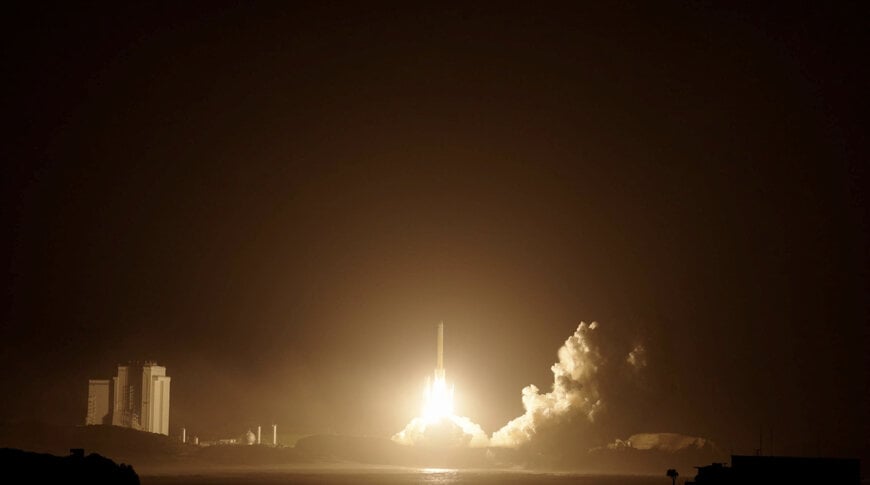
Operating mobile robotic systems on irregular, small celestial bodies presents severe locomotion challenges due to sub-milligravity environments that render conventional traction mechanisms ineffective while amplifying recoil dynamics. To resolve these surface mobility limitations and characterize landing regolith for subsequent sample-return spacecraft, autonomous micro-rovers combine lightweight deployable structures, dynamic self-righting mechanisms, and specialized surface spectrometers.
The German Aerospace Center (DLR) and the French space agency CNES developed the Idefix rover as a key exploration payload for the Martian Moons eXploration (MMX) mission, led by the Japan Aerospace Exploration Agency (JAXA). Following its launch on board an H3 launch vehicle from the Tanegashima Space Center on 19 October 2026, the spacecraft is en route to Mars, where the rover will be delivered to Phobos to conduct in-situ mechanical and mineralogical surface analyses ahead of planned sample-collection operations.
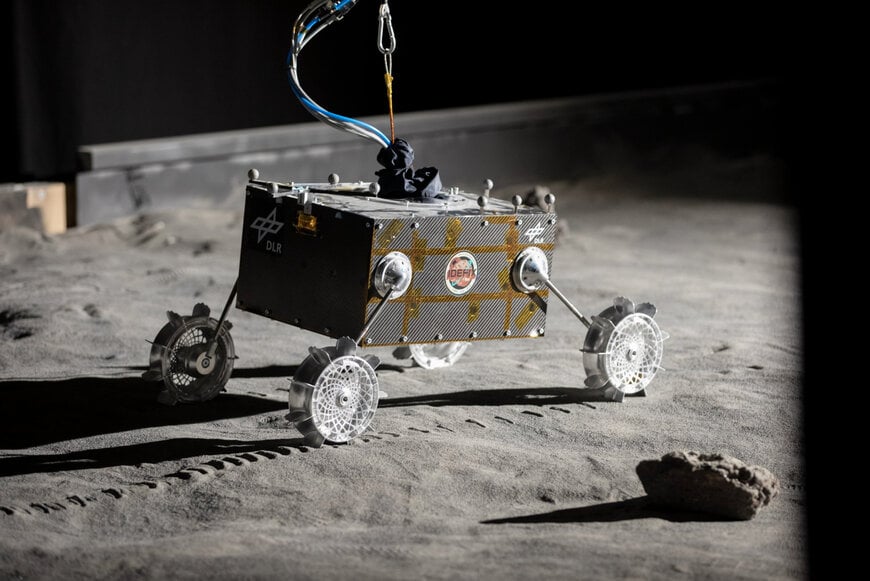
Autonomous Locomotion and Uprighting in Sub-Milligravity Regimes
Exploring Phobos requires robotic systems capable of surviving extreme mechanical and thermal variations. Surface gravitational acceleration on Phobos is less than one-thousandth of Earth's gravity, which causes any wheel torque or mechanical rebound to risk ejecting a vehicle into orbital escape velocity. In addition, the surface experiences temperature swings exceeding 200 degrees Celsius across a seven-hour day-night cycle.
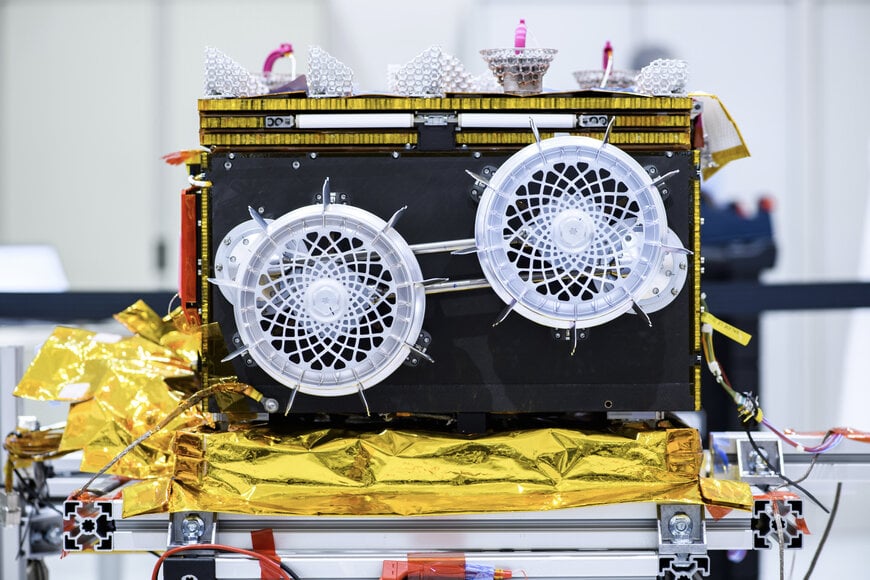
To deploy onto the moon around the transition period of 2028 to 2029, the MMX mothercraft will release Idefix from an altitude between 40 and 100 meters above the regolith. The rover will undergo an unbraked ballistic descent, bouncing and rolling across the uneven surface until coming to a complete stop. Because orientation upon resting cannot be predicted, the robotic platform features an autonomous self-righting system that actuates external panels to reorient the chassis upward, deploys photovoltaic arrays, and initiates surface operations without immediate Earth-based ground commands.
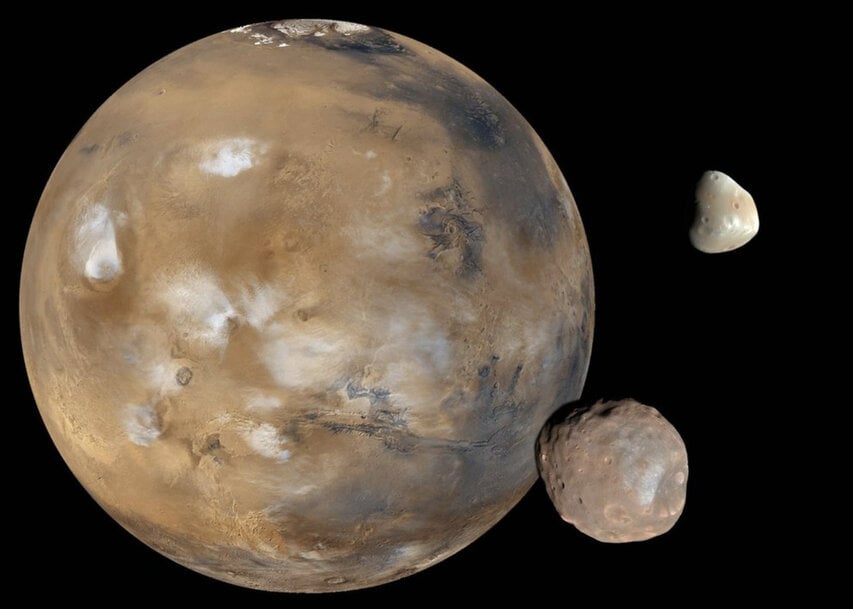
Surface Instrumentation and Autonomous Control Architecture
Long radio signal propagation delays between Earth and the Martian system rule out real-time manual teleoperation, necessitating on-board autonomy for trajectory tracking and obstacle negotiation. As DLR project manager Markus Grebenstein pointed out, the technical architecture requires extremely lightweight construction combined with high structural robustness, paired with control approaches designed to right the rover from any arbitrary resting orientation.
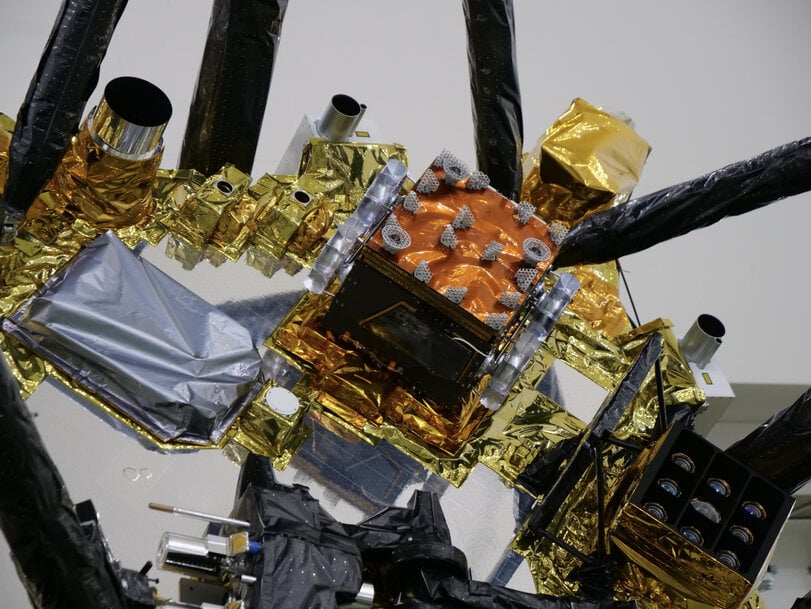
Idefix carries two core scientific instruments developed by DLR: the RAX Raman spectrometer and the miniRAD radiometer. The RAX payload uses laser spectroscopy to measure surface mineralogy and chemical bonding, identifying whether the regolith resembles primitive carbonaceous chondrite asteroids or Mars-derived impact ejecta. The miniRAD radiometer measures surface thermal emission and thermal inertia to determine regolith grain size, porosity, and layering. Complementing these sensors, CNES navigation and wheel cameras monitor wheel-soil mechanics to measure shear strength and bearing capacity. The collective dataset will directly guide JAXA engineers in selecting safe landing sites for the primary MMX spacecraft to touch down and extract at least 10 grams of regolith.
Distributed Operational Architecture Across European Flight Centers
Operational command and control for the rover alternates between the DLR Microgravity User Support Center (MUSC) in Cologne, Germany, and the CNES mission operations center in Toulouse, France. During the interplanetary cruise toward Mars, flight controllers execute routine health assessments, sensor recalibrations, battery management sequences, and deep-space software updates while the rover remains attached to the MMX host spacecraft.
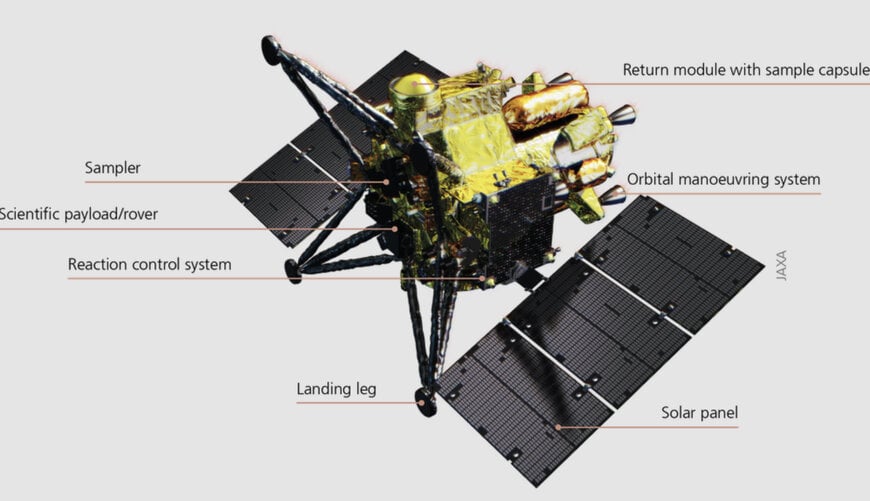
Upon arrival at the Martian system in mid-2027, the MMX probe will enter quasi-satellite orbits to map Phobos and Deimos with eight dedicated scientific instruments. Following rover deployment in late 2028 or early 2029, Idefix will operate for an estimated 100-day design lifetime. The main MMX spacecraft will subsequently perform its touch-and-go sampling maneuvers, transferring collected regolith into an Earth re-entry capsule targeted for recovery in 2031.
Additional Context:
This section details technical specifications and competitive benchmarking not included in the original product announcement.
The Idefix rover operates with a total mass of approximately 25 kilograms, carrying a dedicated scientific sensor suite of approximately 2.5 kilograms. On Phobos, where surface gravity averages roughly 0.0057 m/s², the structural mass of the rover equates to a physical resting weight of less than 20 grams-force. To generate traction without spinning out into space, the locomotion subsystem uses four independently actuated wheels equipped with nine optimized blades or grousers, manufactured using topology optimization to minimize mass to approximately 190 grams per wheel.
In technical lineage and deployment architecture, Idefix builds directly on the heritage of the DLR-CNES Mobile Asteroid Surface Scout (MASCOT) lander, deployed by JAXA's Hayabusa2 spacecraft onto asteroid 162173 Ryugu, and the European Space Agency Philae lander carried by Rosetta to comet 67P/Churyumov–Gerasimenko. While the 10-kilogram MASCOT relied on an internal eccentric swing-arm mechanism to execute single hops across Ryugu's surface without continuous directional steering, Idefix incorporates a fully articulated four-wheel mobility system adapted for controlled traverse across regolith. Furthermore, whereas MASCOT operated on non-rechargeable primary lithium batteries for 17 hours, Idefix utilizes deployable silicon solar panels generating at least 60 watt-hours per day to support extended surface traverses over several months.
Edited by Natania Lyngdoh, Induportals editor, with AI assistance.
www.dlr.com
