
www.aero-defence.tech
23
'25
Written on Modified on
DLR Innovates Pilot Support Systems
DLR tested Virtual and Remote Co-Pilot systems, both receiving positive feedback for enhancing pilot support in cockpits, and will now be further developed.
www.dlr.de
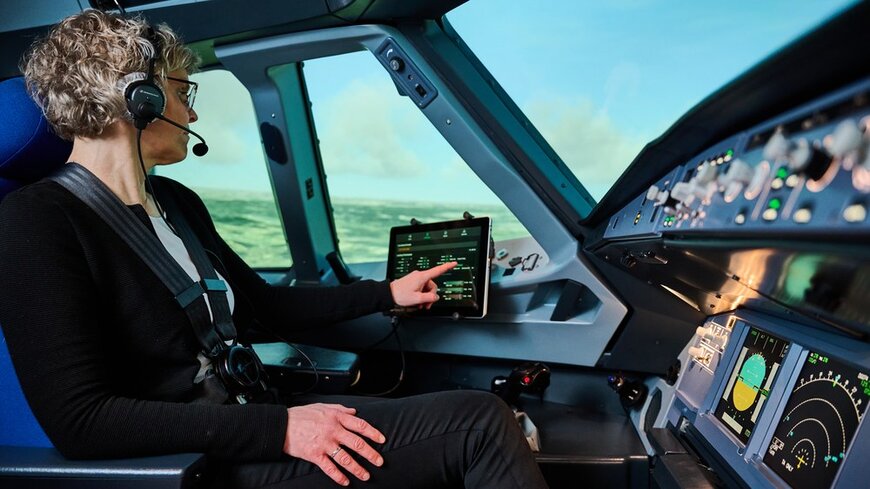
In an extensive test campaign, researchers at the German Aerospace Center (Deutsches Zentrum für Luft- und Raumfahrt; DLR) have investigated two new concepts aimed at reducing the workload for pilots in one- and two-person cockpits: the Virtual Co-Pilot and the Remote Co-Pilot. They also evaluated the feasibility of Single Pilot Operations (SiPO) – flights with only one pilot on board instead of the current two. Together with 14 pilots – both captains and first officers on short and long-haul flights from European airlines – the researchers tested the concepts as part of the DLR project NICo (Next Generation Intelligent Cockpit). The new concepts were simulated in various realistic and demanding situations using DLR's cockpit simulator AVES (Air Vehicle Simulator).
Virtual Co-Pilot as an onboard app
"Pilots want a system that prepares and displays all the required information in the event of a necessary diversion," explains Dominik Niedermeier, co-project lead at the DLR Institute of Flight Systems. In the past, pilots carried a flight bag containing maps, manuals and checklists in paper form. Nowadays, people in the cockpit rely on electronic flight bags (EFBs), which are tablet computers containing a wealth of information and maps. "Our Virtual Co-Pilot eliminates the need to manually gather information from various sources," Niedermeier continues.
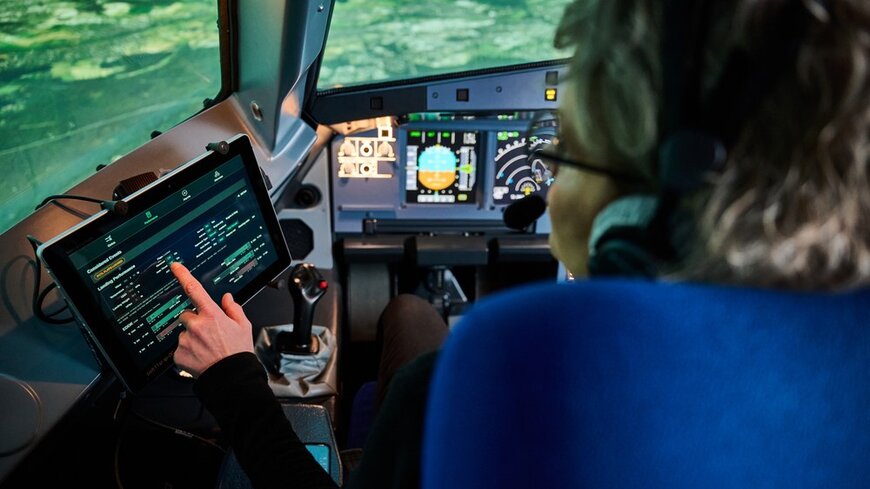
As part of the NICo project, researchers developed an app for EFBs to help pilots select alternative airports. In order to accurately assess the potential of the technology, seven crews, each with two commercial pilots, completed a scenario in the AVES simulator as part of the study. They used the new system to select a suitable alternative airport following a technical problem. All test subjects described the application as very useful and promising for everyday use.
The findings from the trial show that when the pilots' criteria are taken into account, they trust the assistance system. The system considers factors such as distance from the airport and runway length, which were identified as relevant in a preliminary study. Eleven of the fourteen pilots said the system helped them reach a decision more quickly. "The results have encouraged us to continue developing the system," says Niedermeier. "The pilots are enthusiastic about the assistance system – even though it is still a prototype."
Supporting solo pilots with a remote co-pilot
The Institute of Flight Guidance took a different approach with the development of the Remote Co-Pilot (RCP). With this technology, the cockpit crew is supported by a pilot on the ground if required. This support could already be used today in aircraft with multiple pilots on board, but ground-based support for several single-pilot aircraft is also conceivable.
In the study conducted by DLR, the commercial pilots flew as single pilots in the cockpit and also provided support for up to eight aircraft simultaneously from the ground as remote co-pilots. To do this, they not only simulated normal flights but also evaluated emergency procedures in the event of fire and fuel loss in flight.
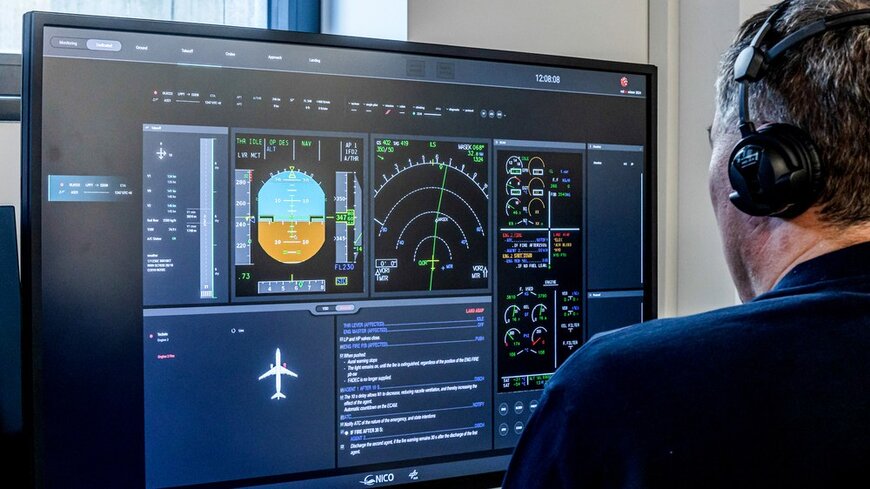
The pilots all confirmed that the design of the workstation developed for the remote co-pilot was intuitive and that they could quickly and safely support the single pilot in the air from the ground. "As remote co-pilots, the pilots primarily see themselves as service providers for the cockpit, and the crew management that is standard today cannot be applied directly to single-pilot operations," says Niermann, summarising two challenges for future research. Nevertheless, the great potential of the system has been demonstrated.
"We were able to show that the support from a remote co-pilot is seen by pilots as a real added value for aviation," says a delighted Niermann. The NICo project and the study carried out have provided many answers about new types of support in the cockpit, but have also generated new research questions. In close dialogue with industry and pilots, DLR's neutrality in investigating these innovative concepts was repeatedly cited as very important. DLR will continue to research this topic together with airlines and pilot associations in the future.
Next steps: technology maturity and economic analysis
DLR is now planning to further develop the Virtual Co-Pilot EFB app and increase its level of technological maturity. At the same time, the researchers are continuing the work from NICo in the FOCUS follow-up project. In addition to further technical development, FOCUS will also investigate the economic viability of single-pilot operations.
www.dlr.de
