
www.aero-defence.tech
29
'26
Written on Modified on
DLR and Consortium Partners Advance Aviation AI Systems
The German Aerospace Center developed AI-supported team members and assistance systems to optimize air traffic control and pilot decision-making.
www.dlr.de
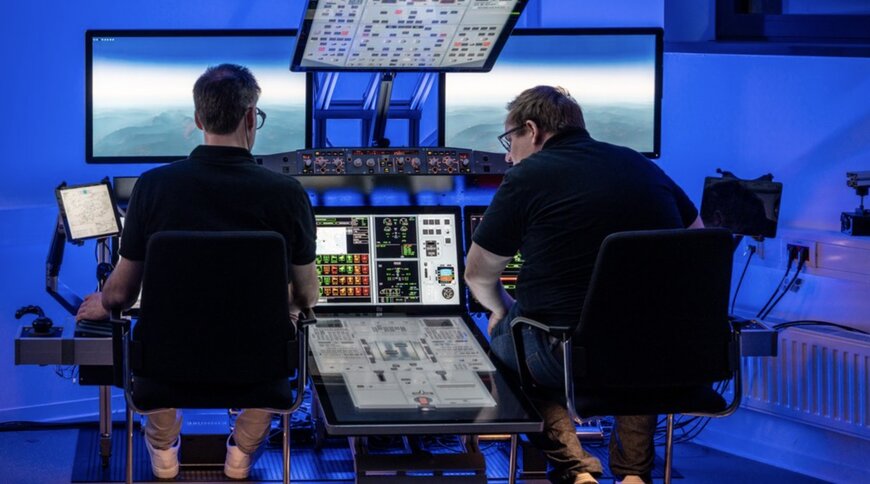
The German Aerospace Center, in collaboration with aviation companies, research institutions, and public authorities, has developed AI-supported solutions under the LOKI project to optimize air traffic management and cockpit operations. The initiative introduces a digital air traffic controller and an intelligent pilot assistance system to address rising flight volumes and time-critical decision challenges.
Context of the Cooperation
The aviation sector experiences expanding flight volumes alongside growing challenges in maintaining necessary staffing levels within air traffic control operations. Traditional assistance frameworks lack the capacity to process massive, multi-source datasets or adapt dynamically to fluctuating operational variables in real time.
To address these systemic strains, the German Aerospace Center (DLR) led a four-year collaborative initiative designated as the LOKI project (Collaboration between Aviation Operators and AI Systems). The consortium combines the research infrastructure of DLR with national and international air traffic control companies, research institutions, and public authorities. This cooperative framework was required to build trustworthy, user-centered artificial intelligence systems capable of mitigating personnel workload while maintaining strict safety standards.
Technical Solution and Responsibilities
The technological architecture developed by the partners introduces two primary AI-driven solutions configured for distinct operational environments:
- Digital Interactive Reliable Controller (DIRC): Engineered as a digital air traffic controller, this software functions as an active team member within the control center. Unlike traditional static tools, DIRC can execute specific operational tasks independently, enabling dynamic task allocation and coordination between human controllers and the digital system.
- Intelligent Pilot Assistance System (IPAS): Implemented as a cockpit demonstrator, this system is engineered to analyze and process large volumes of data. It supports flight crews during time-critical scenarios, such as selecting alternative flight paths or identifying optimal alternate airports.
According to Carmen Bruder, the project’s scientific lead from the DLR Institute of Aerospace Medicine, the development focused on structuring human-AI cooperation to be transparent and user-centered. The system architecture balances automated data processing with continuous human control and clear information regarding the AI's capabilities and limitations to systematically build operator trust.
Deployment or Implementation
The implementation and validation phases of the LOKI project spanned a four-year timeline, utilizing advanced simulation environments to benchmark system performance against real-world airspace constraints. During the collaborative testing phases, simulations demonstrated that the integrated human-DIRC configuration successfully managed up to 25 percent more than the current maximum authorized traffic volume specified for an airspace sector.
In addition to software benchmarking, the partnership evaluated the training and human factor requirements needed for future deployment. The project concluded by formulating formalized operational recommendations for public authorities, focusing on gradual function rollouts and structured training opportunities to guide the safe integration of AI into European aviation infrastructure.
Edited by Romila DSilva, Induportals Editor, with AI assistance.
Deployment or Implementation
The implementation and validation phases of the LOKI project spanned a four-year timeline, utilizing advanced simulation environments to benchmark system performance against real-world airspace constraints. During the collaborative testing phases, simulations demonstrated that the integrated human-DIRC configuration successfully managed up to 25 percent more than the current maximum authorized traffic volume specified for an airspace sector.
In addition to software benchmarking, the partnership evaluated the training and human factor requirements needed for future deployment. The project concluded by formulating formalized operational recommendations for public authorities, focusing on gradual function rollouts and structured training opportunities to guide the safe integration of AI into European aviation infrastructure.
Edited by Romila DSilva, Induportals Editor, with AI assistance.
