
Stirling Dynamics Uses 3D Printing to Enhance Air Passenger Experience
By making custom in-cabin accessories a cost-effective option.
www.stirling-dynamics.com
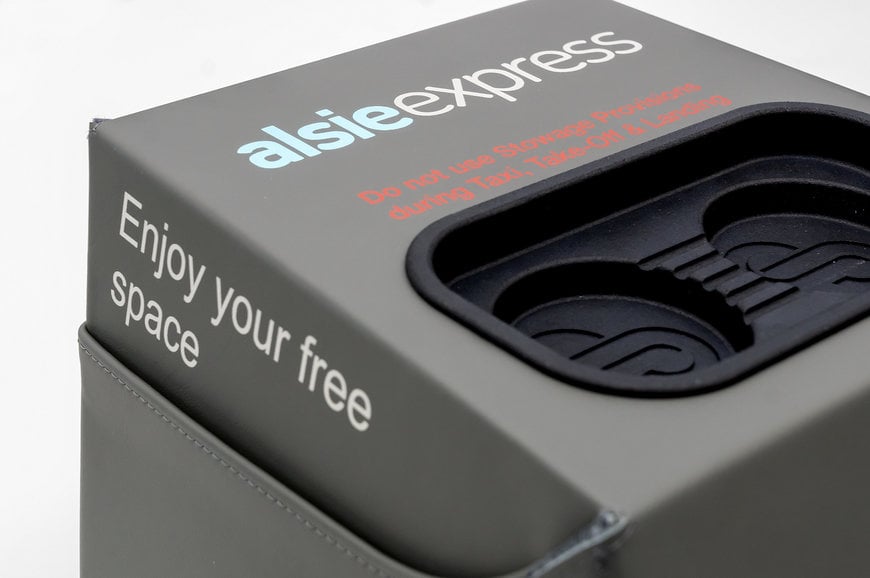
Fast design iteration and cost-efficient product customization are benefits often associated with additive manufacturing (AM). EASA 21.J-certified design organization Stirling Dynamics – a specialist in commercial aircraft solutions for OEMs, MROs, and airlines – recently added another benefit to this list when it identified a new application for an existing low-criticality in-cabin accessory. The benefit? Enhanced passenger experience.
Working with additive manufacturing specialist Materialise, the company has transformed a seat blocker originally intended to help airlines during the COVID-19 pandemic, into a highly customizable option that gives passengers improved comfort and convenient storage for devices, drinks, and other items during a flight.
Application spotting: the process behind the part
Stirling Dynamics’ focus is design and certification. Their portfolio’s broad scope covers everything from low-criticality cabin parts to electronics and avionics, reflecting a diverse skill set and a unique approach to problem-solving that often relies on being able to identify when and how to use 3D printing. And on being able to accurately assess the business case for items developed.
“Not everything becomes a 3D printing project - we have to be very careful. Developing a part and bringing it up to an EASA Form-1 approval is a very time-consuming process for all involved,” says Henryk Bork, Head of Aviation at Stirling Dynamics. The company also has to be realistic about whether it can make certified solutions accessible (in terms of price and quantity) to any operators that need them.
Evolving the seat blocker originally developed during the COVID-19 pandemic to help airlines “remove” seats from the schematics without physically having to remove them from the plane, met both criteria. A business case did exist for turning a useful ‘must have’ into a passenger-focused perk. With the flexibility offered by 3D printing fundamental to its viability.
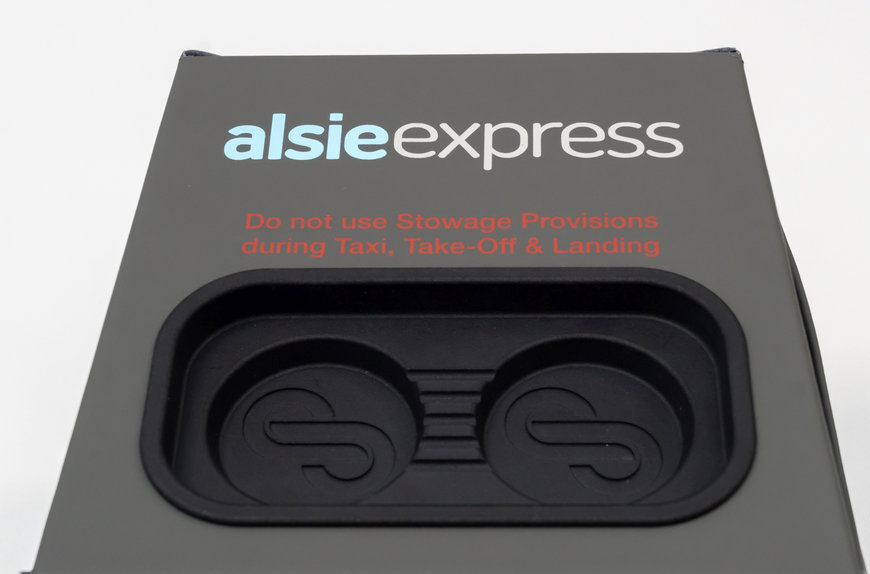
An in-cabin solution perfect for passenger comfort.
Document pockets and detachable 3D-printed slots for chargers, devices, and cups are the most notable new features of the re-imagined seat blocker. As an EASA Part 21.G-certified holder of Production Organization Approval (POA), Materialise is certified to produce flight-ready parts like these, with a lead time of just three weeks on these particular components.
Each part is embedded into a strong foam material, ensuring the seat blocker keeps its shape while removing the risk of injury should anyone fall on it and keeping weight to a minimum — just 1.5 kg. The whole part is finished in handcrafted leather, available in various colors. Most importantly, it’s produced with Form-1 accreditation, making it officially installable on any aircraft seat.
Cost effective customization that’s only possible with 3D printing.
This combination of 3D printing and handcrafted leather allows Stirling Dynamics’ customers plenty of room for customization — an important asset for a part that sits so prominently in the aircraft cabin.
“We can go to any customer and let them choose the color and the print of the leather,” explains Henryk. “But even better are the options for the inserts. They can choose whether they’re separated or combined to allow space for a mobile phone, for example, or have their logo integrated into the design. That makes 3D printing very attractive — it would be impossible to balance the tooling costs with any other method.”
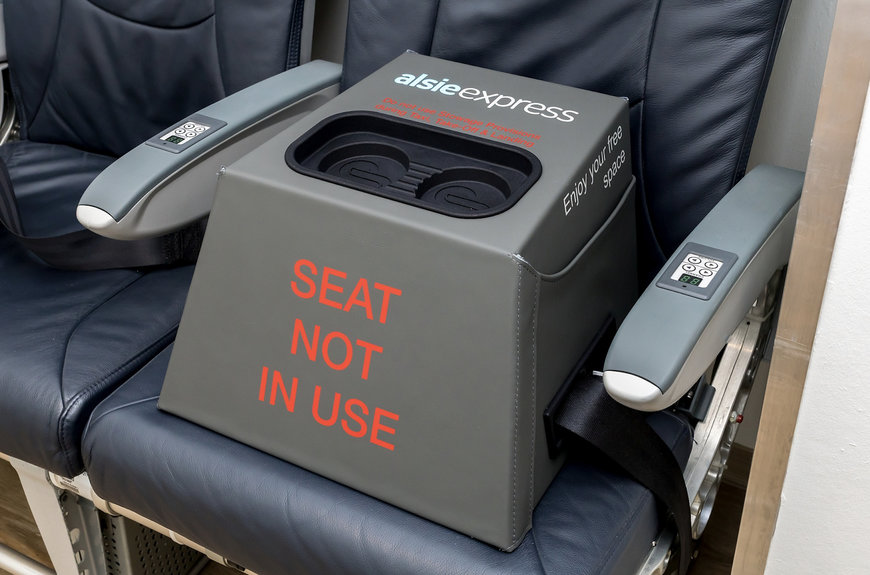
From trial series to permanent product.
Like all solutions developed, the seat blocker has undergone Stirling Dynamics’ uncompromising test phase - a three-stage trial process that improves quality, builds trust, and helps gather valuable data.
“Our offer to the customer is always balanced on three stages of feedback and improvement,” explains Henryk. “We send prototypes to make sure fit, form, and function are guaranteed and meet their expectations. With 3D printing, we can easily adapt whatever needs adapting and do another loop, then agree on a trial period of one to three months to get valuable in-service performance data before we finalize the part.”
Moving on to metal.
The new look seat blocker is the latest in a long line of products that showcase Stirling Dynamics’ problem-solving and creativity; creativity set to be bolstered as the company explores new material options on the horizon.
“We are very much looking forward to collaborating with Materialise on metal printing for aerospace as well. It will be another game changer, and I have no lack of imagination,” adds Henryk. “It could be very interesting in terms of structural repairs and different solutions that don’t exist yet.”
For now, however, the newly imagined seat blocker is just one of a growing number of low-criticality 3d-printed flying polymer parts that do exist. One already proving popular with Stirling Dynamics’ customers and the passengers who benefit from enhanced seating facilities.
www.stirling-dynamics.com
