
www.aero-defence.tech
17
'23
Written on Modified on
SAFRAN TO PARTICIPATE IN THE EUROPEAN SPACE AGENCY'S JUICE MISSION
Safran's input includes a frequency synthesizer integrated into the SWI (Sub-millimeter Wave Instrument) and advanced optical filters for the MAJIS (Moons And Jupiter Imaging Spectrometer).
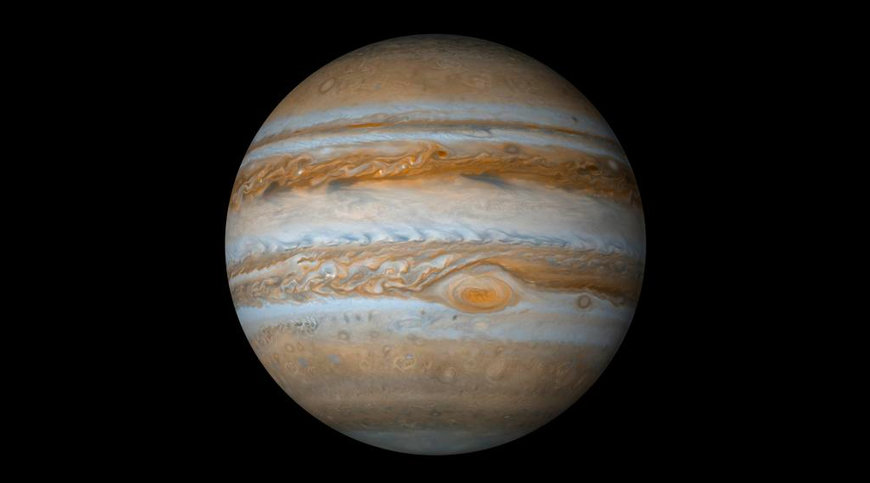
The Space Division at Safran Electronics & Defense is taking part in the European Space Agency's (ESA) JUICE (JUpiter ICy moons Explorer) mission, launched from the European Spaceport in Kourou, French Guiana on April 14, 2023. Marking the beginning of a new era of discovery in our solar system, JUICE will explore Jupiter and three of its moons – Europa, Ganymede and Callisto – to gain a better understanding of them, study their composition and find possible traces of life. The probe's space voyage to Jupiter will take eight years. Upon its arrival, scheduled in 2031, JUICE will put to use its dozen sophisticated scientific instruments.
Searching for forms of extraterrestrial life
The SWI is a very high-resolution spectrometer designed to study the atmospheres of Jupiter and its moons. Exposed to extreme environmental conditions – including cold, radiation, and vibration – the K-band synthesizer supplied by Safran is a vital contribution to the instrument as it generates precise and stable radio frequency signals in a band ranging from 22.2 to 26.4 GHz with a resolution of 150 KHz. The signals enable the SWI to probe the moons' atmospheres in depth and detect vital molecules like water, to provide valuable information about their composition.
The technical challenges addressed by Safran teams to produce this equipment, from its development through to ESA class 1 qualification included guaranteeing high spectral purity, high output power, low consumption because there is little solar energy at this distance, and reduced mass and volume. The instrument was developed under the responsibility of the MPS based in Göttingen, Germany. For this project, Safran collaborated with the Paris Observatory (LERMA), the MPS, the CNES and the ESA.
Mapping and analyzing the composition of Jupiter's moons
MAJIS is the visible-infrared spectral imager selected to obtain chemical maps of the different (icy, mineral, organic, etc.) components on the surface of Jupiter's moons. The instrument uses linear variable optical filters supplied by Safran to obtain detailed information about the composition and properties of the objects it observes. These space-grade optical components push the boundaries of state-of-the-art technology by covering a wide spectrum from visible (500 nm) to near-infrared (2500 nm) and by blocking unwanted wavelengths (rejection density 4). This data will then be correlated with other instruments, particularly those taking geographic readings.
www.safran-group.com
