
www.aero-defence.tech
07
'23
Written on Modified on
SAIC SUPPORTS NASA’S ARTEMIS PROGRAM
SAIC is supporting NASA’s Artemis program to push human exploration on the moon and then Mars and beyond, with flight readiness, safety and mission assurance activities.
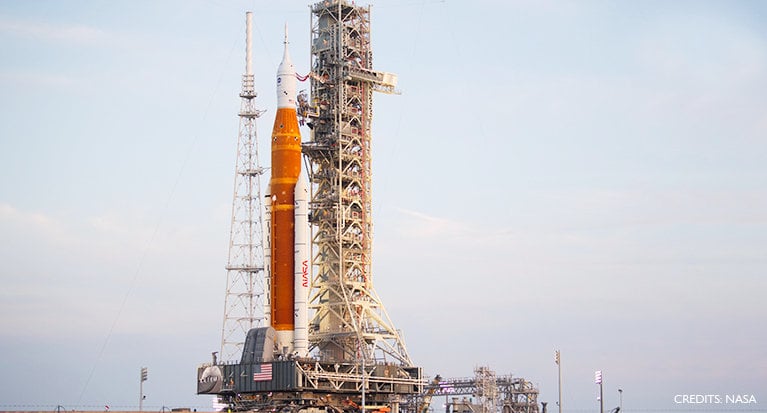
NASA will take the next milestone step to sending astronauts on long-term trips to the moon with the crewed Artemis II mission in late 2024. On April 3, NASA and the Canadian Space Agency revealed four astronauts who will work together on an approximately 10-day flight test to the vicinity of the moon: Americans Reid Wiseman, commander; Victor Glover, pilot; and Christina Hammock Koch, mission specialist; and Canadian Jeremy Hansen, mission specialist. The Artemis program is laying the foundation for the next giant leap for mankind to go to Mars.
Artemis II's crew members will be the first humans to fly near the moon since the historic Apollo program. Late next year, they will launch into space on the Space Launch System (SLS) rocket and prove the life-support systems of the Orion human spacecraft while validating the capabilities and techniques required to live and work in deep space. NASA"s announcement of the spaceflight crew at an event near Johnson Space Center in Houston formally kicks off the astronauts' training and mission preparations for about 18 months.
Artemis II follows the successful Artemis I uncrewed mission last December, as part of three missions of increasing length and complexity to establish a sustained human presence on the lunar surface. Artemis I was a stepping stone that marked the first integrated flight test of NASA’s deep space exploration systems before human spaceflights could begin.
SAIC performs system software assurance for all of NASA’s human spaceflight programs. As part of NASA’s Independent Verification and Validation Program, SAIC puts mission software through the paces to confirm operation, look for errant behaviours, and chronicle what it does under duress.
To make sure the SLS, Orion and EGS systems software checks were done efficiently, SAIC innovated an agile approach to software IV&V. By applying the same agile concepts and principles used in software development, the small software IV&V team was able to quickly do assessments on the systems software supplied by the developers under fast-paced iteration cycles. The team focused on a “follow the risk” approach that added assurance to the highest-risk areas to the software and enabled the flexibility to shift quickly to other areas when needed.
www.saic.com
