
www.aero-defence.tech
30
'26
Written on Modified on
Elbit Systems unveils UUV portfolio at Euronaval 2026
The expansion follows the ISE acquisition, integrating autonomous underwater capabilities with existing unmanned surface vessels.
elbitsystems.com
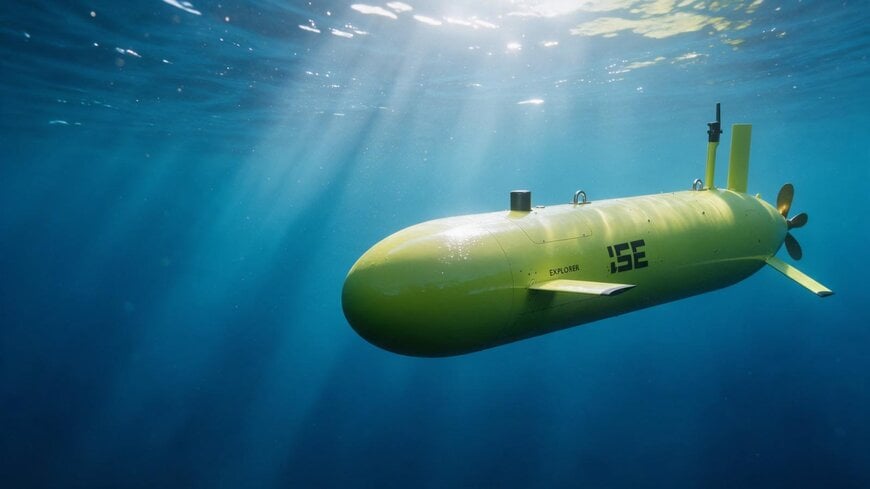
Elbit Systems is debuting its Unmanned Underwater Vehicle (UUV) capabilities at Euronaval 2026, marking a strategic expansion into the subsea domain. This development follows the company’s recent acquisition of Canada-based International Submarine Engineering Ltd. (ISE), a subsea robotics pioneer that has delivered over 250 autonomous and remotely operated vehicles to customers in more than 20 countries. By integrating ISE's subsea technologies into its existing maritime framework, Elbit Systems aims to deliver a holistic, multi-domain autonomous ecosystem. The new UUV platforms will be showcased alongside the company's combat-proven Seagull family of Unmanned Surface Vessels (USVs), offering naval forces coordinated operational architectures tailored for both surface and subsurface missions.
Manned-unmanned teaming and multi-domain operations
The newly integrated UUV portfolio focuses on modular Autonomous Underwater Vehicles (AUVs) engineered for complex missions, including anti-submarine warfare (ASW), mine countermeasures (MCM), seabed mapping, and the protection of critical maritime infrastructure. These systems are designed for long-endurance operations and can deploy a flexible array of mission-specific payloads, such as sonar and intelligence, surveillance, and reconnaissance (ISR) systems. According to Oren Sabag, General Manager of Elbit Systems ISTAR & EW, navies are increasingly seeking comprehensive autonomous solutions. By linking the UUVs with the Seagull USVs and advanced C4I networks, Elbit enables Manned-Unmanned Teaming (MUM-T), allowing human operators to seamlessly launch, recover, and manage autonomous formations across multiple domains from a single operational command center.
Additional Context: Acoustic communications and UUV autonomy
This section details underwater communication physics and autonomous decision-making not included in the original press release.
Integrating Unmanned Underwater Vehicles (UUVs) with Unmanned Surface Vessels (USVs) for coordinated fleet operations presents severe physical communication challenges. Unlike surface drones that rely on high-bandwidth Radio Frequency (RF) signals and satellite links for real-time telemetry, RF waves attenuate completely within a few meters underwater. To communicate, UUVs must rely on acoustic modems, which transmit data using sound waves. Acoustic communication is characterized by extreme latency, low bandwidth (often measured in kilobits per second), and susceptibility to multipath interference from the seabed and thermoclines. Because a submerged UUV cannot stream high-resolution sonar video back to a command center in real-time, the vehicle requires highly advanced onboard edge-computing and artificial intelligence. The UUV must autonomously process raw sensor data, identify threats (such as naval mines), and make navigation decisions entirely on its own, surfacing or raising an antenna only to transmit a compressed, critical data burst back to the USV or manned command ship.
Edited by an industrial journalist, Lekshman Ramdas, with AI assistance.
www.elbitsystems.com
