
www.aero-defence.tech
29
'26
Written on Modified on
Thales supplies deployable radar systems to Romanian Air Force
The mobile surveillance and precision approach systems will enhance operational resilience and NATO interoperability by 2030.
www.thalesgroup.com
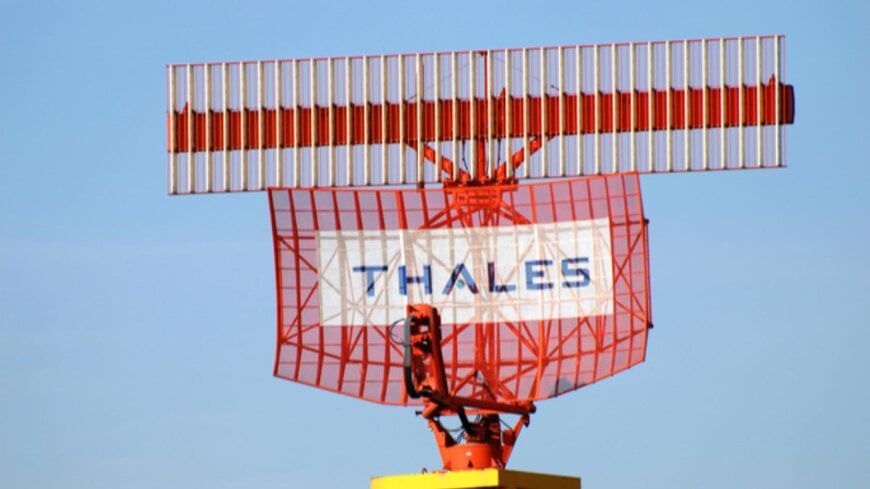
The Romanian Ministry of National Defence has selected Thales to provide four deployable Ground Controlled Approach Radar Systems for the Romanian Air Force. Scheduled for phased delivery by 2030, this multiannual agreement will equip four military locations with highly mobile technologies supporting both civil and military airspace surveillance, as well as critical approach and landing operations.
Operational resilience through mobile infrastructure
Traditional air traffic management relies heavily on static airbase infrastructure, which can become vulnerable or insufficient in contested environments. The new deployable systems are specifically engineered to allow the Romanian Air Force to rapidly relocate operations to alternative sites. By providing air traffic controllers with precise, real-time data on an aircraft's position relative to the runway centerline and glide path, these mobile units ensure that safe aircraft recovery and airspace management can continue uninterrupted, even in demanding operational scenarios or low-visibility weather conditions.
Advanced surveillance and NATO interoperability
The hardware architecture is anchored by the STAR NG, a scalable S-Band Primary Surveillance Radar that provides up to 60 nautical miles of coverage. This is integrated with the cybersecure RSM NG/IFF secondary radar, which combines EUROCONTROL Mode S, ADS-B detection, and encrypted NATO Mode 5 interrogation into a single unit. Alongside four dedicated Precision Approach Radars (PARs), the suite seamlessly streams critical tracking data to national and NATO command-and-control networks, bolstering situational awareness and defense capabilities along the alliance's eastern flank.
Additional Context: Precision Approach Radar (PAR) and Mode 5 IFF
This section details military radar tracking mechanics and cryptographic identification protocols not included in the original press release.
While civilian airports rely heavily on static Instrument Landing Systems (ILS) that emit continuous VHF/UHF radio beams for automated aircraft guidance, military expeditionary forces require highly mobile alternatives. A Precision Approach Radar (PAR) operates entirely independently of sophisticated onboard aircraft navigation receivers. It utilizes highly directional radar beams that rapidly scan both the horizontal (azimuth/localizer) and vertical (elevation/glide slope) axes to actively track the incoming aircraft. An air traffic controller analyzes this return and issues continuous verbal course corrections over a standard radio to "talk" the pilot down to the runway threshold. To secure the airspace during these operations, the integrated Identification Friend or Foe (IFF) system employs the modern NATO Mode 5 standard. Unlike legacy Mode 4 systems, Mode 5 utilizes time-varying cryptographic keys, spread-spectrum transmission, and lethal interrogation safeguards to securely authenticate friendly aircraft, rendering the identification signal highly resilient against electronic warfare spoofing, jamming, and signal interception.
Edited by an industrial journalist, Lekshman Ramdas, with AI assistance.
www.thalesgroup.com
