
www.aero-defence.tech
15
'26
Written on Modified on
Networked Air Defence Command and Control Integration
Airbus Defence and Space connects German and Swedish missile systems via the SAMOC software hub to solve multi-national air defense interoperability challenges.
www.airbus.com
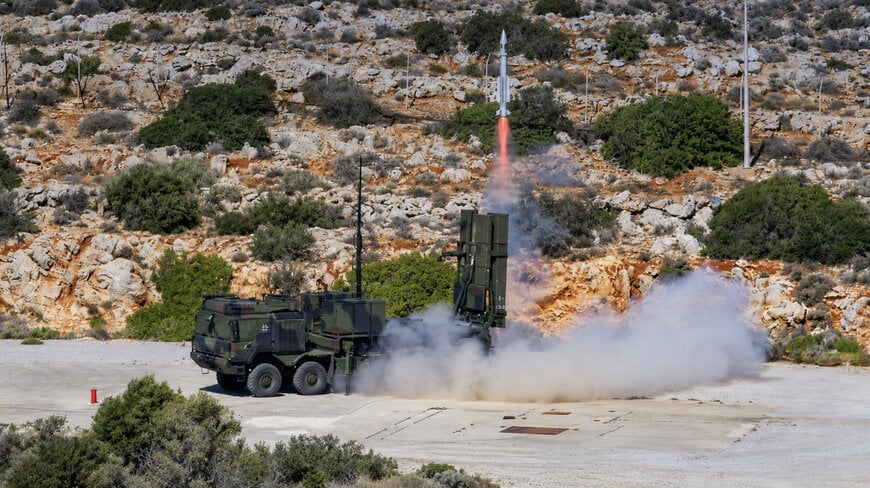
Defending modern airspace against simultaneous unmanned aerial vehicle and cruise missile threats requires unified data exchange across previously incompatible national defense architectures. In a joint operation between the German and Swedish armed forces, Airbus Defence and Space integrated multi-layered surface-to-air missile batteries into a single command network for the aerospace and defense sector.
Overcoming Fragmentation in Multi-Layered Air Defence Architectures
Modern military air defense relies on a combination of short-range, medium-range, and long-range effectors to counter diverse aerial threats ranging from low-flying drones to high-speed cruise missiles. Historically, operating these disparate systems across different national armed forces has created technical bottlenecks in target acquisition, sensor fusion, and fire distribution. Individual weapon platforms typically rely on proprietary radar protocols and isolated fire control loops, which delays response times and increases the risk of redundant engagements during high-density aerial attacks. Establishing a networked air defence command and control architecture is essential to link heterogeneous sensors and shooters into a continuous, synchronized operational picture.
During the NATO exercise SPARTAN ARROW 26 held in Chania, Crete, on 14 October 2026, Airbus Defence and Space demonstrated a technical solution to this interoperability challenge. Working alongside the German Air Force, the German Army, and the Swedish Air Force, the engineering team connected bi-national air defense hardware into a unified, real-time engagement network.
Operating Principles of the SAMOC Software Hub
At the core of the networked architecture is the German Surface to Air Missile Operations Centre (SAMOC) command post. Functioning as the central software hub for ground-based air defense coordination, SAMOC processes incoming sensor tracks, evaluates threat trajectories, and assigns engagement tasks to the appropriate weapon systems based on range, altitude, and interceptor availability.
For the first time in an operational environment, engineers linked both the German Air Force IRIS-T SLM medium-range air defense system and the Swedish Air Force PATRIOT long-range air defense system directly to the SAMOC software platform. To complete the multi-layered defense chain, Airbus also integrated the German Army Light Air Defence System (LeFlaSys), which provides short-range protection against unmanned aerial vehicles. By unifying these three tiers within a single digital command structure, the system coordinated long, medium, and short-distance engagements simultaneously under realistic electronic and kinetic conditions.
Andreas Reinecke, Head of Defence Digital and Cyber at Airbus Defence and Space, noted that effective air defense is the result of a seamlessly integrated overall capability rather than the performance of individual products. He added that from initial target acquisition to a precise hit, the command and control solution in Crete showed how smoothly the interaction works, with the SAMOC command post connecting individual weapon systems into a reliable, digital protective shield for Europe.
Real-World Validation and NATO Certification Workflows
The architectural integration during SPARTAN ARROW 26 served as a live-fire validation environment for both participating nations. Coordinated directly through the SAMOC network, an all-German crew executed the first live missile firing of the IRIS-T SLM system. Completing this live-fire engagement under networked command conditions fulfilled a mandatory technical prerequisite for official NATO certification of the German system.
Simultaneously, the Swedish Air Force executed its first independent PATRIOT live firing through the same networked command post. This operational milestone completed the NATO certification and validation process for the Swedish PATRIOT batteries while proving bi-national technical interoperability with German command infrastructure. Throughout the live engagements against drone and cruise missile targets, engineers recorded empirical system telemetry regarding network bandwidth utilization, end-to-end system response times, and electronic jam resistance. These operational datasets will be used directly to refine and standardize future NATO networked command and control capabilities.
Additional Context:
This section details technical specifications and competitive benchmarking not included in the original product announcement.
Independent technical documentation from Airbus Defence and Space identifies the command post software as Fortion SAMOC, a Battle Management Command, Control, Communications, Computers, and Intelligence (BMC4I) system designed for strategic and tactical coordination of Ground-Based Air Defence (GBAD) and Ballistic Missile Defence (BMD). The system achieves multi-national interoperability by utilizing NATO-standardized Tactical Data Links (such as Link 16 and JREAP) and standardized military message handling protocols. Fortion SAMOC incorporates reachback functionality that separates the Rear Command Element (RCE) from the Forward Command Element (FCE), reducing the physical footprint of forward-deployed personnel while maintaining full airspace situational awareness.
Regarding the connected effector specifications, manufacturer data from Diehl Defence specifies that the medium-range IRIS-T SLM system utilizes a Hensoldt TRML-4D active electronically scanned array (AESA) radar and the Airbus Fortion IBMS-FC fire control software to achieve an effective interception range of up to 60 kilometers and an altitude ceiling of 20 kilometers. The short-range German Army LeFlaSys (Ozelot) platform utilizes infrared-guided Stinger missiles for very short-range air defense (VSHORAD) at ranges up to 6 kilometers, while the Raytheon PATRIOT system handles long-range aircraft, cruise missile, and tactical ballistic missile threats at ranges exceeding 70 to 160 kilometers depending on the interceptor variant.
In the defense industry, the drive toward multi-national air defense integration is heavily influenced by the European Sky Shield Initiative (ESSI) and NATO Integrated Air and Missile Defence (IAMD) standards, which mandate seamless plug-and-fight capabilities across allied borders. The primary industry benchmark comparable to the Airbus Fortion SAMOC architecture is the Integrated Battle Command System (IBCS) developed by Northrop Grumman for the United States Army and the Polish Armed Forces. While Fortion SAMOC primarily operates at the brigade, division, and theater coordination levels to allocate fires across complete weapon fire units via standardized NATO data links, Northrop Grumman IBCS replaces legacy proprietary fire control vans (such as the Patriot Engagement Control Station) at the tactical battery level, fusing raw radar track data to pair any individual sensor with any individual launcher. Both systems represent the broader military transition away from isolated, single-vendor missile batteries toward modular, network-centric air defense ecosystems.
Edited by Sucithra Mani, Induportals editor – adapted by AI.
www.airbus.com
