
www.aero-defence.tech
14
'26
Written on Modified on
Airbus & Unseenlabs Win Contract for France’s Next SIGINT Satellites
CASSIOPÉE will replace CERES by 2032, combining Airbus satellite systems with Unseenlabs processing and payload expertise for sovereign space-based intelligence.
www.airbus.com
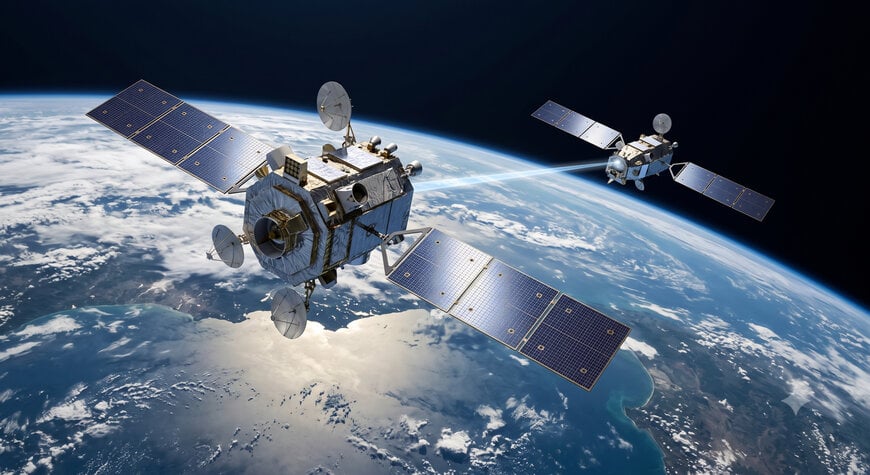
AI Generated Image
Airbus Defence and Space and Unseenlabs have partnered under the CASSIOPÉE programme to develop and deploy an orbital signals intelligence system for the French Directorate-General for Armament. This cooperation combines established space systems engineering with agile processing architectures to renew sovereign space-based electromagnetic monitoring capabilities for national defence operations.
Operational Context and Strategic Challenges
The programme addresses the operational requirement to detect, characterise, and geolocate electromagnetic emissions from radar and telecommunications transmitters across strategic theatres. Maintaining continuous space-based situational awareness requires persistent collection capabilities, high data throughput, and low-latency orbital processing to support tactical and strategic assessment. Cooperation between an established aerospace integrator and a specialised New Space firm resolves the challenge of integrating advanced, compact radiofrequency sensors into an industrialised satellite platform.
Technical Architecture and Industrial Division
Airbus Defence and Space serves as the prime contractor and overall system integrator. The company provides the primary space segment based on its modular S250 satellite platform, previously deployed on the CO3D optical Earth-observation constellation. In addition, Airbus is responsible for integrating the primary satellite control centre and core ground segment architecture.
Unseenlabs provides dedicated radiofrequency detection payloads alongside advanced processing subsystems. Its scope includes mission planning software, on-board data processing units, and integrated ground exploitation segments. The distributed payload architecture is designed to capture electromagnetic emissions, extract signal parameters in orbit, and downscale raw data volumes prior to ground transmission, thereby enhancing system responsiveness.
System Integration and Replacement Schedule
CASSIOPÉE forms the foundational space segment of the overarching CELESTE electromagnetic capability programme. The constellation is scheduled for operational deployment by 2032, directly succeeding the operational CERES satellite constellation. Technical interfaces between the S250 bus and the Unseenlabs payload are configured to support expanded electromagnetic bandwidth coverage, higher operational revisit rates, and seamless interoperability with French military command and control infrastructure.
Applications and Operational Impact
The constellation will serve sovereign defence and strategic surveillance missions, providing continuous monitoring over contested operational sectors. The integration of advanced processing algorithms into the space segment reduces downlink latency, delivering accelerated intelligence cycles for situation assessment. The architectural upgrades over legacy CERES platforms ensure operational continuity, heightened geolocation accuracy for active electromagnetic emitters, and structural independence in orbital electronic intelligence gathering.
Edited by Natania Lyngdoh, Induportals editor, assisted by AI.
www.airbus.com
Airbus Defence and Space and Unseenlabs have partnered under the CASSIOPÉE programme to develop and deploy an orbital signals intelligence system for the French Directorate-General for Armament. This cooperation combines established space systems engineering with agile processing architectures to renew sovereign space-based electromagnetic monitoring capabilities for national defence operations.
Operational Context and Strategic Challenges
The programme addresses the operational requirement to detect, characterise, and geolocate electromagnetic emissions from radar and telecommunications transmitters across strategic theatres. Maintaining continuous space-based situational awareness requires persistent collection capabilities, high data throughput, and low-latency orbital processing to support tactical and strategic assessment. Cooperation between an established aerospace integrator and a specialised New Space firm resolves the challenge of integrating advanced, compact radiofrequency sensors into an industrialised satellite platform.
Technical Architecture and Industrial Division
Airbus Defence and Space serves as the prime contractor and overall system integrator. The company provides the primary space segment based on its modular S250 satellite platform, previously deployed on the CO3D optical Earth-observation constellation. In addition, Airbus is responsible for integrating the primary satellite control centre and core ground segment architecture.
Unseenlabs provides dedicated radiofrequency detection payloads alongside advanced processing subsystems. Its scope includes mission planning software, on-board data processing units, and integrated ground exploitation segments. The distributed payload architecture is designed to capture electromagnetic emissions, extract signal parameters in orbit, and downscale raw data volumes prior to ground transmission, thereby enhancing system responsiveness.
System Integration and Replacement Schedule
CASSIOPÉE forms the foundational space segment of the overarching CELESTE electromagnetic capability programme. The constellation is scheduled for operational deployment by 2032, directly succeeding the operational CERES satellite constellation. Technical interfaces between the S250 bus and the Unseenlabs payload are configured to support expanded electromagnetic bandwidth coverage, higher operational revisit rates, and seamless interoperability with French military command and control infrastructure.
Applications and Operational Impact
The constellation will serve sovereign defence and strategic surveillance missions, providing continuous monitoring over contested operational sectors. The integration of advanced processing algorithms into the space segment reduces downlink latency, delivering accelerated intelligence cycles for situation assessment. The architectural upgrades over legacy CERES platforms ensure operational continuity, heightened geolocation accuracy for active electromagnetic emitters, and structural independence in orbital electronic intelligence gathering.
Edited by Natania Lyngdoh, Induportals editor, assisted by AI.
www.airbus.com
