
www.aero-defence.tech
13
'26
Written on Modified on
Unmanned Aircraft System Modernization for Defense Operations
General Atomics Aeronautical Systems partnered with the Arizona Army National Guard to integrate Gray Eagle 25M aircraft into divisional aviation operations.
www.ga.com
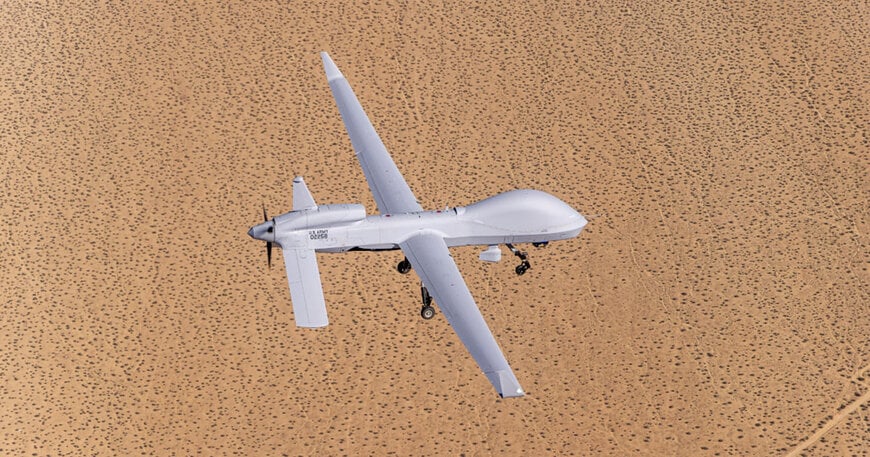
General Atomics Aeronautical Systems finalized delivery plans with the Arizona Army National Guard to supply eight Gray Eagle 25M unmanned aircraft systems for operational deployment in defense and domestic emergency management. The program establishes the initial divisional aviation unit integration ahead of wider deployment across National Guard divisions.
Operational Integration and Organizational Roles
The operational framework pairs General Atomics Aeronautical Systems as the primary system developer with the Arizona Army National Guard, operating within the 40th Infantry Division, as the deployment and operational authority. The partnership addresses the requirement for organic aerial reconnaissance, surveillance, and target acquisition at the divisional command level without exposing flight personnel to operational hazards. National Guard forces require expeditionary remote-sensing platforms compatible with standard military communication networks, enabling long-endurance data collection for cross-domain missions.
Technical System Architecture and Specifications
The Gray Eagle 25M is an upgraded iteration of the extended-range unmanned platform engineered for expeditionary operational profiles. The system architecture incorporates an open-system framework allowing dynamic payload integration, including synthetic-aperture multi-mode radar, electro-optical and infrared sensors, and launched effects. The design delivers a flight endurance threshold of nearly 40 hours, supporting long-range detection while operating beyond threat engagement zones. Automated takeoff and landing systems govern flight transitions to maintain flight stability and minimize human pilot workload.
According to Patrick Shortsleeve, Vice President of Strategic Development at General Atomics Aeronautical Systems the platform operates with automatic takeoff and landing capability to act as an enabler for intelligence and network operations, utilizing operational autonomy alongside manned rotary-wing assets.
Fielding Phases and Deployment Timelines
Initial unit delivery of eight aircraft is scheduled for September 2027 within Arizona. This deployment serves as the foundation for the Army National Guard target objective to establish eight divisional unmanned aviation companies. Congress has funded three unit acquisitions under current procurement contracts, with four additional operating units scheduled for deployment through 2029.
Tactical Use Cases and Operational Impact
The integration of divisional unmanned platforms standardizes tactical reconnaissance, surveillance, and target acquisition capabilities across terrestrial, maritime, and homeland response operations. Operating with secure line-of-sight and satellite data links, the platform functions as an aerial communications node supporting joint combat coordination and domestic disaster mitigation. The integration of high-resolution radar and autonomous flight management ensures persistent sensor coverage, direct command-level targeting dissemination, and survivability across high-risk operating environments.
Edited by Evgeny Churilov, Induportals Media - Adapted by AI.
www.ga.com
