
www.aero-defence.tech
13
'26
Written on Modified on
Next-Generation Combat Vehicles & Autonomous Systems for Ground Defense
American Rheinmetall exhibits modernized combat vehicles, tactical autonomy, mobile air defense, and robotics for defense modernization programs.
www.rheinmetall.com
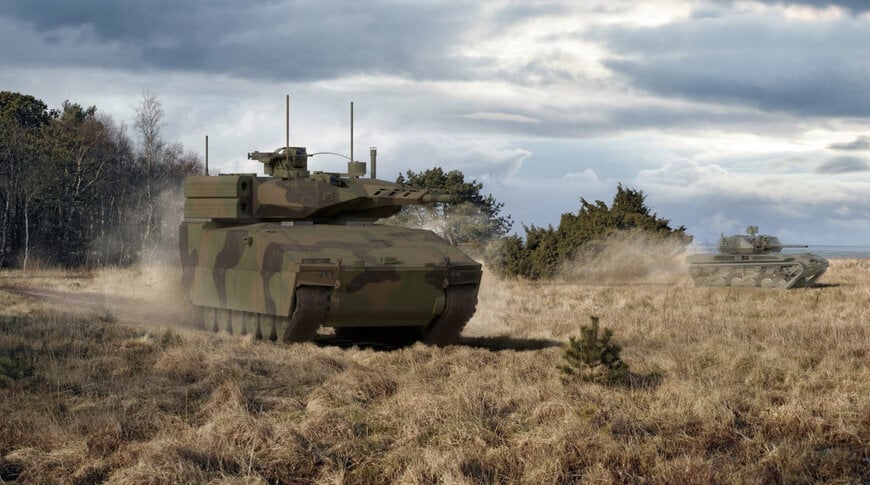
Ground combat forces face contested multi-domain battlefields characterized by pervasive uncrewed aerial threats, electronic warfare, and decentralized operational logistics that strain conventional mechanical equipment. To address these operational requirements, American Rheinmetall, the domestic operating arm of Rheinmetall, presented a suite of next-generation combat systems, tactical automation platforms, and short-range air defense technologies tailored for modern defense modernization priorities.
Modern Ground Warfare Dynamics and Open Systems Architecture
Tactical formations operating in peer and near-peer combat environments require accelerated vehicle modernization to maintain survivability and tactical lethality. Legacy mechanized platforms frequently encounter size, weight, power, and cooling limitations that impede the integration of modern sensor suites, counter-uncrewed aerial systems, and automated mission command systems.
Addressing these operational constraints requires vehicle designs governed by modular open systems approaches. This architectural shift enables continuous technology insertion, permitting defense forces to modernize sub-components, software payloads, and counter-threat effectors without engineering full hull replacements.
Next-Generation Armored Vehicles and Mobile Short-Range Air Defense
A central element of tactical modernization is the Lynx XM30 combat vehicle, developed as a primary prototype solution for mechanized infantry combat vehicle requirements. Engineered around an open, modular computing and mechanical architecture, the platform accommodates evolving electronic architecture, advanced protection systems, and high-bandwidth datalinks for collaborative air-ground littoral operations. American Rheinmetall is delivering working prototype configurations to defense authorities for comprehensive mobility, protection, and operational evaluations.
To counter low-altitude aerial threats and loitering munitions that threaten armored columns, the portfolio integrates mobile air defense using the Boxer 8x8 wheeled vehicle paired with the Skyranger 30mm turret. The mobile short-range air defense system incorporates an autonomous engagement pipeline and blended effector suite, pairing medium-caliber programmable airburst munitions with secondary missile options to safeguard maneuver formations against hostile uncrewed aerial systems.
Autonomous Logistics and Tactical Uncrewed Ground Vehicles
Logistics survivability and squad-level support are addressed through tactical wheeled vehicles and dedicated robotic platforms:
- The HX truck platform incorporates an autonomous kit configured for the Common Autonomous Multipurpose Launcher mission profile. Proven through demonstration trials at Redstone Arsenal in June 2026, the vehicle provides crewed or uncrewed autonomous load and unload sequences, convoy waypoint tracking, and teleoperation on a baseline with more than 20,000 units fielded internationally.
- The Ox uncrewed ground vehicle provides quiet tactical movement for platoon-level casualty evacuation, resupply, electronic warfare, and counter-drone payloads, participating in ground mobility evaluation trials.
- The hybrid-electric MUSKOX platform pairs artificial intelligence drive controls with hybrid power distribution for medium-class logistics and sustainment operations.
- The Mission Master SP amphibious unmanned ground vehicle delivers automated resupply across contested last-tactical-mile routes, compatible with standard cargo transport aircraft.
- The Wild Goose dismounted infantry robotic carrier delivers a 330-pound payload capacity and an operational range up to 25 kilometers, designed for immediate field configuration.
Extended-Range Munitions and Manufacturing Infrastructure
Tactical lethality developments presented include 155mm extended-range propellants, velocity-enhanced artillery projectiles, programmable airburst rounds, and the shoulder-fired, magazine-loaded 40mm automatic squad rifle. Industrial integration also encompasses high-precision armored cabs for multiple-launch rocket systems, supported by domestic manufacturing facilities located in Arkansas, Maine, Michigan, Ohio, Texas, and Virginia that employ more than 1,500 personnel.
The technical displays, including panel presentations covering XM30 design paradigms and crew-centric integration, took place at the Association of the United States Army Annual Meeting and Exposition, held in Washington, D.C., from 12 to 14 October 2026.
Additional Context:
This section details technical specifications and competitive benchmarking not included in the original product announcement.
The industrial competition surrounding mechanized infantry modernization is defined by the United States Army XM30 Mechanized Infantry Combat Vehicle program, previously designated as the Optionally Manned Fighting Vehicle, intended to replace the long-serving Bradley Fighting Vehicle baseline originally fielded in the 1980s. In the current engineering and manufacturing development phase, American Rheinmetall Team Lynx—partnered with Textron Systems, Raytheon, L3Harris Technologies, and Allison Transmission—competes directly against General Dynamics Land Systems.
A primary benchmark differentiator between the competing vehicle designs centers on open vehicle architecture. Both competitors are bound by the Department of Defense Modular Open Systems Approach and Ground Combat System Common Infrastructure Architecture standards, mandating non-proprietary electronic interfaces that decouple hardware from software updates.
In the short-range air defense segment, mobile platforms such as the Boxer Skyranger 30 address a critical air defense gap highlighted by contemporary conflicts. While existing military units rely heavily on the Stryker-based Maneuver Short-Range Air Defense platform armed with AGM-114L Hellfire missiles, Stinger missiles, and 30mm M230LF chain guns, the Skyranger 30 architecture utilizes 30mm x 173 caliber programmable airburst ammunition (AHEAD technology). This programmable kinetic fragmentation approach provides a lower cost-per-kill metric compared to guided surface-to-air missiles when engaging high-density swarms of Class 1 and Class 2 uncrewed aerial systems.
Edited by Natania Lyngdoh, Induportals editor, with AI assistance.
www.rheinmetall.com
Tactical lethality developments presented include 155mm extended-range propellants, velocity-enhanced artillery projectiles, programmable airburst rounds, and the shoulder-fired, magazine-loaded 40mm automatic squad rifle. Industrial integration also encompasses high-precision armored cabs for multiple-launch rocket systems, supported by domestic manufacturing facilities located in Arkansas, Maine, Michigan, Ohio, Texas, and Virginia that employ more than 1,500 personnel.
The technical displays, including panel presentations covering XM30 design paradigms and crew-centric integration, took place at the Association of the United States Army Annual Meeting and Exposition, held in Washington, D.C., from 12 to 14 October 2026.
Additional Context:
This section details technical specifications and competitive benchmarking not included in the original product announcement.
The industrial competition surrounding mechanized infantry modernization is defined by the United States Army XM30 Mechanized Infantry Combat Vehicle program, previously designated as the Optionally Manned Fighting Vehicle, intended to replace the long-serving Bradley Fighting Vehicle baseline originally fielded in the 1980s. In the current engineering and manufacturing development phase, American Rheinmetall Team Lynx—partnered with Textron Systems, Raytheon, L3Harris Technologies, and Allison Transmission—competes directly against General Dynamics Land Systems.
A primary benchmark differentiator between the competing vehicle designs centers on open vehicle architecture. Both competitors are bound by the Department of Defense Modular Open Systems Approach and Ground Combat System Common Infrastructure Architecture standards, mandating non-proprietary electronic interfaces that decouple hardware from software updates.
In the short-range air defense segment, mobile platforms such as the Boxer Skyranger 30 address a critical air defense gap highlighted by contemporary conflicts. While existing military units rely heavily on the Stryker-based Maneuver Short-Range Air Defense platform armed with AGM-114L Hellfire missiles, Stinger missiles, and 30mm M230LF chain guns, the Skyranger 30 architecture utilizes 30mm x 173 caliber programmable airburst ammunition (AHEAD technology). This programmable kinetic fragmentation approach provides a lower cost-per-kill metric compared to guided surface-to-air missiles when engaging high-density swarms of Class 1 and Class 2 uncrewed aerial systems.
Edited by Natania Lyngdoh, Induportals editor, with AI assistance.
www.rheinmetall.com
