
www.aero-defence.tech
21
'26
Written on Modified on
Earth Observation Architecture for European Security Infrastructure
Leonardo leads an industrial consortium to define operational frameworks and digital infrastructure for European governmental Earth observation services.
www.leonardo.com
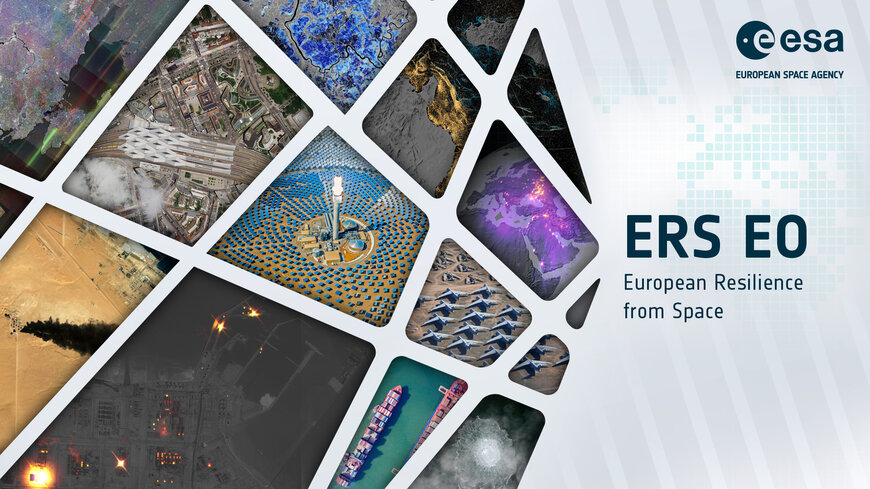
Leonardo has partnered with European aerospace organizations under a European Space Agency study contract to define the system architecture for the European Union Earth Observation Governmental Service. The initiative addresses autonomous operational decision-making in security and defense applications across member states.
Industrial Cooperation and Operational Scope
The study addresses the operational need to integrate fragmented Earth observation systems across institutional, commercial, and national domains. Due to the scale and technical complexity of continental monitoring, Leonardo coordinates an industrial consortium spanning seven nations: Italy, France, Germany, Spain, Luxembourg, Portugal, and Poland.
Core technical capabilities are provided through the Space Alliance joint ventures — Telespazio and Thales Alenia Space — alongside e-GEOS. Partner organizations including OHB, GAF, HiTec, Alioth, CEiiA, Argotec, Satlantis, KP Labs, AIKO, and SITAEL contribute specialized expertise across orbital systems, flight software, and sensor design.
Technical Architecture and Allocation of Responsibilities
The consortium is designing a federated end-to-end digital infrastructure covering four operational tiers:
- Space Segment: Spacecraft, optical sensors, and synthetic aperture radar payloads, incorporating existing dual-use constellations.
- Ground Segment: Uplink, downlink, and distributed telemetry tracking and command stations.
- Data Processing: High-performance data pipelines, gap-analysis algorithms, and multi-source data fusion engines.
- Service Delivery: Secure operational interfaces delivering geoinformation to authorized defense and governmental users.
Leonardo and its partners evaluate proposed architectural options against operational benchmarks: system latency, structural resilience against disruptions, sensor responsiveness, and lifecycle cost. The framework incorporates parallel technical activities from the European Resilience from Space for Earth Observation initiative to federate existing national and private assets into a standardized network.
System Integration and Implementation
Implementation begins with an evaluation of current defense user requirements followed by a technical gap analysis of European orbital and ground assets. Subsequent phases define interoperability interfaces that allow heterogeneous sovereign satellites to process tasking requests and return georeferenced intelligence. By federating disparate platforms rather than deploying isolated systems, the architecture ensures continuous data availability, operational redundancy, and secure dissemination for governmental decision-makers.
Edited by Evgeny Churilov, Induportals Media - Adapted by AI.
www.leonardo.com
System Integration and Implementation
Implementation begins with an evaluation of current defense user requirements followed by a technical gap analysis of European orbital and ground assets. Subsequent phases define interoperability interfaces that allow heterogeneous sovereign satellites to process tasking requests and return georeferenced intelligence. By federating disparate platforms rather than deploying isolated systems, the architecture ensures continuous data availability, operational redundancy, and secure dissemination for governmental decision-makers.
Edited by Evgeny Churilov, Induportals Media - Adapted by AI.
www.leonardo.com
