
www.aero-defence.tech
11
'26
Written on Modified on
Satellite Navigation Ground Segment Modernization Under New Defense Contracts
Lockheed Martin advances global satellite navigation resiliency by upgrading critical ground control architecture under new military agreements.
www.lockheedmartin.com
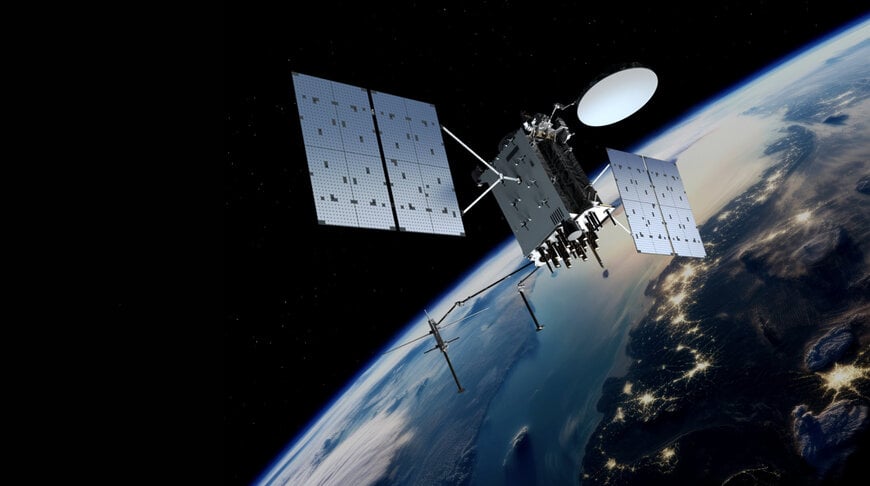
Lockheed Martin continues the development, production, and sustainment of the Global Positioning System space and control infrastructure. Through two recent agreements, the company is executing technical upgrades to ground station software, hardware, and operational management protocols to support both legacy and next-generation navigation satellites.
The United States Space Force awarded two task orders valued at a combined 114 million dollars to execute comprehensive ground segment modifications. This technical effort addresses the operational ground architecture required to integrate the upcoming GPS IIIF constellation while upgrading core computing platforms. The primary application areas span high-security defense navigation, global aerospace operations, commercial maritime transport, financial transaction timestamping, telecommunications network synchronization, and municipal utility infrastructure.
Contingency Ground Control Payload Integration
The first task order, valued at 96 million dollars, funds engineering work on the GPS IIIF Contingency Operations System. This program modifies the active ground control software baseline to directly interface with and command the fully digital navigation payloads aboard upcoming GPS IIIF space vehicles.
This technical capability ensures that as the Space Force fields the new satellite block, ground operators can manage telemetry, execute flight maneuvers, and distribute operational navigation messages without requiring an entirely new control enterprise to reach full operational readiness. The upgrade ensures continuous military M-Code broadcast management, which relies on high-power, directional, anti-jamming spot beams designed to operate in electronic warfare environments. By securing signal transmission in contested regions, the system maintains accurate positioning, navigation, and timing for defense forces while safeguarding civilian signals across the L1, L2, and L5 frequencies.
Architecture Evolution Plan Computing Refresh
The second award provides 17.5 million dollars for Phase 1 of the Architecture Evolution Plan x86 modernization program. The Architecture Evolution Plan serves as the core operational software environment controlling the existing operational constellation from master control facilities.
Phase 1 initiates a three-stage architectural overhaul that migrates legacy hardware components to modern x86 microprocessor computing platforms. This transition introduces modular software packaging, decoupled system layers, and modernized commercial processing hardware to reduce system latency, simplify security patch implementation, and improve mean time between failures across ground antenna networks and monitoring stations.
Sustainment History and Space Vehicle Production Context
The task orders extend long-term sustainment operations under the GPS Control Segment Sustainment II contract vehicle. In April 2026, the company secured a separate 105 million dollar contract for the Contingency Launch Operations System, which provides specialized telemetry tracking, early orbit insertion, and end-of-life disposal protocols specifically tailored to the GPS IIIF baseline.
The ground modifications align directly with the transition of the space segment. Following the launch of the tenth and final GPS III space vehicle from Cape Canaveral Space Force Station, Florida, in April 2026, production shifted entirely to the GPS IIIF configuration. Space vehicles built under the IIIF standard incorporate the LM2100 Combat Bus, introducing a fully digital navigation payload that yields sixty-three times greater anti-jamming resistance compared to legacy Block II models, integrated laser retroreflector arrays for high-accuracy laser ranging, and unified S-band tracking capabilities.
The ground segment adaptations ensure that these orbital enhancements translate directly to operational performance on Earth without interruption to critical digital supply chain networks or industrial timing infrastructure.
Additional Context:
This section details technical specifications and competitive benchmarking not included in the original product announcement
The Architecture Evolution Plan operated by Lockheed Martin functions as the operational baseline for satellite command and control, serving alongside the parallel development of the Next Generation Operational Control System, developed by RTX Corporation.
Architecture Evolution Plan maintains operational command over active GPS constellations through iterative COTS computing migrations, including the x86 hardware transition. In contrast, the Next Generation Operational Control System was architected as a clean-sheet framework featuring cyber-hardened, service-oriented software partitioned across Block 0 for launch checkout, Block 1 for comprehensive satellite operations, Block 2 for advanced M-Code cryptography, and Block 3F for full GPS IIIF operational tasking.
While the Next Generation Operational Control System was specified to deliver automated constellation health management and Department of Defense Risk Management Framework cybersecurity compliance from inception, technical complexities delayed its operational field deployment. Consequently, the Space Force maintains and modernizes the Architecture Evolution Plan with contingency capabilities to bridge technical requirements, using targeted task orders to match modern satellite bus interfaces, ensure operational continuity, and support high-grade cryptographic key distribution across defense networks.
Edited by Natania Lyngdoh, Induportals editor, assisted by AI.
www.lockheedmartin.com
