
www.aero-defence.tech
10
'26
Written on Modified on
Engineering reliable power transmission for the marine industry
Regal Rexnord combines specialist engineering expertise and a portfolio of trusted power transmission brands to deliver reliable, long-term performance for demanding marine propulsion and auxiliary power systems.
www.regalrexnord.com
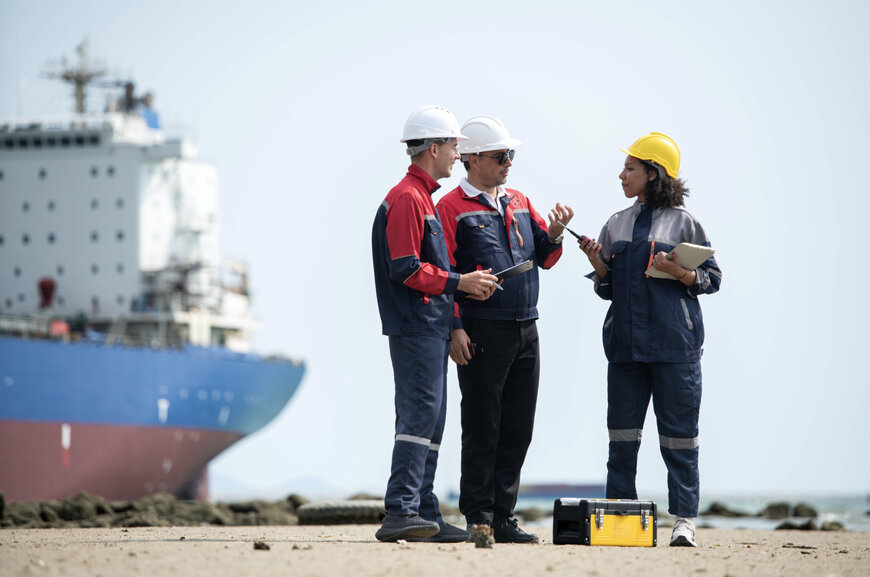
The operation of marine propulsion and auxiliary power systems in harsh industrial environments places significant demands on drivetrain components due to high torque, continuous operation, vibration, shock loading, and restricted installation spaces. Regal Rexnord addresses these challenges by integrating decades of engineering expertise with trusted power transmission brands to develop comprehensive system solutions. This technical initiative focuses on mitigating torsional vibration, managing drivetrain dynamics, and ensuring long-term operational reliability across marine applications.
Technical Solution and Responsibilities
The system architecture relies on an integrated approach to drivetrain dynamics, moving beyond isolated component selection to evaluate complete systems. Regal Rexnord's CENTA and Jaure brands execute torsional vibration analysis (TVA) during the design phase to predict torsional stresses, thermal loads, and dynamic behavior across connected equipment.
The division of responsibilities encompasses the engineering and supply of flexible and torsional couplings, thin-wall steel tube or ultra-lightweight carbon-fiber wound intermediate shafts, intermediate bearings, braking systems, clutches, and bulkhead seals. The broader portfolio incorporates specialist technologies from Stromag, Svendborg Brakes, Twiflex, Wichita Clutch, and Nicotra Gebhardt. Engineers customize individual components to match exact vessel requirements regarding torque, speed, space constraints, and load conditions.
Deployment and Implementation
Implementation involves configuring complete intermediate driveshaft solutions that link the main engine and gearbox according to specific vessel geometry. Engineering teams conduct analyses on both new designs and systems already operating in the field to identify potential vibration sources and optimize maintenance decisions. This configuration process aligns component selection with installation constraints and operational profiles.
Applications and Operational Impact
Target applications encompass marine propulsion, auxiliary power generation, and above- and below-deck systems operating under severe conditions. Concrete use cases involve dampening torsional vibrations in high-torque drivetrains, transmitting power within constrained machinery spaces, and protecting critical connected equipment against premature fatigue.
The operational benefits include reduced maintenance requirements, protection of downstream equipment against destructive resonance, extended service life, and lower total cost of ownership over the lifetime of the vessel.
Edited by Sucithra Mani, Induportals editor – adapted by AI.
www.regalrexnord.com
