
www.aero-defence.tech
04
'26
Written on Modified on
Optomechanical Systems Integration for Orbital Astrophysics Survey Instrumentation
BAE Systems developed the structural and thermal optomechanical platform for NASA to enable wide-field optical survey capabilities in orbital astrophysics.
www.baesystems.com
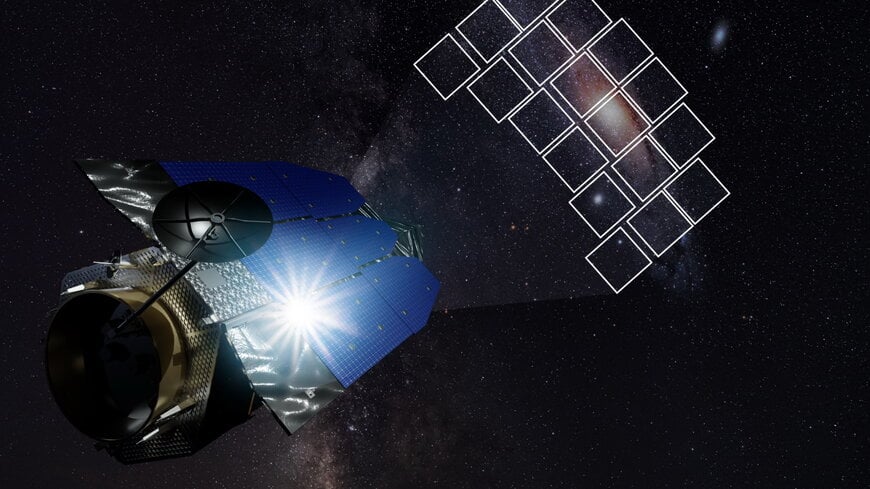
BAE Systems and NASA collaborated on the development and deployment of the Wide Field Instrument for the Nancy Grace Roman Space Telescope, deployed from the Kennedy Space Center. The cooperation delivers wide-field infrared imaging instrumentation engineered for large-scale astrophysical surveys and exoplanetary demographic research.
Inter-Agency Technical Collaboration
Orbital survey observatories require structural platforms capable of isolating sensitive scientific sensors from mechanical displacement and thermal drift. NASA managed overall observatory architecture and mission parameters, while BAE Systems was contracted to engineer, fabricate, and validate the Opto-Mechanical Assembly, the foundational core of the primary Wide Field Instrument. Cooperative integration was required due to the tight mechanical tolerances, multi-sensor alignment needs, and multi-domain engineering required for orbital instrumentation.
Opto-Mechanical Architecture and Functional Division
The Opto-Mechanical Assembly establishes the operational environment necessary for the Wide Field Instrument to maintain optical alignment during mission operations. Within this division of responsibility, BAE Systems engineered:
- An optical bench designed to maintain rigid spatial alignment among internal mirror and sensor elements.
- An active and passive thermal control system engineered to mitigate thermal expansion gradients across orbital eclipse transitions.
- Precision mechanical actuation systems, optical elements, and control electronics.
- Assembly-level integration and structural validation testing prior to flight handover.
This optomechanical subsystem isolates the instrument's focal plane and optics from dynamic platform vibrations, preserving focus stability across wide survey passes.
Operational Application and Performance Metrics
The assembly supports an optical architecture that expands survey throughput compared to prior space-based observatories.
Operational Application and Performance Metrics
The assembly supports an optical architecture that expands survey throughput compared to prior space-based observatories.
- The Wide Field Instrument provides an optical field of view at least 100 times greater than that of the Hubble Space Telescope.
- The expanded field of view enables sky survey rates up to 1,000 times faster, facilitating large-scale statistical data collection across billions of cosmic objects.
- Primary applications include mapping galactic structural dynamics and identifying exoplanetary candidates through gravitational microlensing and transit observations.
Long-Term System Scalability
Technical methodologies established during the fabrication and integration of the Roman Space Telescope inform subsequent development programs. BAE Systems is applying structural stabilization frameworks derived from these flight programs to the early-stage engineering of NASA's Habitable Worlds Observatory concept. Under the Ultra-Stable Large Telescope Research and Analysis initiative, engineering teams are developing mirror actuation mechanisms capable of picometer-level positioning adjustments to meet the optical wave-front stability parameters required for direct exoplanet imaging.
Edited by Evgeny Churilov, Induportals Media - Adapted by AI.
www.baesystems.com
Technical methodologies established during the fabrication and integration of the Roman Space Telescope inform subsequent development programs. BAE Systems is applying structural stabilization frameworks derived from these flight programs to the early-stage engineering of NASA's Habitable Worlds Observatory concept. Under the Ultra-Stable Large Telescope Research and Analysis initiative, engineering teams are developing mirror actuation mechanisms capable of picometer-level positioning adjustments to meet the optical wave-front stability parameters required for direct exoplanet imaging.
Edited by Evgeny Churilov, Induportals Media - Adapted by AI.
www.baesystems.com
