
www.aero-defence.tech
02
'26
Written on Modified on
High-Sensitivity Camera Electronics for Deep Space Optical Systems
ABB and Nüvü Camēras developed radiation-hardened camera readout electronics to support starlight suppression and exoplanet imaging for astronomical instrumentation.
global.abb
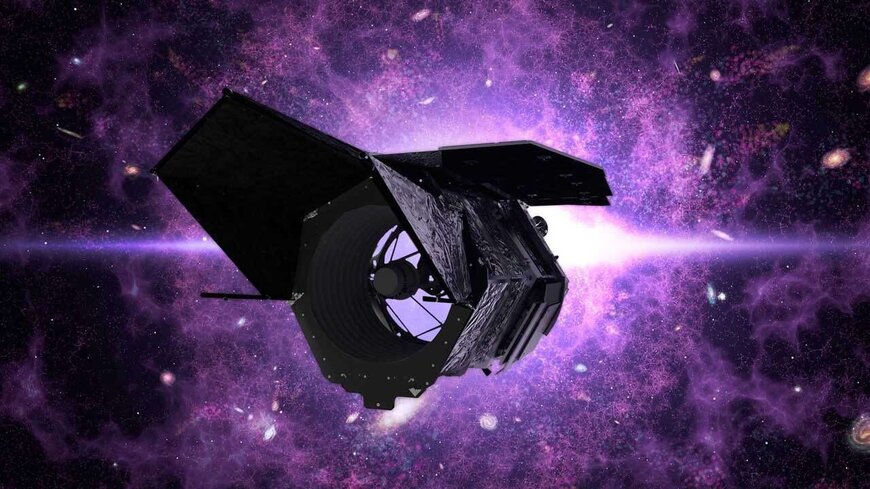
ABB and Nüvü Camēras collaborated to engineer and manufacture high-sensitivity camera electronics integrated into the Roman Coronagraph Instrument aboard the Nancy Grace Roman Space Telescope. Deployed for space science and advanced optical instrumentation, the system provides high-contrast imaging to detect low-intensity optical signals in direct proximity to high-luminosity stellar sources.
Operational Challenges and Collaboration Rationale
Exoplanet direct imaging requires resolving light from celestial bodies that are orders of magnitude dimmer than their host stars. This contrast differential necessitates advanced starlight suppression combined with high-sensitivity detection.
Because the observatory is situated at the Sun-Earth Lagrange point L2 — approximately 1.5 million kilometers from Earth — servicing missions are not feasible. This operational environment requires high system reliability, thermal stability under cryogenic conditions, and resilience against deep-space cosmic radiation. To address these constraints, the engineering consortium combined ABB’s systems engineering and space qualification expertise with Nüvü Camēras’ low-noise sensor and imaging architectures.
Technical Architecture and Partitioning of Responsibilities
Under a development framework supported by the Canadian Space Agency and awarded via NASA’s Jet Propulsion Laboratory, the partners partitioned system responsibilities:
- Sensor Electronics Architecture: Nüvü Camēras contributed the core high-sensitivity imaging technology designed to detect faint photon fluxes.
- System Hardening and Packaging: ABB packaged the readout electronics into a compact module comparable in size to a standard shoebox. The assembly integrates space-qualified components rated for ionising radiation and thermal variations.
- Instrument Integration: The camera electronics interface with the Roman Coronagraph Instrument, processing signals where physical masks and deformable mirrors attenuate primary starlight before photons reach the detector.
The resulting electronics system enables the coronagraph to achieve high-contrast performance projected to be 100 to 1000 times more sensitive to planetary signatures than prior orbital coronagraph architectures.
Deployment and Implementation
The electronics package launched as a primary subsystem on August 30, 2026. The observatory operates in an unserviced halo orbit around Lagrange point L2, an orbital geometry that maintains fixed relative angles between the Sun and Earth to mitigate stray-light interference. Signals captured by the cameras feed processing pipelines that evaluate planetary atmospheres and debris disks, serving as a technical precursor for the instrumentation planned for the Habitable Worlds Observatory.
Edited by Evgeny Churilov, Induportals Media - Adapted by AI.
www.abb.com
Deployment and Implementation
The electronics package launched as a primary subsystem on August 30, 2026. The observatory operates in an unserviced halo orbit around Lagrange point L2, an orbital geometry that maintains fixed relative angles between the Sun and Earth to mitigate stray-light interference. Signals captured by the cameras feed processing pipelines that evaluate planetary atmospheres and debris disks, serving as a technical precursor for the instrumentation planned for the Habitable Worlds Observatory.
Edited by Evgeny Churilov, Induportals Media - Adapted by AI.
www.abb.com
