
www.aero-defence.tech
21
'26
Written on Modified on
Autonomous Surface Vessel Integration for Remote Kinetic Engagement
Lockheed Martin and Saildrone validated remote fire control and weapon integration on unmanned surface vessels during naval fleet experimentation exercises.
www.lockheedmartin.com
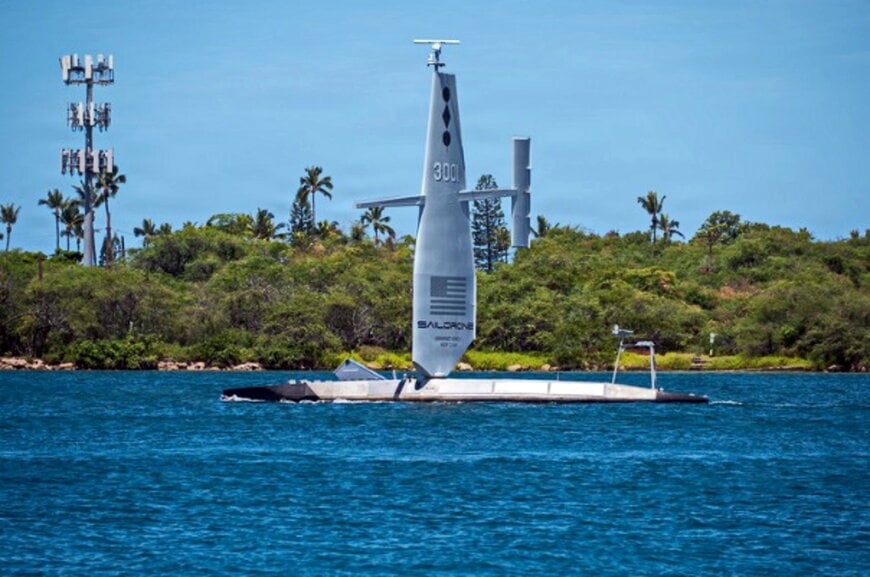
Lockheed Martin and Saildrone have integrated and live-fired precision munitions from an uncrewed surface vehicle to advance maritime digital infrastructure and defense capabilities. The initiative demonstrates the rapid adaptation of commercial autonomous vessels for multi-domain naval operations.
System Architecture and Partner Roles
The project combined Saildrone’s autonomous surface platform with Lockheed Martin’s weapon systems and fire-control interfaces. Lockheed Martin integrated a dual Joint Air-to-Ground Missile launcher with the United States Navy’s Adjunct Remote Engagement System, a remotely operated command-and-control combat system. Saildrone provided the Surveyor-class vessel, supplying the navigation systems, payload volume, and onboard power required to host the kinetic and sensor payloads.
Operational Testing and Interface Integration
During naval experimentation exercises near Hawaii, the uncrewed vessel acted on external target telemetry transmitted from the USS Theodore Roosevelt Carrier Strike Group. The combat interface processed targeting data to engage a surrogate high-speed surface craft, launching two precision munitions equipped with dual-mode semi-active laser and millimeter-wave radar seekers.
The demonstration also validated a passive electronic warfare payload aboard the vessel. Operating in coordination with an airborne MH-60S helicopter, the platform detected, classified, and localized a surrogate threat radar emitter, verifying passive surveillance and data-sharing interoperability across fleet networks.
Fleet Scalability and Industrial Applications
The engineering integration progressed from initial concept to live-fire demonstration within six months. By utilizing standardized interfaces, the cooperation establishes a repeatable integration model for deploying modular defense payloads onto commercial autonomous platforms. Future phases focus on scaling larger containerized payloads, including vertical launch systems and towed acoustic arrays, to support distributed maritime surveillance and industrial automation in uncrewed naval operations.
Edited by Evgeny Churilov, Induportals Media - Adapted by AI.
www.lockheedmartin.com
