
www.aero-defence.tech
06
'26
Written on Modified on
TSUBAKI KABELSCHLEPP Advances Shore Power Cable Management for Maritime Energy Transition
TKSPS system enables reliable shore power, flexible installation, durable cable protection and long-term support for decarbonised port infrastructure.
www.kabelschlepp.com
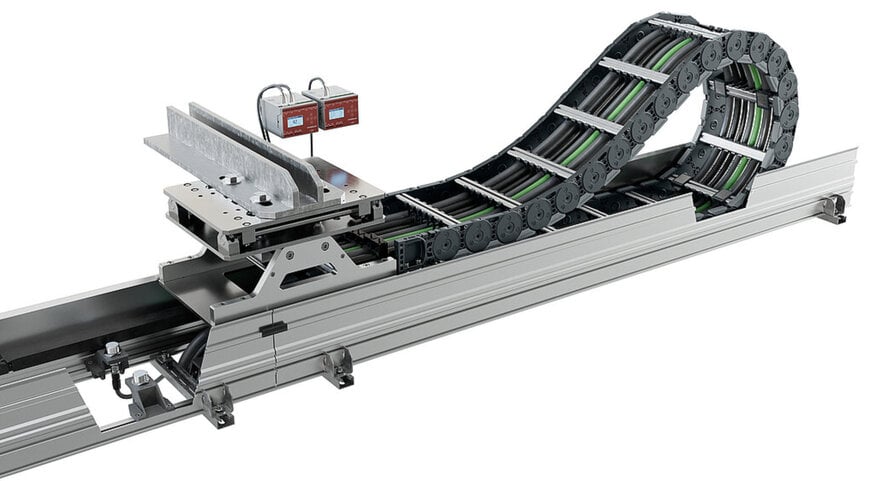
The Condition Monitoring System from TSUBAKI KABELSCHLEPP measures and records the state of the glide shoes and the push and pull forces to the nearest per cent.
Image: TSUBAKI KABELSCHLEPP
TSUBAKI KABELSCHLEPP introduces the TKSPS system solution, a comprehensive cable management technology designed to support the decarbonization of port operations. This system ensures the safe and continuous transmission of electrical power and signals to various ship types, facilitating the maritime energy transition.
Cable Carrier Mechanics And Environmental Resistance
Port electrification requires complex infrastructure to supply ships with high-voltage shore power, eliminating the reliance on vessel auxiliary engines during docking. The TSUBAKI KABELSCHLEPP Shore Power System utilizes cable carriers equipped with roller guiding mechanisms. These systems are installed either underground within the quay or inside specialized guide channels at the quay edge to provide structural and weather protection. The external materials exhibit high resistance to saltwater and ultraviolet radiation, preventing material degradation under continuous maritime exposure. By implementing these measures, the systems withstand heavy mechanical strain and protect the internal cables while transferring the substantial electrical loads required by cruise and container vessels.
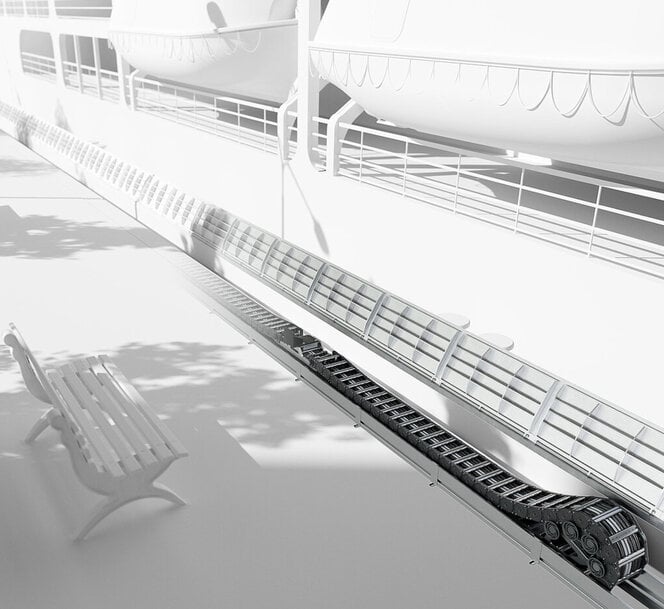
Salt water, wind, UV radiation: Shore power systems run in tough conditions. The cable carriers from TSUBAKI KABELSCHLEPP are ideal for this field of application.
Image: TSUBAKI KABELSCHLEPP / AI generated
System Architecture And Regulatory Compliance
The solution features a modular architecture that accommodates both greenfield port developments and brownfield infrastructure retrofits. Components are engineered with advanced corrosion protection measures, reaching up to the C5-M protection rating, which corresponds to very high marine environmental corrosivity. The system architecture adheres strictly to international regulations, including the IEC 80005-1 standard for high-voltage shore connection systems. Pascal Berg, Industry Manager at TSUBAKI KABELSCHLEPP, states that each system is documented in accordance with the EU Machinery Directive to guarantee compliance and minimize subsequent engineering modifications during the operational phase.
Condition Monitoring And Engineering Integration
To ensure operational stability, the systems integrate active condition monitoring capabilities. This diagnostic feature continuously logs the mechanical push and pull forces exerted on the cable carriers, enabling operators to identify potential system malfunctions before they cause operational downtime. Additionally, the system incorporates ready-to-install functional modules, such as floating drivers with integrated sensors, to enhance physical adaptability during active shore power connections. The manufacturer supports these installations with comprehensive engineering services, encompassing system planning, physical implementation, and continuous maintenance programs.
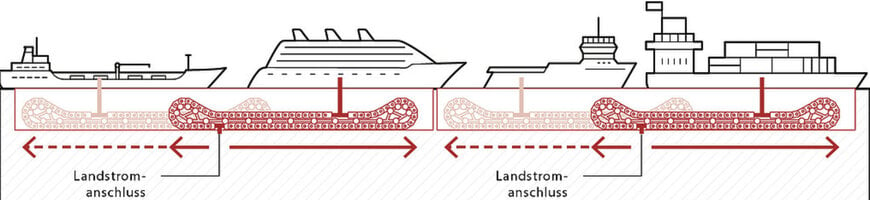
The demand for shore power solutions is increasing worldwide: With the TKSPS system solutions for cruise ships and container ships, TSUBAKI KABELSCHLEPP offers standardised cable carrier systems for different port scenarios.
Image: TSUBAKI KABELSCHLEPP
Additional Context:
This section details technical specifications and competitive benchmarking not included in the original product announcement
In the maritime shore power sector, cable management systems are evaluated against technical benchmarks defined by the IEC/IEEE 80005-1 standard, which governs high-voltage shore connection systems exceeding 1 megavolt-ampere. Competitive solutions from manufacturers such as Igus and Cavotec also utilize specialized modular energy chains and motorized cable reels to manage dynamic cable routing between fixed onshore converters and moving vessels. Standard performance criteria for these systems include mechanical durability under constant tidal variations, automated synchronization sequences, and resistance to C5-M marine corrosion levels. The integration of continuous condition monitoring and sensor-equipped floating drivers serves as a primary differentiator, providing predictive maintenance data to manage the substantial mechanical forces experienced during container and cruise ship operations.
Edited by Natania Lyngdoh, Induportals editor, assisted by AI.
www.tsubaki-kabelschlepp.com
Image: TSUBAKI KABELSCHLEPP
TSUBAKI KABELSCHLEPP introduces the TKSPS system solution, a comprehensive cable management technology designed to support the decarbonization of port operations. This system ensures the safe and continuous transmission of electrical power and signals to various ship types, facilitating the maritime energy transition.
Cable Carrier Mechanics And Environmental Resistance
Port electrification requires complex infrastructure to supply ships with high-voltage shore power, eliminating the reliance on vessel auxiliary engines during docking. The TSUBAKI KABELSCHLEPP Shore Power System utilizes cable carriers equipped with roller guiding mechanisms. These systems are installed either underground within the quay or inside specialized guide channels at the quay edge to provide structural and weather protection. The external materials exhibit high resistance to saltwater and ultraviolet radiation, preventing material degradation under continuous maritime exposure. By implementing these measures, the systems withstand heavy mechanical strain and protect the internal cables while transferring the substantial electrical loads required by cruise and container vessels.
Salt water, wind, UV radiation: Shore power systems run in tough conditions. The cable carriers from TSUBAKI KABELSCHLEPP are ideal for this field of application.
Image: TSUBAKI KABELSCHLEPP / AI generated
System Architecture And Regulatory Compliance
The solution features a modular architecture that accommodates both greenfield port developments and brownfield infrastructure retrofits. Components are engineered with advanced corrosion protection measures, reaching up to the C5-M protection rating, which corresponds to very high marine environmental corrosivity. The system architecture adheres strictly to international regulations, including the IEC 80005-1 standard for high-voltage shore connection systems. Pascal Berg, Industry Manager at TSUBAKI KABELSCHLEPP, states that each system is documented in accordance with the EU Machinery Directive to guarantee compliance and minimize subsequent engineering modifications during the operational phase.
Condition Monitoring And Engineering Integration
To ensure operational stability, the systems integrate active condition monitoring capabilities. This diagnostic feature continuously logs the mechanical push and pull forces exerted on the cable carriers, enabling operators to identify potential system malfunctions before they cause operational downtime. Additionally, the system incorporates ready-to-install functional modules, such as floating drivers with integrated sensors, to enhance physical adaptability during active shore power connections. The manufacturer supports these installations with comprehensive engineering services, encompassing system planning, physical implementation, and continuous maintenance programs.
The demand for shore power solutions is increasing worldwide: With the TKSPS system solutions for cruise ships and container ships, TSUBAKI KABELSCHLEPP offers standardised cable carrier systems for different port scenarios.
Image: TSUBAKI KABELSCHLEPP
Additional Context:
This section details technical specifications and competitive benchmarking not included in the original product announcement
In the maritime shore power sector, cable management systems are evaluated against technical benchmarks defined by the IEC/IEEE 80005-1 standard, which governs high-voltage shore connection systems exceeding 1 megavolt-ampere. Competitive solutions from manufacturers such as Igus and Cavotec also utilize specialized modular energy chains and motorized cable reels to manage dynamic cable routing between fixed onshore converters and moving vessels. Standard performance criteria for these systems include mechanical durability under constant tidal variations, automated synchronization sequences, and resistance to C5-M marine corrosion levels. The integration of continuous condition monitoring and sensor-equipped floating drivers serves as a primary differentiator, providing predictive maintenance data to manage the substantial mechanical forces experienced during container and cruise ship operations.
Edited by Natania Lyngdoh, Induportals editor, assisted by AI.
www.tsubaki-kabelschlepp.com
