
www.aero-defence.tech
03
'26
Written on Modified on
Deployable Tactical Air Navigation System for Aeronautical Communication
Thales and the Nato Support and Procurement Agency are deploying an autonomous air navigation infrastructure to support military aviation in GNSS-denied environments.
www.thalesgroup.com
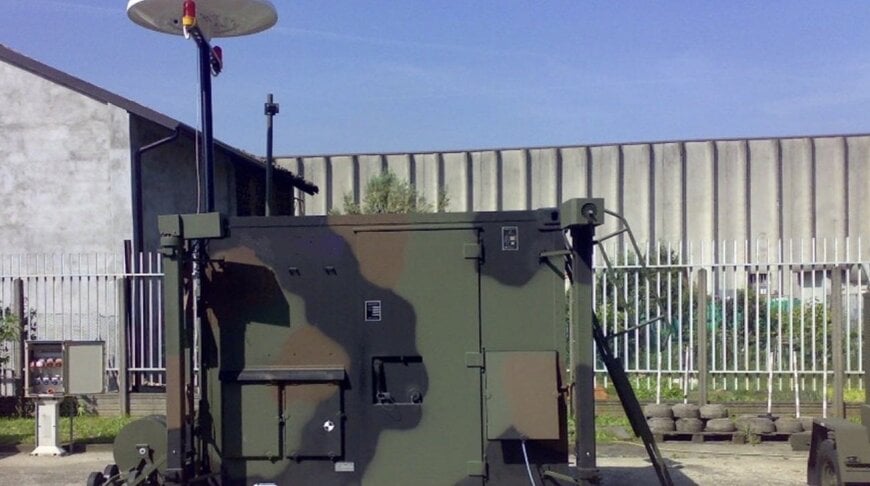
Thales' next-generation Deployable Tactical Air Navigation (D-TACAN) system © Thales
Thales and the Nato Support and Procurement Agency (NSPA) are cooperating to implement a Deployable Tactical Air Navigation (D-Tacan) system for the Spanish Air and Space Force. This mobile infrastructure provides critical aeronautical communication, navigation, and surveillance (CNS) capabilities for military aviation operating from permanent bases and temporary airfields.
Roles and Industrial Challenge
The deployment addresses the operational requirement for resilient air operations in environments where Global Navigation Satellite Systems (GNSS) are jammed or denied. To address this technical challenge, the NSPA utilized its standardized procurement framework to acquire a European navigation solution. Responsibilities are divided by geographic and technical expertise: Thales manufactures the system at its facility in Gorgonzola, Italy, while Thales in Spain executes system integration, localized engineering, maintenance, and training. This distribution ensures that centralized manufacturing is coupled with localized, long-term logistical support.
Technical Solution
Based on the Ground Based Tacan 553 architecture, the D-Tacan functions as an autonomous navigation beacon. The system transmits bearing and distance data to equipped aircraft, enabling precise approach and landing procedures without reliance on satellite positioning. The hardware is integrated into a standard 20-foot ISO shelter, engineered to facilitate transport via air, sea, rail, and road. To ensure continuous 24/7 functionality in remote locations, the shelter is equipped with independent power generation systems, an uninterruptible power supply (UPS), and integrated communication interfaces. The system architecture incorporates cybersecurity protocols to resist electronic interference and maintain data integrity.
Deployment and Integration
The implementation phase involves delivering the physical infrastructure alongside a comprehensive integrated logistic support package. This encompasses spare parts provisioning, electronic documentation, and operational training for operators. Because the system utilizes standardized ISO shelter dimensions and modular power systems, it can be rapidly deployed to temporary staging areas without requiring extensive civil engineering preparations. Thales in Spain provides the local engineering required to connect the system with the existing command structures of the Spanish Air and Space Force.
Applications and Expected Impact
The primary application is military aviation, specifically ensuring continuous flight operations during electronic warfare scenarios where standard satellite navigation is compromised. By deploying this infrastructure, the Spanish Air and Space Force gains process stability and improved operational flexibility during remote deployments. Furthermore, utilizing the NSPA procurement framework allows other Nato member states with similar technical requirements to acquire identical systems. This mechanism establishes a baseline for hardware interoperability and shared maintenance protocols across allied forces.
Edited by Aishwarya Mambet, Induportals Editor, with AI assistance.
www.thalesgroup.com
Thales and the Nato Support and Procurement Agency (NSPA) are cooperating to implement a Deployable Tactical Air Navigation (D-Tacan) system for the Spanish Air and Space Force. This mobile infrastructure provides critical aeronautical communication, navigation, and surveillance (CNS) capabilities for military aviation operating from permanent bases and temporary airfields.
Roles and Industrial Challenge
The deployment addresses the operational requirement for resilient air operations in environments where Global Navigation Satellite Systems (GNSS) are jammed or denied. To address this technical challenge, the NSPA utilized its standardized procurement framework to acquire a European navigation solution. Responsibilities are divided by geographic and technical expertise: Thales manufactures the system at its facility in Gorgonzola, Italy, while Thales in Spain executes system integration, localized engineering, maintenance, and training. This distribution ensures that centralized manufacturing is coupled with localized, long-term logistical support.
Technical Solution
Based on the Ground Based Tacan 553 architecture, the D-Tacan functions as an autonomous navigation beacon. The system transmits bearing and distance data to equipped aircraft, enabling precise approach and landing procedures without reliance on satellite positioning. The hardware is integrated into a standard 20-foot ISO shelter, engineered to facilitate transport via air, sea, rail, and road. To ensure continuous 24/7 functionality in remote locations, the shelter is equipped with independent power generation systems, an uninterruptible power supply (UPS), and integrated communication interfaces. The system architecture incorporates cybersecurity protocols to resist electronic interference and maintain data integrity.
Deployment and Integration
The implementation phase involves delivering the physical infrastructure alongside a comprehensive integrated logistic support package. This encompasses spare parts provisioning, electronic documentation, and operational training for operators. Because the system utilizes standardized ISO shelter dimensions and modular power systems, it can be rapidly deployed to temporary staging areas without requiring extensive civil engineering preparations. Thales in Spain provides the local engineering required to connect the system with the existing command structures of the Spanish Air and Space Force.
Applications and Expected Impact
The primary application is military aviation, specifically ensuring continuous flight operations during electronic warfare scenarios where standard satellite navigation is compromised. By deploying this infrastructure, the Spanish Air and Space Force gains process stability and improved operational flexibility during remote deployments. Furthermore, utilizing the NSPA procurement framework allows other Nato member states with similar technical requirements to acquire identical systems. This mechanism establishes a baseline for hardware interoperability and shared maintenance protocols across allied forces.
Edited by Aishwarya Mambet, Induportals Editor, with AI assistance.
www.thalesgroup.com
