
www.aero-defence.tech
24
'26
Written on Modified on
Hybrid Electric Architecture Testing Completed for Next Generation Aviation
Collins Aerospace and industry partners completed laboratory integration testing of hybrid-electric propulsion subsystems to optimize energy management in commercial aircraft.
www.rtx.com
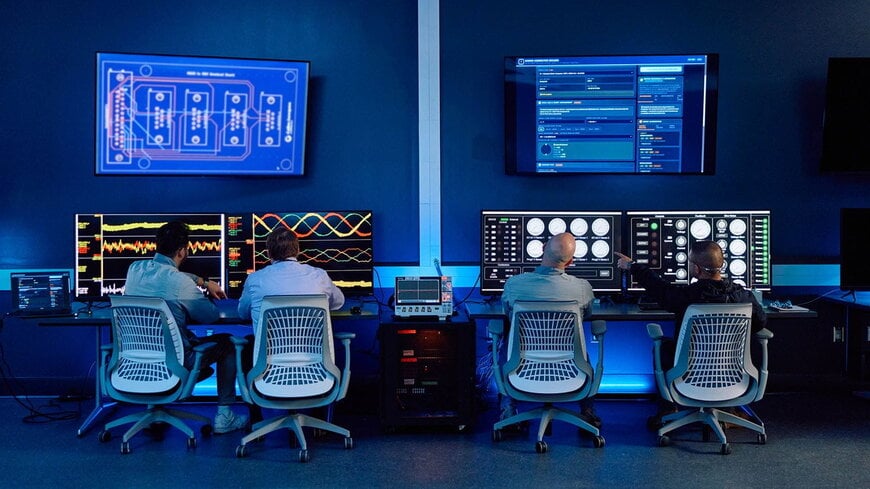
Collins Aerospace, alongside consortium partners including Airbus, Pratt and Whitney, and GKN Aerospace, has concluded integrated subsystem laboratory testing for the European Union Clean Aviation SWITCH project. The initiative focuses on developing hybrid-electric powertrain architectures to improve propulsion efficiency for short- and medium-range commercial aircraft.
Industrial Context and Collaboration Rationale
Developing high-efficiency hybrid-electric flight propulsion requires synchronized integration across turbomachinery, megawatt-class electrical generation, high-voltage distribution, and real-time electronic power management. Due to the multi-domain complexity of aircraft electrification, single-entity engineering is insufficient. A multi-company framework allows engine manufacturers, airframers, and electrical system suppliers to co-validate physical interfaces, thermal boundaries, and control logic before full aircraft integration. MTU Aero Engines coordinates the overall SWITCH project.
Technical Architecture and Partner Responsibilities
The tested system integrates two megawatt-class motor generators and controllers developed by Collins Aerospace with a gas turbine engine platform. Pratt and Whitney engineered the hybrid-electric engine controller and executed powertrain system integration. Airbus provided the interface control unit for the aircraft energy-management system, while GKN Aerospace supplied the high-voltage wiring system. Solid-state power controllers and distribution panels from Collins Aerospace replace mechanical relays and circuit breakers to reduce weight and increase power reliability.
System Implementation and Testing Roadmap
Initial multi-system integration testing took place at The Grid, an advanced electric power systems facility operated by Collins Aerospace in Rockford, Illinois. The hardware was evaluated alongside simulated aircraft and engine systems. The tested subsystems are transferred to Airbus laboratories for higher-level aircraft integration, focusing on battery interfacing and energy control systems. The technology will subsequently feed into the Airbus-led Large Scale Integration Demonstrator of Hybrid Electrical Architecture project, targeting comprehensive ground demonstration tests scheduled for 2027.
Applications and Expected Impact
The hybrid-electric architecture targets short- and medium-range commercial passenger aircraft. By integrating electrical power generation and distribution with gas turbine engines, the system optimizes in-flight power distribution and reduces overall fuel burn. Replacing conventional mechanical circuit breakers with solid-state distribution units further lowers structural mass while enhancing operational reliability and system maintainability across regional and narrowbody flight operations.
Industry Assessment
According to Pierre Durel, Project Officer at Clean Aviation, SWITCH and LEIA are essential building blocks to make the hybrid-electric short- and medium-range aircraft become a reality, demonstrating the power of collaboration across the industry.
Edited by Evgeny Churilov, Induportals Media - Adapted by AI.
www.rtx.com
