
www.aero-defence.tech
22
'26
Written on Modified on
The Exploration Company Uses Siemens Software to Accelerate Spacecraft Development
By adopting the Siemens Xcelerator portfolio, the startup simplifies complex engineering processes to streamline the manufacturing of its reusable Nyx spacecraft and rocket engines.
www.siemens.com
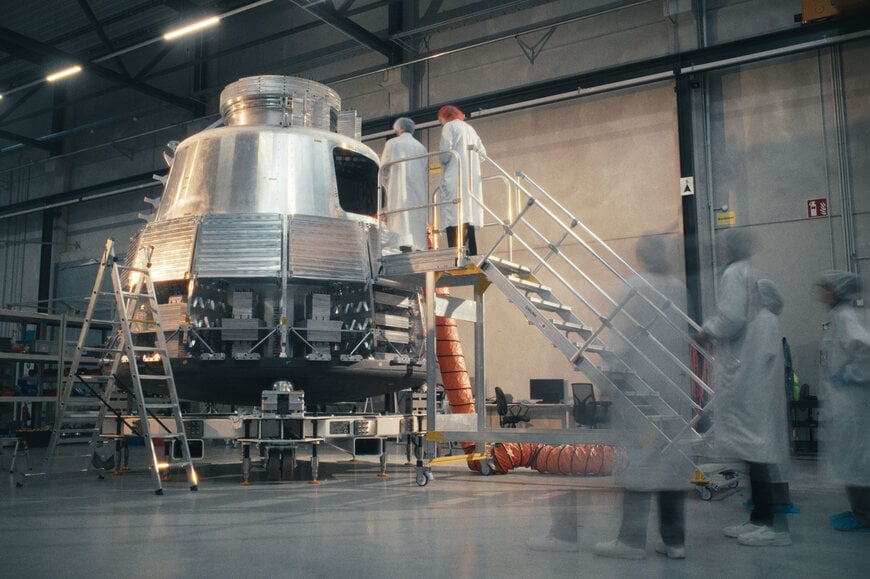
The Exploration Company and Siemens Digital Industries Software are collaborating to implement an integrated digital infrastructure for the engineering of reusable space transport systems. The technology streamlines mechanical, electrical, and simulation workflows across spacecraft and propulsion manufacturing.
Operational Context and Engineering Challenges
Developing launcher-agnostic reusable space systems requires managing cross-disciplinary design complexity under strict aerospace certification standards. Founded in 2021 in Gauting, Germany, The Exploration Company develops the Nyx spacecraft family and high-performance propulsion systems for orbital cargo and crew transport. The organization required a connected digital environment to unify mechanical design, electrical wiring interconnection systems, and simulation to minimize design rework and streamline manufacturing processes.
Technical Architecture and Division of Responsibilities
Siemens provides software tools from the Siemens Xcelerator portfolio, serving as the core environment for multi-disciplinary data management and end-to-end traceability. The Exploration Company integrates these software tools directly into its development and manufacturing operations.
The software architecture links mechanical, electrical, and simulation domains to enable automated data synchronization across engineering disciplines. For the Storm high-thrust rocket engine, this setup allows engineers to model and optimize additive manufacturing parameters, ensuring that changes in one engineering domain automatically reflect across related sub-systems.
Implementation and Flight Demonstration
The software framework was deployed during the engineering phase of the Mission Bikini orbital demonstration capsule. By using an integrated data environment, the engineering team transitioned from initial concept to flight-ready hardware within a nine-month timeframe. The system provides continuous data traceability required to verify compliance with aerospace safety and performance standards.
Industrial Applications and Process Impact
The primary applications cover orbital transport systems, crew capsules, and additive-manufactured rocket engines. Implementing unified digital tools replaces siloed engineering environments with synchronized data exchange. This operational logic reduces hardware rework, improves process stability during additive manufacturing, and maintains data lineage from initial concept through final assembly.
Edited by Evgeny Churilov, Induportals Media - Adapted by AI.
www.siemens.com
