
www.aero-defence.tech
22
'26
Written on Modified on
Valeo to develop and produce sovereign electric drone motor
Valeo leveraged technological building blocks from the automotive industry to develop a range of electric motors without critical rare earths.
www.valeo.com
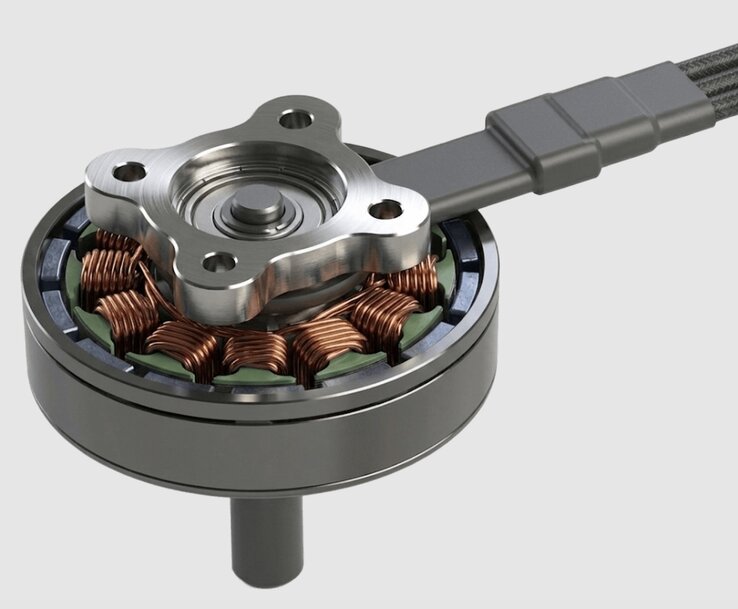
Valeo and defense technology firm Harmattan AI have partnered to manufacture a range of sovereign electric drone motors in France. Designed for both civil and defense autonomous platforms, the propulsion units leverage automotive electrification technology to eliminate heavy rare earth materials from the motor architecture and secure localized supply chains.
Industrial Manufacturing and Strategic Objectives
The propulsion units will equip Harmattan AI's autonomous systems, with series production scheduled to begin in early 2027 at a Valeo manufacturing facility in France. The initiative repurposes established automotive hardware building blocks into specialized drone propulsion components.
Supply Chain Security and Value Chain Control
The integration of rare-earth-free motor designs mitigates critical raw material dependencies within defense manufacturing. By eliminating heavy rare earth elements, the supply chain avoids geopolitical and material sourcing bottlenecks associated with specialized permanent magnets.
Additional Context
This section details technical specifications not included in the original news release.
Conventional high-power-density electric motors for unmanned aerial vehicles predominantly rely on permanent magnet synchronous architectures, which utilize rare earth elements like neodymium and dysprosium to maintain magnetic flux density under high operating temperatures. To eliminate reliance on critical raw materials, alternative electric motor designs utilize electrically excited synchronous or synchronous reluctance architectures. In an electrically excited configuration, permanent magnets on the rotor are replaced with electromagnetic copper coils powered via an excitation system or inductive energy transfer. The stator incorporates high-density copper hairpin winding technology, replacing traditional round wire coils with rectangular copper conductors to maximize slot fill factors, lower electrical resistance, and increase continuous torque density within a compact chassis footprint. Active rotor excitation introduces internal thermal loads, requiring direct stator winding cooling or targeted airflow channels to stabilize phase currents during high-thrust drone maneuvers.
Edited by Romila DSilva, Induportals Editor, with AI assistance.
www.valeo.com
