
www.aero-defence.tech
09
'26
Written on Modified on
Thales Accelerates European Defense Production Capacity
Group increases capital expenditure by 40% to scale output across seven major defense domains.
www.thalesgroup.com
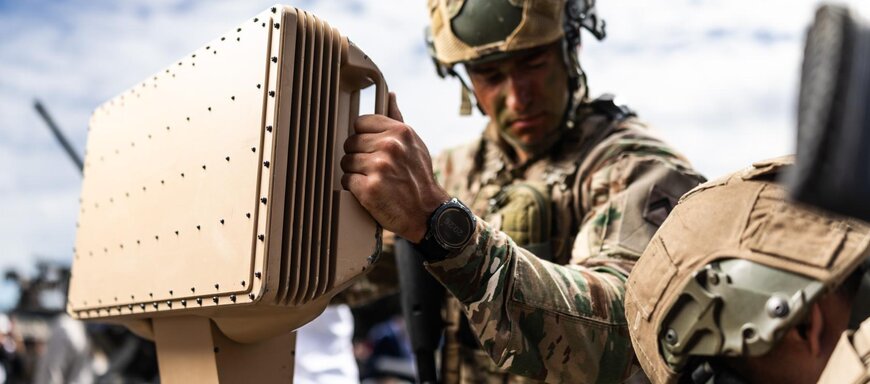
Thales is executing a significant industrial expansion across Europe, with capital expenditure projected to reach €830–850 million in 2026—a 40% increase over the 2024–2026 period. The investment targets expanded capacity, facility modernization, and workforce growth, with over 9,000 new hires planned globally in 2026, 70% of whom will be based in Europe. These efforts focus on scaling production across seven strategic domains: air surveillance, air defense, effectors, sonars, and military communications.
Strategic Industrial Ramp-up by Domain
Thales is multiplying output across multiple key defense programs through facility expansion and vertical integration:
Air Surveillance and Defense: Radar production in France and the Netherlands has quadrupled since 2021. A new partnership with the Dutch Ministry of Defence aims to increase antenna production by an additional 60% by 2028. In Germany, the production of Ground Observer 12 (GO12) radars is set to increase five-fold by late 2026.
Precision Munitions: At Herstal, Belgium, Laser Guided Rocket (LGR) production is scaling five-fold (2024–2026) with a further three-fold increase planned by 2028. In France, munitions production at La Ferté-Saint-Aubin is quadrupling (2023–2026) supported by a new automated foundry.
- SAMP/T NG and Missiles: Thales is targeting a two-fold increase in production for the SAMP/T NG air defense system. Simultaneously, Lightweight Multi-role Missile (LMM) production in Belfast is planned for a seven-fold increase within four years.
- Naval Systems: CAPTAS sonar production increased 2.5-fold (2024–2025), and delivery lead times for mine countermeasure sonars have been halved to 10 months.
Communications and Network Infrastructure
The Group is consolidating its secure communications footprint through a multi-country investment plan:
The Group is consolidating its secure communications footprint through a multi-country investment plan:
- France: Expansion of the Centre of Excellence in Cholet and significant investment in secure communications, including radio, cryptography, and electronic warfare.
- Benelux/Europe: Tripling of SOTAS vehicle communication production in the Netherlands since late 2023. Extension of the Tubize site in Belgium and expansion of the C4I competence center in Romania.
Collaborative Ecosystem and Partnerships
Thales continues to utilize a multi-domestic footprint to integrate local expertise into sovereign defense solutions. The Group maintains an extensive network of transnational joint ventures and strategic partnerships—including collaborations with Leonardo (Italy), Diehl (Germany), Navantia (Spain), and Kongsberg (Norway)—to support interoperable, multi-domain operations. This industrial strategy is further supported by the creation of trusted cloud joint ventures, such as S3NS in France.
Additional Context: The challenge of "Industrial Readiness"
The defense industrial base is currently facing a "bottleneck" challenge where surge demand exceeds the capacity of legacy, low-volume production lines. Thales’ current strategy of "vertical integration"—bringing critical manufacturing activities in-house—is a direct response to this volatility. By controlling the supply of key components (like the foundry modernization at La Ferté-Saint-Aubin), the company reduces reliance on third-party suppliers who may face their own capacity constraints. Furthermore, the shift toward "modular, open architectures" (as seen in SkyDefender) allows the Group to scale production of subsystems without re-engineering the entire platform. This design philosophy is essential for military interoperability, as it ensures that updated radar or communication modules can be "plugged into" existing national frameworks, speeding up deployment for European armed forces.
Edited by Lekshman Ramdas, Induportals editor – adapted by AI.
www.thalesgroup.com
Thales continues to utilize a multi-domestic footprint to integrate local expertise into sovereign defense solutions. The Group maintains an extensive network of transnational joint ventures and strategic partnerships—including collaborations with Leonardo (Italy), Diehl (Germany), Navantia (Spain), and Kongsberg (Norway)—to support interoperable, multi-domain operations. This industrial strategy is further supported by the creation of trusted cloud joint ventures, such as S3NS in France.
Additional Context: The challenge of "Industrial Readiness"
The defense industrial base is currently facing a "bottleneck" challenge where surge demand exceeds the capacity of legacy, low-volume production lines. Thales’ current strategy of "vertical integration"—bringing critical manufacturing activities in-house—is a direct response to this volatility. By controlling the supply of key components (like the foundry modernization at La Ferté-Saint-Aubin), the company reduces reliance on third-party suppliers who may face their own capacity constraints. Furthermore, the shift toward "modular, open architectures" (as seen in SkyDefender) allows the Group to scale production of subsystems without re-engineering the entire platform. This design philosophy is essential for military interoperability, as it ensures that updated radar or communication modules can be "plugged into" existing national frameworks, speeding up deployment for European armed forces.
Edited by Lekshman Ramdas, Induportals editor – adapted by AI.
www.thalesgroup.com
