
www.aero-defence.tech
16
'26
Written on Modified on
Development of Medium Altitude Unmanned Systems for ISR Missions
Thales and Aura Aero collaborate to integrate active electronically scanned array radar and electronic warfare systems into a medium-altitude long-endurance drone platform.
www.thalesgroup.com
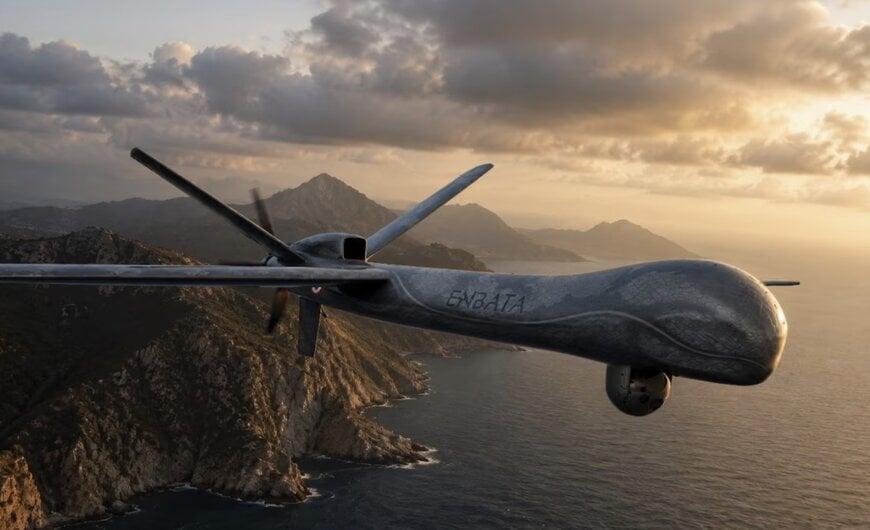
Thales and Aura Aero have established a cooperative framework to develop a medium-altitude long-endurance (MALE) unmanned aerial system equipped with advanced reconnaissance technologies. This technical solution focuses on deploying intelligence, surveillance, and reconnaissance (ISR) capabilities for defense applications and military operations.
Participating Entities and Operational Challenges
The initiative addresses the operational challenge of executing sustained intelligence and maritime surveillance missions in complex electromagnetic environments. To manage the complexity of airborne data processing and system integration, cooperation was required between platform manufacturers and sensor specialists. Aura Aero provides the Enbata drone platform, which features fly-by-wire flight controls and an open architecture designed to accommodate diverse modular payloads. Thales contributes its expertise in defense electronics, supplying the radar and electronic warfare payloads required for precise data acquisition.
Technical Solution and Responsibilities
The technical solution centers on a multi-mission MALE architecture capable of extended flight durations. Thales is responsible for providing the AirMaster C airborne surveillance radar and specialized electronic warfare components. The AirMaster C system utilizes an Active Electronically Scanned Array (AESA) architecture combined with onboard artificial intelligence algorithms. This technological integration allows the system to perform autonomous target classification, which functions at a system level to filter information and systematically reduce the volume of raw data transmitted to ground control stations.
Deployment and Integration
Supported by the French Ministry of the Armed Forces and the French Defence Procurement Agency (DGA), the drone system is undergoing structured development and testing phases. Initial flight testing of the Enbata platform is scheduled for 2026, followed by the complete hardware and software integration of the Thales equipment between 2026 and 2027. Both partners manage specific engineering roles to ensure structural and electromagnetic compatibility when integrating the radar and electronic warfare payloads into the aircraft's existing flight system.
Applications and Expected Impact
Target application areas for this platform include armed reconnaissance, long-range intelligence gathering, maritime surveillance, and counter-drone operations. By utilizing this system, defense operators achieve higher process stability and situational awareness in contested airspaces. The expected technical impact of the onboard AI target classification is a measurable optimization of bandwidth consumption and faster decision-making for ground personnel. Furthermore, the combined electronic warfare and AESA radar systems provide operators with reliable mechanisms to identify objects of interest, ensuring operational continuity in complex defense scenarios.
Edited by Aishwarya Mambet, Induportals Editor, with AI assistance.
www.thalesgroup.com
