
www.aero-defence.tech
16
'26
Written on Modified on
Rolls Royce Power Systems Unveils New Integrated Parallel Hybrid System
The high-performance mtu PowerPack Xelerate combines a diesel engine and electrified transmission to deliver energy-efficient propulsion for next-generation military tracked vehicles.
www.rolls-royce.com
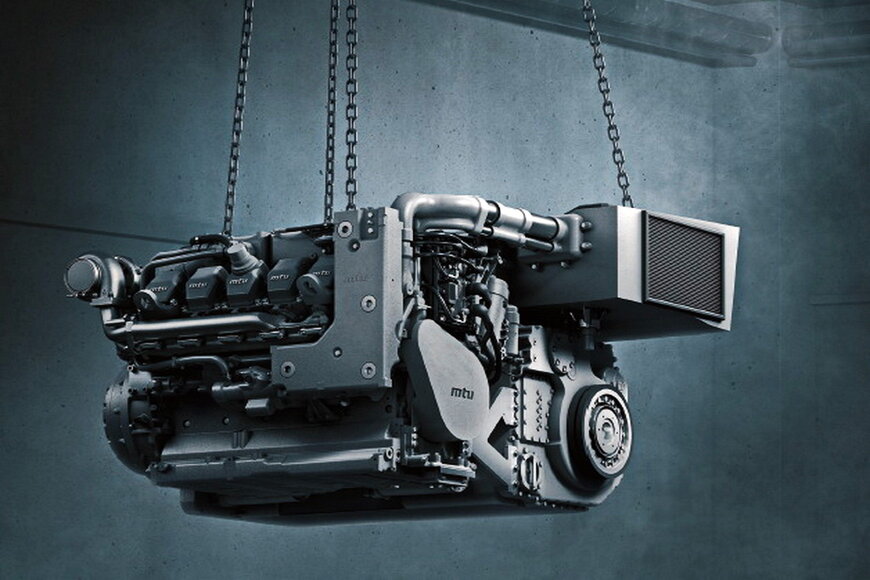
The system combines a diesel engine with an electrified manual gearbox to create a cohesive propulsion and power-generation unit. By integrating the mtu 10V 199 internal combustion engine with the ZF eLSG 5000 transmission, the configuration delivers a combined system output exceeding 1400 kW. This specialized architecture is designed specifically for military tracked vehicles, addressing the dual requirements of mechanical traction and high-voltage electrical power generation for modern defense platforms.
Weight Optimization and Vehicle Integration
The mechanical and electrical integration of the powertrain allows for more flexible vehicle packaging, which directly influences the overall mass distribution of armored platforms. Utilizing this high-power-density system enables defense manufacturers to limit the total weight of tracked vehicles to the Military Load Classification 60 class, which equates to approximately 54 metric tons. This weight management supports strategic mobility and infrastructure compatibility while maintaining high levels of ballistic protection. Additionally, the transmission and engine functions are managed via an electronic drive-by-wire control interface, making the drivetrain compatible with optional manning and fully unmanned ground vehicle frameworks.
Electrical Power Generation and Operational Efficiency
Modern military land operations require significant electrical energy to sustain advanced sensor suites, communication networks, and active protection systems. The parallel hybrid configuration addresses this demand by generating electrical energy directly from the powertrain, reducing the reliance on auxiliary power units. The system increases thermal efficiency and operational range while mitigating thermal and acoustic signatures during specific operational phases. From a logistics perspective, the integrated single-system design simplifies maintenance protocols and streamlines spare parts supply chains for field armies.
Development Timeline and Program Integration
The hybrid architecture builds upon foundational research conducted for low-emission, high-output military propulsion, including technologies explored in the Main Ground Combat System framework. The development cycle positions the technology beyond the initial conceptual phase into functional system integration. Production schedules indicate that the initial physical prototypes are slated for assembly and testing before 2030, with the objective of transitioning to full series production for deployment in next-generation armored platforms starting in the subsequent decade.
Additional Context: Technical Specifications and Competitive Benchmarking
The parallel hybrid system operates in a distinct performance bracket compared to traditional mechanical drivetrains and alternative hybrid architectures currently utilized in heavy armored vehicles.
Standard heavy armored propulsion typically relies on conventional hydraulic or mechanical transmissions coupled with high-output diesel engines, such as the Renk HSWL series transmissions paired with MTU 880 series engines. While these conventional arrangements achieve comparable mechanical power outputs between 1100 kW and 1200 kW, they lack integrated high-voltage direct current generation capabilities, requiring separate auxiliary power units that add weight and volume.
In contrast, alternative series hybrid development programs, such as those evaluated by the United States Army Next Generation Combat Vehicle initiatives, decouple the engine from the tracks entirely to optimize electrical generation. However, series hybrid systems often face efficiency losses during conversion from mechanical to electrical and back to mechanical energy at sustained high speeds. The parallel architecture of the ZF eLSG 5000 and mtu 10V 199 configuration maintains a direct mechanical drive path for high-speed cross-country mobility while simultaneously sourcing up to several hundred kilowatts of electrical power, establishing an intermediate benchmark that balances mechanical transmission efficiency with high-capacity onboard power generation.
Edited by Evgeny Churilov, Induportals Media - Adapted by AI.
www.rolls-royce.com
