
www.aero-defence.tech
29
'26
Written on Modified on
Integrated Combat Architecture Supports Fleetwide Naval Modernization
Lockheed Martin and the U.S. Navy are implementing a common integrated combat system architecture to accelerate software deployment and combat capability upgrades across the surface fleet.
www.lockheedmartin.com
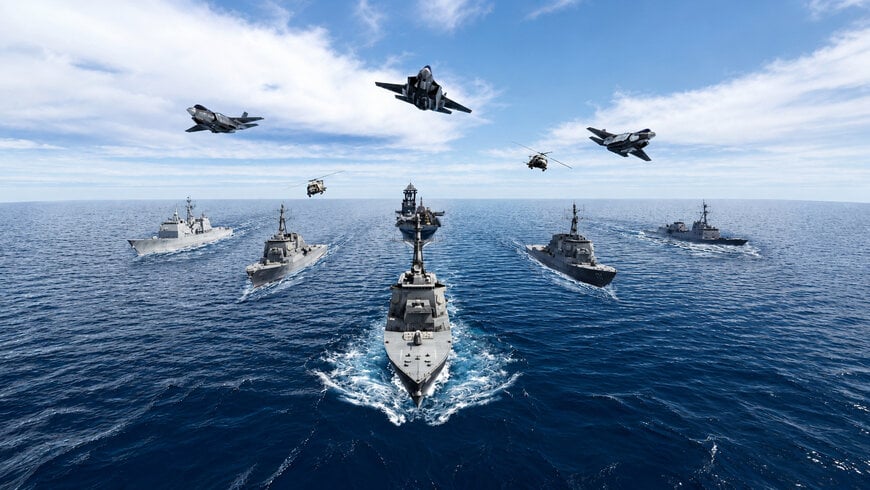
The U.S. Navy and Lockheed Martin have delivered the first Integrated Combat System (ICS)-enabled baseline, establishing a standardized combat system architecture intended to support faster software updates and common operational capabilities across naval surface combatants. The initiative supports naval digital infrastructure modernization and long-term fleetwide interoperability.
Cooperation for Fleetwide Combat System Standardization
The cooperation brings together Lockheed Martin, the U.S. Navy, and industry partners to develop and deploy a common combat system framework. The objective is to reduce fragmentation among shipboard combat system configurations while enabling a more predictable process for introducing new operational capabilities.
The program addresses the challenge of maintaining advanced combat readiness across a large fleet operating with evolving sensors, weapons, and software requirements. A common architecture allows capability development to be performed once and deployed across multiple platforms, reducing duplication of engineering and integration efforts.
Technical Solution and Responsibilities
The delivered BL9.C3.0 baseline is the first ICS-enabled software package compiled from the Forge development environment. The baseline combines established combat system functions with updated software infrastructure designed to support continuous modernization.
A key technical element is Tactical Platform as a Service (Tactical PaaS), which provides the foundation for containerized software deployment. This approach enables software components to be developed, tested, updated, and deployed more efficiently while maintaining compatibility within the broader combat system architecture.
Lockheed Martin is responsible for combat system development, software integration, and baseline delivery. The U.S. Navy defines operational requirements, certification processes, and fleet implementation objectives, while industry partners contribute supporting technologies and integration activities.
Deployment and Implementation
The delivery initiates a six-month operating cadence for future updates and certifications. Under this model, new software releases will be developed, tested, certified, and prepared for deployment on a predictable schedule.
Future baseline releases are expected to incrementally incorporate additional sensors, effectors, operational functions, and software capabilities. The common ICS architecture is intended to simplify integration with existing naval combat systems while supporting long-term scalability across the fleet.
Applications and Operational Use Cases
The integrated combat system is designed for surface combatants requiring coordinated air and missile defense, sensor management, weapons integration, and tactical decision support. The architecture supports industrial automation principles within naval software development by standardizing deployment processes and reducing system complexity.
Potential operational benefits include improved configuration management, faster software fielding, enhanced interoperability between platforms, and more consistent capability availability across deployed vessels.
Expected Impact
The transition to a single ICS-enabled baseline is intended to reduce lifecycle costs associated with maintaining multiple combat system configurations. The six-month update cycle provides a structured mechanism for introducing new capabilities while maintaining certification and operational readiness requirements.
"The first ICS-enabled baseline delivery highlights Lockheed Martin’s commitment to and partnership with the U.S. Navy to accelerate the transition to a common, fully integrated combat architecture in a continuously evolving warfighting environment," said Chandra Marshall, vice president of Multi-Domain Combat Systems at Lockheed Martin.
Edited by Sucithra Mani, Induportals editor – adapted by AI.
www.lockheedmartin.com
