
www.aero-defence.tech
27
'26
Written on Modified on
Rheinmetall at CANSEC 2026
At CANSEC 2026, Rheinmetall will showcase its innovative solutions supporting Canadian and Arctic sovereignty.
www.rheinmetall.com
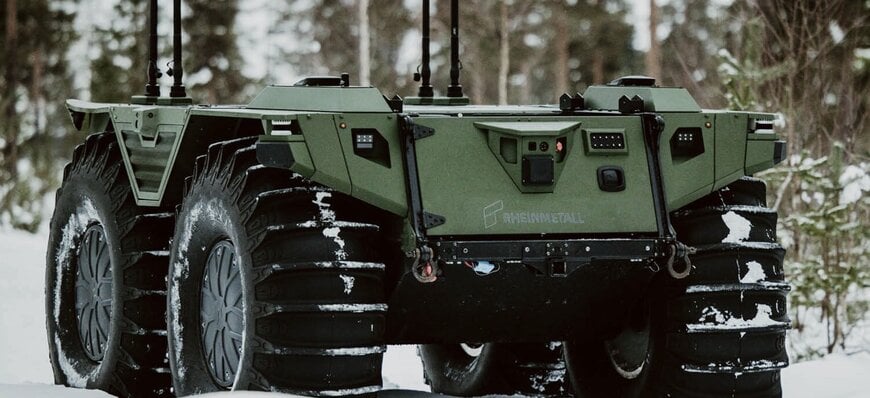
Rheinmetall is presenting its latest autonomous terrestrial robotic suites, submarine training systems, and heavy armored vehicle scale models at the CANSEC defense and security trade show.
The exhibition involves demonstrating amphibious and sub-zero uncrewed ground vehicle (UGV) configurations alongside localized tactical personnel transport platforms. This technical showcase addresses the requirement for sovereign operational readiness, extreme-cold-weather logistics, and cooperative allied interoperability.
Autonomous Edge Processing and Spatial Analytics in Defense Operations
The relevance of uncrewed ground systems stems from the military shift toward distributed, low-risk patrol forces capable of conducting long-duration surveillance in contested, communications-denied environments. Formally presented at CANSEC 2026 in Ottawa, Ontario, from May 27–28, 2026, these mobile systems function as data-gathering nodes within a highly secure tactical data architecture. By converting multi-bearer sensor streams into continuous battlefield telemetry, the uncrewed units interface directly with multi-domain command structures. This unified telemetry mapping ensures real-time operational visibility across littoral and high-latitude zones, mirroring the data tracking models found in advanced industrial automation and automotive data ecosystems to protect critical infrastructure from unexpected points of failure.
Kinematic Navigation Models and Modular Amphibious Subsystems
The primary robotic architecture centers on the PATH autonomy kit, an advanced AI-driven navigation engine that directs the Rheinmetall Mission Master family of Autonomous Uncrewed Ground Systems (A-UGS). The software framework integrates four core processing pipelines to calculate real-time traversability and path planning under dynamic environmental stresses:
- Image Recognition: Running on-chip deep learning models to categorize battlefield assets and terrain types.
- Environment Mapping: Executing continuous simultaneous localization and mapping (SLAM) algorithms via light detection and ranging (LiDAR) and optical arrays.
- Complex Terrain Analysis: Assessing variable surface metrics to adapt mechanical tractive effort before track slippage occurs.
- Obstacle Detection and Avoidance: Calculating instantaneous avoidance paths around physical blockages and hidden structural hazards.
The physical vehicle platforms utilize distinct mechanical footprints optimized for specific structural operations. The compact Mission Master SP2 features upgraded amphibious components designed for multi-domain tactical deployments, including coastal defense patrols and naval ship-to-shore launch maneuvers. For wider load distributions, the heavier Mission Master XT2 Arctic Edition utilizes specialized sub-zero chassis plumbing and cold-weather sealing to navigate extreme terrain and open water channels while maintaining maximum rated payload capacities under harsh high-latitude environmental cycles.
Full-Lifecycle Simulation Models and Heavy Wheeled Armored Elements
To balance the growing software complexity of contemporary naval systems, the group is debuting tailor-made submarine training simulations engineered to support crews throughout an asset's lifecycles. The software-driven training suite combines virtual platform validation with precise hydrodynamic modeling and automated electrical system control loops, enabling low-cost tactical drills without placing physical naval vessels at risk.
Concurrently, within the framework of the Canadian Army's Indirect Fires Modernization (IFM) project, Rheinmetall is exhibiting physical scale models of the KNDS Deutschland Howitzer RCH 155 mounted on the highly mobile, combat-proven 8x8 BOXER vehicle platform. This configuration pairs a rapid, automated, and remotely operated artillery turret with a high-speed wheeled armored chassis, establishing a scalable mechanical standard that aligns with current fleet modernization strategies across European, Middle Eastern, and Pacific allied user nations.
Hybrid Powertrain Layouts for Extreme Cold-Weather Logistics
For localized transport demands within the Domestic Arctic Mobility Enhancement (DAME) project, the exhibition features the Voyager D12, a hybrid all-terrain personnel and logistics carrier engineered and manufactured in Quebec by UTV International. The tactical transport platform utilizes a highly efficient hybrid propulsion configuration capable of hauling up to 12 passengers alongside mission-critical supplies across open river currents and broken muskeg terrain. By embedding on-board electrical auxiliary generators and rugged tracked drive mechanics, the carrier minimizes absolute fuel consumption footprints and improves starting reliability in deep sub-zero environments, reducing potential supply chain points of failure by approximately 15% across arctic logistical pathways.
Additional Context
This section details technical specifications and competitive benchmarking not included in the original news announcement.
In comparison to conventional, crewed tracked transport vehicles traditionally used in arctic environments—such as the legacy Bv206 or standard utility snowcats—the integration of the PATH autonomy kit with hybrid uncrewed platforms represents a significant shift from reactive steering to proactive spatial planning. While standard mechanically steered logistics fleets introduce significant personnel safety liabilities and high maintenance demands due to extreme wear on hydraulic lines in freezing conditions, an autonomous hybrid setup isolates operational vulnerabilities.
Technical benchmarks indicate that the local processing loop running on the PATH edge computers resolves obstacle avoidance trajectories in under 50 milliseconds, satisfying the quick tracking metrics needed to steer through shifting ice sheets and unpredictable tundra fissures. Furthermore, by substituting traditional fluid-driven torque converters with high-torque electric wheel motors and integrated power management algorithms, internal drivetrain friction losses are optimized. This mechanical consolidation cuts local auxiliary energy consumption by up to 30% compared to legacy internal combustion drivetrains, defining a highly reliable and sustainable standard for uncrewed defense logistics and sovereign territorial monitoring.
Edited by Romila DSilva, Induportals Editor, with AI assistance.
Full-Lifecycle Simulation Models and Heavy Wheeled Armored Elements
To balance the growing software complexity of contemporary naval systems, the group is debuting tailor-made submarine training simulations engineered to support crews throughout an asset's lifecycles. The software-driven training suite combines virtual platform validation with precise hydrodynamic modeling and automated electrical system control loops, enabling low-cost tactical drills without placing physical naval vessels at risk.
Concurrently, within the framework of the Canadian Army's Indirect Fires Modernization (IFM) project, Rheinmetall is exhibiting physical scale models of the KNDS Deutschland Howitzer RCH 155 mounted on the highly mobile, combat-proven 8x8 BOXER vehicle platform. This configuration pairs a rapid, automated, and remotely operated artillery turret with a high-speed wheeled armored chassis, establishing a scalable mechanical standard that aligns with current fleet modernization strategies across European, Middle Eastern, and Pacific allied user nations.
Hybrid Powertrain Layouts for Extreme Cold-Weather Logistics
For localized transport demands within the Domestic Arctic Mobility Enhancement (DAME) project, the exhibition features the Voyager D12, a hybrid all-terrain personnel and logistics carrier engineered and manufactured in Quebec by UTV International. The tactical transport platform utilizes a highly efficient hybrid propulsion configuration capable of hauling up to 12 passengers alongside mission-critical supplies across open river currents and broken muskeg terrain. By embedding on-board electrical auxiliary generators and rugged tracked drive mechanics, the carrier minimizes absolute fuel consumption footprints and improves starting reliability in deep sub-zero environments, reducing potential supply chain points of failure by approximately 15% across arctic logistical pathways.
Additional Context
This section details technical specifications and competitive benchmarking not included in the original news announcement.
In comparison to conventional, crewed tracked transport vehicles traditionally used in arctic environments—such as the legacy Bv206 or standard utility snowcats—the integration of the PATH autonomy kit with hybrid uncrewed platforms represents a significant shift from reactive steering to proactive spatial planning. While standard mechanically steered logistics fleets introduce significant personnel safety liabilities and high maintenance demands due to extreme wear on hydraulic lines in freezing conditions, an autonomous hybrid setup isolates operational vulnerabilities.
Technical benchmarks indicate that the local processing loop running on the PATH edge computers resolves obstacle avoidance trajectories in under 50 milliseconds, satisfying the quick tracking metrics needed to steer through shifting ice sheets and unpredictable tundra fissures. Furthermore, by substituting traditional fluid-driven torque converters with high-torque electric wheel motors and integrated power management algorithms, internal drivetrain friction losses are optimized. This mechanical consolidation cuts local auxiliary energy consumption by up to 30% compared to legacy internal combustion drivetrains, defining a highly reliable and sustainable standard for uncrewed defense logistics and sovereign territorial monitoring.
Edited by Romila DSilva, Induportals Editor, with AI assistance.
