
www.aero-defence.tech
20
'26
Written on Modified on
High-Power Satellite Bus Targets Orbital Infrastructure
Vast introduces a 15 kW satellite platform derived from Haven mission technologies for communications, defence and AI space applications.
www.vastspace.com
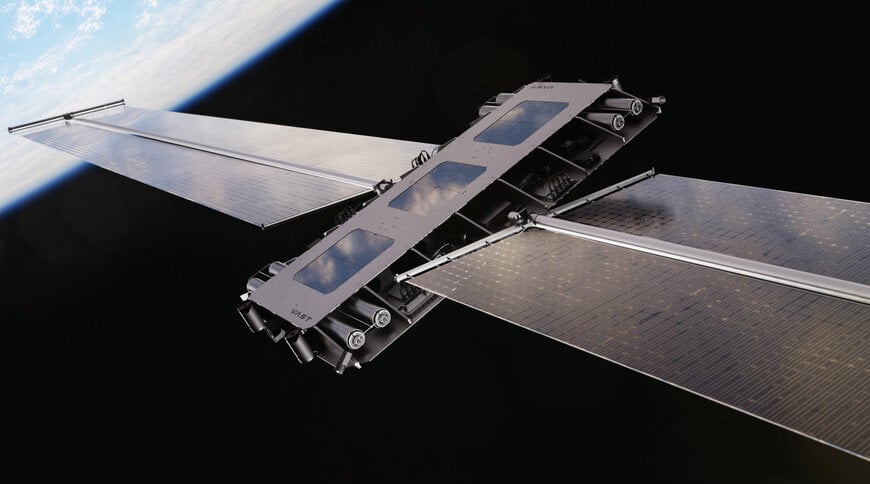
An illustration of the 15 kW-class satellite bus of the Vast Satellite product line.
Vast has launched a new satellite business focused on high-power spacecraft platforms for communications, Earth observation, national security and orbital computing applications. The first product is a 15 kW-class satellite bus developed using technologies validated through the company’s Haven Demo mission and originally engineered for its Haven-1 space station programme.
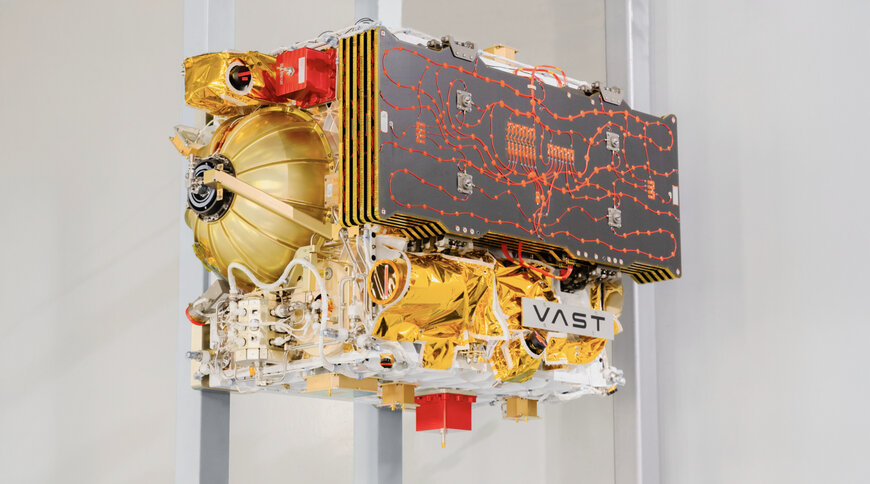
Photo of the fully integrated Haven Demo satellite at Vast HQ in Long Beach, CA which successfully launched to orbit on November 2, 2025 aboard Bandwagon-4.
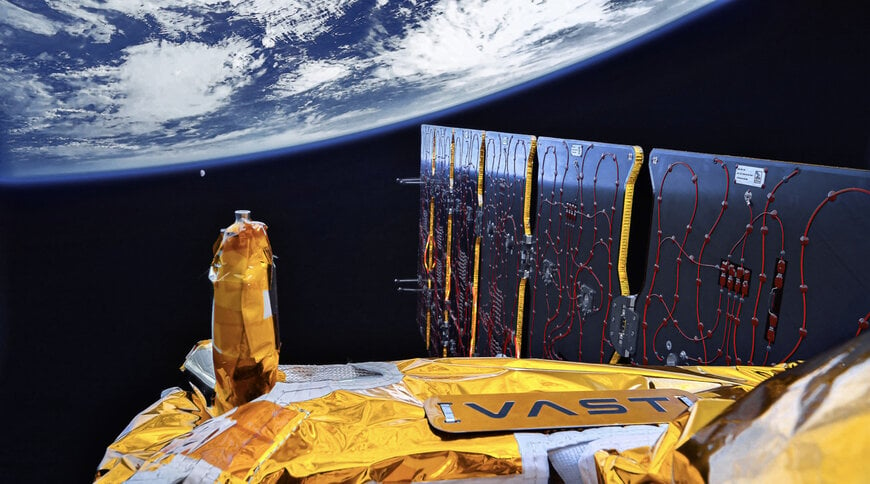
Photo captured by Haven Demo confirming solar array deployment and capturing the Earth and the Moon.
Satellite platform expands beyond commercial space stations
The new satellite line marks Vast’s expansion from commercial space stations into high-volume spacecraft manufacturing. The initial platform is designed to support power-intensive missions requiring flexible payload integration and extended operational capability in low Earth orbit (LEO).
The spacecraft architecture reuses internally developed avionics, power systems, communications technologies, propulsion components and flight software previously deployed on the Haven Demo mission. According to Vast, the common subsystem approach is intended to accelerate production timelines and reduce development costs through vertically integrated manufacturing.
The company confirmed an initial agreement with an undisclosed customer covering four satellites, with options for up to 200 additional units.
Haven Demo mission provides flight heritage for spacecraft systems
Vast stated that the Haven Demo mission, completed in 2025 and deorbited in February 2026, served as an in-orbit validation platform for avionics, power systems and flight software now integrated into the satellite product line.
Flight heritage remains a significant metric in spacecraft procurement because systems previously tested in orbit generally reduce technical risk for future missions.
The company said the validated technologies underpinning Haven Demo form the foundation of the new satellite bus architecture.
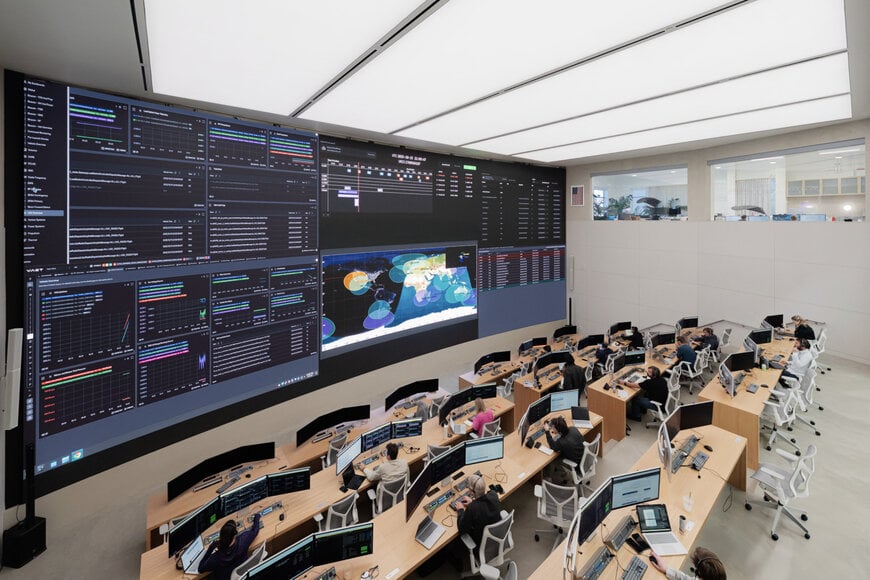
Photo of Vast’s Mission Control Center at Vast HQ in Long Beach, CA.
Vast has launched a new satellite business focused on high-power spacecraft platforms for communications, Earth observation, national security and orbital computing applications. The first product is a 15 kW-class satellite bus developed using technologies validated through the company’s Haven Demo mission and originally engineered for its Haven-1 space station programme.
Photo of the fully integrated Haven Demo satellite at Vast HQ in Long Beach, CA which successfully launched to orbit on November 2, 2025 aboard Bandwagon-4.
Photo captured by Haven Demo confirming solar array deployment and capturing the Earth and the Moon.
Satellite platform expands beyond commercial space stations
The new satellite line marks Vast’s expansion from commercial space stations into high-volume spacecraft manufacturing. The initial platform is designed to support power-intensive missions requiring flexible payload integration and extended operational capability in low Earth orbit (LEO).
The spacecraft architecture reuses internally developed avionics, power systems, communications technologies, propulsion components and flight software previously deployed on the Haven Demo mission. According to Vast, the common subsystem approach is intended to accelerate production timelines and reduce development costs through vertically integrated manufacturing.
The company confirmed an initial agreement with an undisclosed customer covering four satellites, with options for up to 200 additional units.
Haven Demo mission provides flight heritage for spacecraft systems
Vast stated that the Haven Demo mission, completed in 2025 and deorbited in February 2026, served as an in-orbit validation platform for avionics, power systems and flight software now integrated into the satellite product line.
Flight heritage remains a significant metric in spacecraft procurement because systems previously tested in orbit generally reduce technical risk for future missions.
The company said the validated technologies underpinning Haven Demo form the foundation of the new satellite bus architecture.
Photo of Vast’s Mission Control Center at Vast HQ in Long Beach, CA.
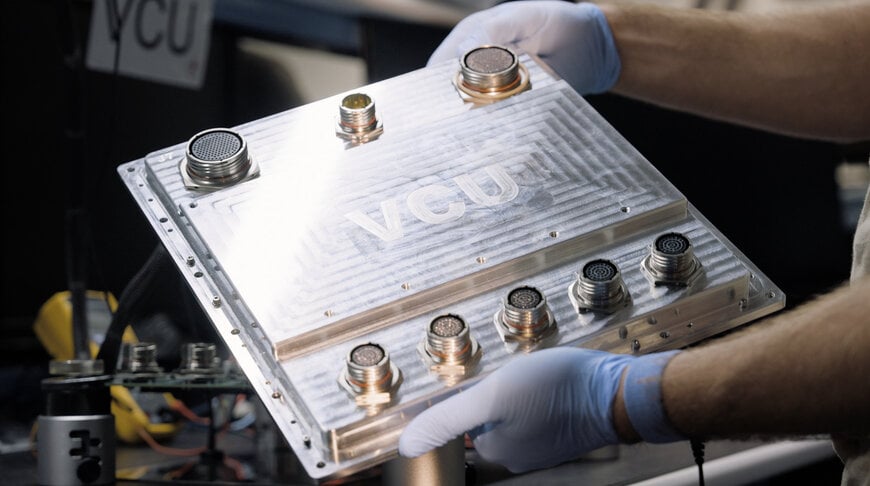
Vast Control Unit at Vast’s manufacturing facilities in Long Beach, CA.
Platform specifications target high-power orbital missions
The inaugural satellite bus is designed for a five-year mission life and supports LEO operations between 350 km and 1,200 km, with future applications planned for medium Earth orbit (MEO), geostationary orbit (GEO) and lunar missions.
Key specifications include:
- Dry mass: 700 kg
- Payload capacity: more than 350 kg
- Dimensions: 2.2 m × 3.6 m
- Total mission delta-V: ≥500 m/s
- Solar power generation: 15 kW through dual rollout arrays
- Payload peak power: above 20 kW depending on mission profile
- Payload average power: 6–14.5 kW
- Thermal dissipation: 6–10 kW
The platform uses flat-panel structures optimised for dense launch configurations and batch satellite deployment.
Electric propulsion and precision guidance support autonomous operations
The spacecraft incorporates a 10 kW krypton electric propulsion system with associated power processing units alongside control moment gyroscopes and torque rods for attitude control.
Guidance, navigation and control performance specifications include:
Electric propulsion and precision guidance support autonomous operations
The spacecraft incorporates a 10 kW krypton electric propulsion system with associated power processing units alongside control moment gyroscopes and torque rods for attitude control.
Guidance, navigation and control performance specifications include:
- Pointing knowledge: <0.05° at 1σ
- Pointing control: <0.1° at 1σ
- Enhanced option: <0.005° knowledge and <0.02° control
Higher pointing precision is particularly important for Earth observation payloads, optical communication systems and advanced sensing applications.
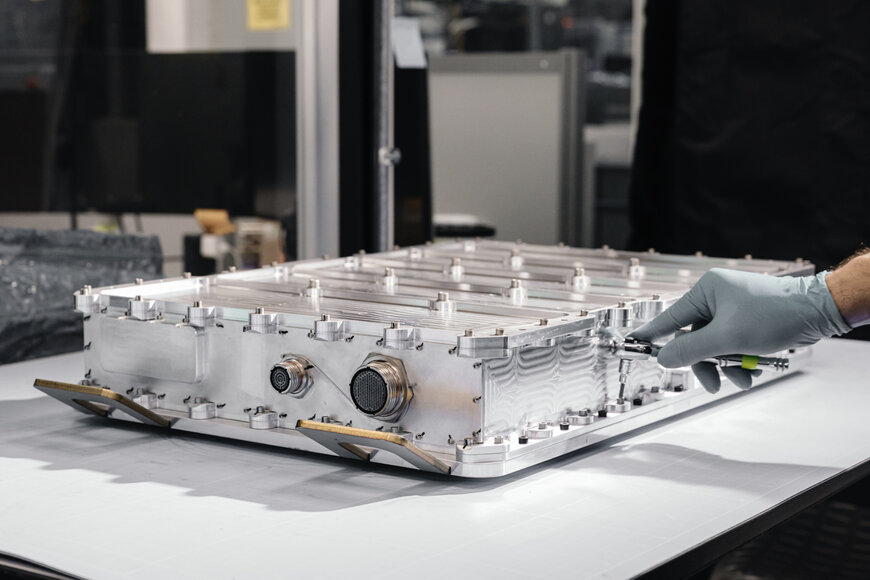
Satellite battery being manufactured at Vast.
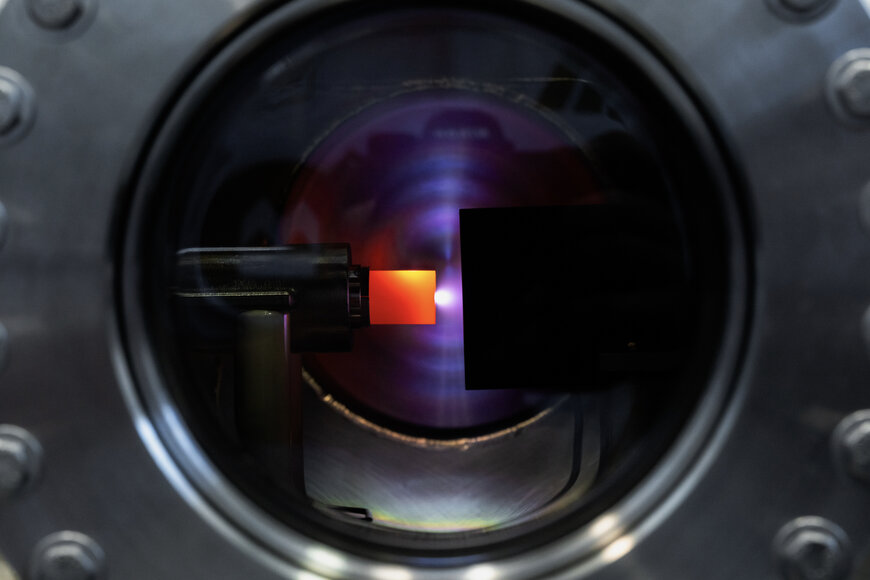
In-house electric propulsion development - cathode testing in a vacuum chamber at Vast HQ.
Onboard computing architecture targets AI and orbital data processing
The platform includes lockstep flight computers connected through Gigabit Ethernet switching infrastructure and supports multiple payload interfaces, including Ethernet, RS-422 and optional MIL-STD-1553 and SpaceWire standards.
Optional configurations include:
Satellite battery being manufactured at Vast.
In-house electric propulsion development - cathode testing in a vacuum chamber at Vast HQ.
Onboard computing architecture targets AI and orbital data processing
The platform includes lockstep flight computers connected through Gigabit Ethernet switching infrastructure and supports multiple payload interfaces, including Ethernet, RS-422 and optional MIL-STD-1553 and SpaceWire standards.
Optional configurations include:
- High-performance GPU computing
- Software-defined radios
- Laser communication terminals
- 4K imaging systems
- NVIDIA Space-1 Vera Rubin modules for AI inference and edge computing applications
These capabilities position the platform toward emerging orbital data center concepts, where satellites process data directly in space rather than transmitting all workloads to ground systems.
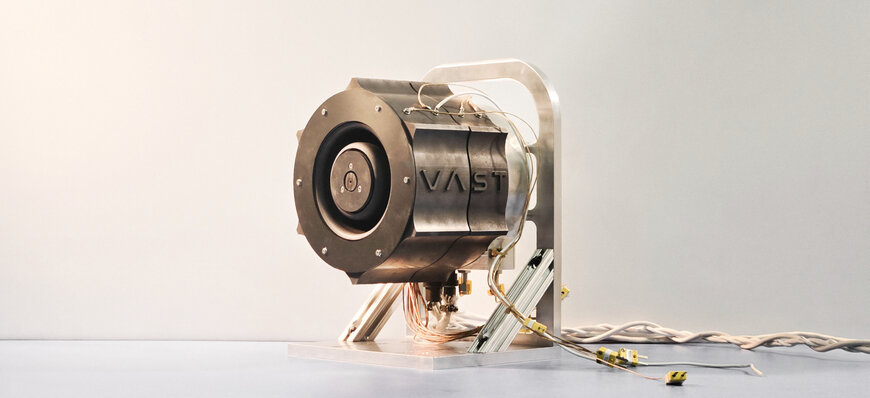
Vast’s in-house 10 kW electric thruster being prepared for vacuum testing.
Long-term strategy links satellites with orbital infrastructure
Vast stated that high-power satellites complement its Haven space station roadmap and broader objective of developing infrastructure supporting continuous human presence in low Earth orbit and future exploration missions beyond Earth orbit.
The company plans to launch 10 of its 15 kW-class satellites in a mission targeted for late 2027.
Edited by Natania Lyngdoh, Induportals editor, assisted by AI.
www.vastspace.com
Vast’s in-house 10 kW electric thruster being prepared for vacuum testing.
Long-term strategy links satellites with orbital infrastructure
Vast stated that high-power satellites complement its Haven space station roadmap and broader objective of developing infrastructure supporting continuous human presence in low Earth orbit and future exploration missions beyond Earth orbit.
The company plans to launch 10 of its 15 kW-class satellites in a mission targeted for late 2027.
Edited by Natania Lyngdoh, Induportals editor, assisted by AI.
www.vastspace.com
