
www.aero-defence.tech
23
'26
Written on Modified on
Autonomous mission planning advances naval air operations
General Atomics Aeronautical Systems supports U.S. Navy CAMP project to enhance AI-driven autonomy workflows and mission planning for autonomous combat platforms.
www.ga.com
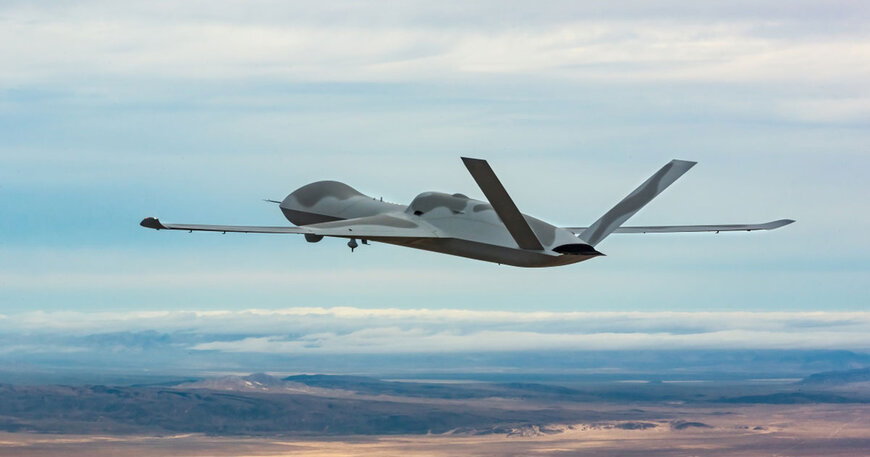
A new U.S. Navy initiative focuses on extending mission planning software to support autonomous combat operations, integrating AI model management, simulation, and real-time operational coordination. The project targets improved human-autonomy teaming in complex, contested environments.
Extending mission planning to autonomy-enabled operations
General Atomics Aeronautical Systems, Inc. has been selected by Naval Air Systems Command PMA-281 to deliver the Collaborative Autonomy Mission Planning and Debrief (CAMP) project. The initiative aims to extend existing mission planning frameworks to support autonomy-specific functions such as behavioural tasking, Rules of Engagement (ROE) configuration, and AI decision thresholds.
The system is designed to address the increasing complexity of autonomous combat aircraft operations, where mission planning must incorporate both deterministic parameters and adaptive AI-driven behaviours.
Integration with simulation and validation environments
The CAMP framework integrates with the Navy’s Joint Digital Autonomy Range and Joint Simulation Environment to enable rapid validation of autonomy-enabled mission profiles. These environments provide high-fidelity simulation for testing operational scenarios before deployment.
This approach supports a digital supply chain for autonomy development, where mission configurations, AI models, and operational parameters are iteratively tested and refined in simulated environments prior to field use.
AI model governance and autonomy workflows
A central component of the project is the management of AI models across their lifecycle, including configuration, validation, and deployment. The system incorporates mechanisms for trusted AI governance, ensuring that decision thresholds and operational behaviours remain aligned with mission objectives and safety constraints.
Human oversight remains integral, with workflows designed to enable effective human-autonomy teaming. This includes structured debrief capabilities that allow post-mission analysis of AI-driven decisions and system performance.
Platform integration and communication architecture
The project will be demonstrated on the MQ-20 Avenger platform, equipped with Government Reference Implementation (GRI) autonomy and payloads such as Electronic Warfare (EW) and Infrared Search and Track (IRST) systems.
Operational communication relies on a multi-layered architecture incorporating Link 16, Tactical Targeting Network Technology, and Starlink. These systems provide resilient command-and-control links required for distributed and contested operational environments.
Demonstration in fleet-level operational scenarios
The programme is scheduled for a government-sponsored demonstration aligned with a 2026 fleet exercise. The demonstration will evaluate mission planning and debrief capabilities in scenarios involving combat air patrol, target engagement, and coordinated operations with crewed platforms such as the F/A-18 Super Hornet.
By integrating autonomy workflows, communications systems, and simulation-based validation, the CAMP initiative demonstrates how mission planning software can support scalable deployment of autonomous combat aircraft. The project reflects a broader shift toward integrated autonomy ecosystems, where AI, simulation, and operational systems are tightly coupled to enable rapid capability development and deployment.
Edited by an industrial journalist Sucithra Mani with AI assistance.
www.ga.com
