
www.aero-defence.tech
20
'26
Written on Modified on
Commercial Engine Integration for Autonomous Combat Aircraft
Pratt & Whitney and Northrop Grumman adapt PW500 propulsion for YFQ-48A Talon Blue to meet collaborative combat aircraft performance and integration requirements.
www.rtx.com
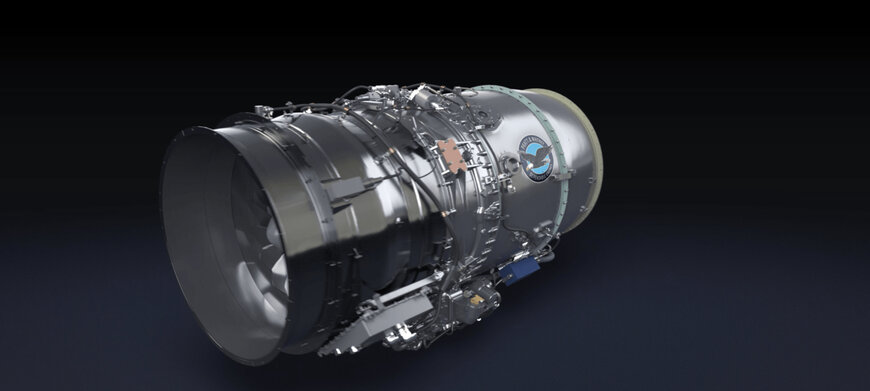
Pratt & Whitney, a business unit of RTX, is supplying a modified PW500 engine for the YFQ-48A Talon Blue autonomous aircraft developed by Northrop Grumman. The cooperation focuses on adapting commercial propulsion technology for defence aerospace applications within collaborative combat aircraft (CCA) programs.
Context of the Cooperation
The YFQ-48A Talon Blue is designed as an autonomous wingman platform intended to operate alongside crewed aircraft. Such systems require propulsion solutions that balance cost, reliability, and mission adaptability.
Pratt & Whitney contributes propulsion expertise based on its existing commercial engine portfolio, while Northrop Grumman leads airframe design, system integration, and mission architecture. The collaboration addresses the challenge of meeting military performance requirements using commercially derived hardware, reducing development timelines and lifecycle costs.
Technical Solution and Responsibilities
The propulsion system is based on a member of the PW500 turbofan engine family, originally developed for business aviation. Pratt & Whitney adapted the engine to meet CCA-specific operational profiles, including variable mission durations, autonomous flight control integration, and extended operating envelopes.
Key technical activities included:
- Modifying engine performance parameters to meet thrust and range requirements under diverse mission conditions
- Expanding operability limits through simulated mission testing
- Validating durability and reliability under non-commercial duty cycles
Northrop Grumman integrated the propulsion system into the Talon Blue platform, ensuring compatibility with onboard autonomous systems, flight control architectures, and mission payload requirements. The integration required alignment between propulsion characteristics and aircraft-level performance models.
Deployment and Implementation
The adapted PW500 engine has completed validation testing and is prepared for flight test phases. Testing included simulation of operational conditions specific to CCA missions, such as varying altitude profiles, rapid deployment scenarios, and extended loiter capabilities.
Integration activities involved mechanical, thermal, and digital interfaces between the engine and the aircraft systems. This includes coordination with onboard power management, avionics communication systems, and control algorithms used in autonomous flight.
Applications and Use Cases
The primary application is within collaborative combat aircraft programs, where autonomous platforms support crewed aircraft in roles such as surveillance, electronic warfare, and force multiplication.
Using a commercial engine platform enables:
- Faster deployment cycles due to existing certification and production maturity
- Reduced maintenance complexity through established support infrastructure
- Scalability across multiple CCA variants with similar propulsion requirements
Results and Expected Impact
The PW500 engine family has accumulated over 24.5 million flight hours in commercial service, providing a validated reliability baseline. By extending its operational envelope for military use, the cooperation demonstrates a pathway to reuse certified systems in defence aerospace platforms.
The approach supports cost-efficient scaling of autonomous aircraft fleets while maintaining performance consistency. It also reduces development risk by leveraging proven engine architectures instead of designing new propulsion systems from scratch.
Edited by an industrial journalist Sucithra Mani with AI assistance.
www.rtx.com
