
www.aero-defence.tech
09
'26
Written on Modified on
On-Orbit AI Processing for Lunar Imaging
Firefly Aerospace and NVIDIA integrate edge AI computing to enable real-time lunar data processing for orbital imaging and mapping applications.
fireflyspace.com
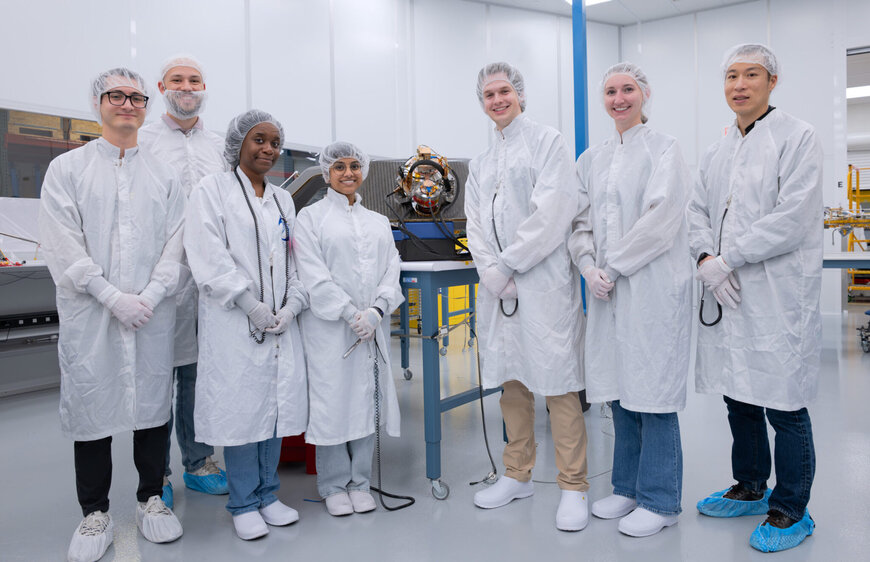
Firefly Aerospace and NVIDIA are collaborating to implement on-orbit data processing capabilities for a commercial lunar imaging service, using embedded AI hardware to reduce latency and bandwidth constraints in deep-space communications.
Context of the Cooperation
Firefly Aerospace is developing the Ocula Moon imaging service as part of its lunar mission architecture, targeting applications such as surface mapping, mineral detection, and space domain awareness. These applications require continuous acquisition and processing of high-resolution imaging data in an environment where communication with Earth is constrained.
NVIDIA contributes embedded AI computing technology to address these constraints. Transmitting raw data from lunar orbit involves latency and limited bandwidth, making centralized processing inefficient for time-sensitive analysis. The cooperation combines spacecraft systems, optical payloads, and edge AI computing to enable distributed processing directly in orbit.
Technical Solution and Responsibilities
The system is based on integrating an embedded AI computing platform using the NVIDIA Jetson module into Firefly’s Elytra orbital vehicle. The imaging payload includes high-resolution telescopes developed by Lawrence Livermore National Laboratory.
Firefly is responsible for the spacecraft platform, payload integration, and onboard software environment, including AI algorithms developed through its SciTec subsidiary. NVIDIA provides the hardware platform optimized for edge inference, enabling AI workloads to operate within the power, size, and thermal constraints of a spacecraft.
At the system level, image data is captured by onboard sensors and processed locally using AI models. Instead of transmitting raw datasets, the system generates structured outputs such as identified features or prioritized datasets. This reduces data volume and enables faster interpretation.
Deployment and Implementation
The solution will be deployed during Blue Ghost Mission 2, scheduled no earlier than late 2026. The Elytra vehicle initially serves as a transfer and communications relay before transitioning into a long-duration orbital platform.
Once in lunar orbit, Elytra is designed to operate for approximately five years, continuously capturing and processing imaging data. The onboard processing capability allows the system to operate with reduced dependence on continuous high-bandwidth communication with Earth. Additional Elytra vehicles planned for subsequent missions will extend coverage and improve revisit frequency.
Applications and Use Cases
The system supports lunar surface mapping, resource identification, and tracking of objects in cislunar space. By combining imaging data with onboard AI processing, it enables faster detection of relevant features and supports operational awareness for both civil and defense-related missions.
Expected Impact
On-orbit processing reduces the need to transmit large volumes of raw data, addressing bandwidth limitations inherent to deep-space missions. By converting raw imagery into actionable outputs before transmission, the system enables more efficient use of communication links and supports near real-time decision-making.
This approach establishes a distributed digital infrastructure in lunar orbit, where autonomous processing nodes can support scalable and continuous data acquisition for future exploration and monitoring missions.
Edited by an industrial journalist Sucithra Mani with AI assistance.
www.fireflyspace.com
