
www.aero-defence.tech
23
'26
Written on Modified on
RTX Collins Aerospace Sidekick Flies Successfully On GA ASI Platform
Collins Aerospace demonstrated its Sidekick mission autonomy software during a four-hour flight of the YFQ-42A uncrewed jet, advancing the Air Force’s Collaborative Combat Aircraft program.
www.rtx.com
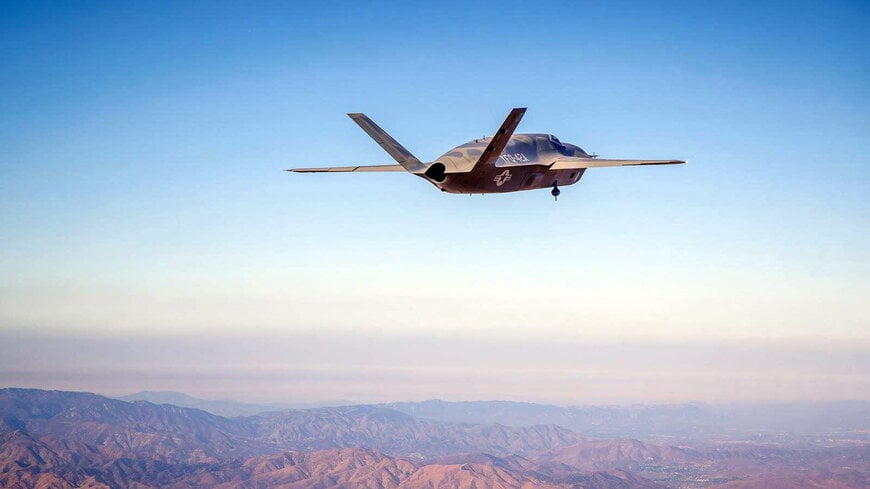
The successful flight of the Sidekick mission autonomy software on General Atomics’ YFQ-42A platform marks a pivotal shift in how uncrewed systems integrate into modern aerial warfare. Unlike traditional autonomous systems that often function as rigid, pre-programmed assets, Sidekick differentiates itself through an open-systems architecture designed for seamless collaboration between human pilots and uncrewed aircraft. This technology addresses the critical need for scalable, adaptable autonomy within the U.S. Air Force’s Collaborative Combat Aircraft (CCA) program, offering a level of mission flexibility that outpaces proprietary, closed-loop alternatives.
Advancing Mission Flexibility Through Open Systems
The primary technical advantage of Sidekick lies in its ability to integrate rapidly across diverse platforms. During a recent four-hour test flight, the software demonstrated precise piloting commands and mission system synchronization, proving that it can manage complex combat tasks without requiring a total overhaul of existing aircraft hardware. This adaptability is a key differentiator in a competitive landscape where speed of deployment is as vital as the technology itself. By utilizing an open-architecture approach, the system allows for faster updates and broader compatibility, ensuring that different types of uncrewed jets can work in unison with various crewed fighter platforms.
Enhancing Human-Machine Collaboration in Combat
Beyond basic flight automation, Sidekick focuses on the intuitive relationship between the operator and the machine. The software is engineered to adjust to a pilot’s specific working style and the unique demands of a mission, rather than forcing the human operator to adapt to the software’s limitations. This collaborative mission autonomy expands the operational reach of a strike package by increasing sensor range and weapon effectiveness while keeping the human operator in a supervisory role. Such a capability is essential for high-threat environments where the cognitive load on pilots must be managed effectively to ensure mission success.
Proven Performance in High-Stakes Environments
The integration of Sidekick onto the YFQ-42A represents nearly a decade of dedicated investment in autonomous research and development. This long-term development cycle has resulted in a mature solution that is already being utilized in the U.S. Air Force’s CCA Increment 1 program. By providing a stable and proven autonomy layer, the technology enables the military to field "loyal wingman" capabilities that are more reliable and easier to scale than emerging experimental prototypes. As the defense industry moves toward a future defined by distributed operations, the ability to pair crewed jets with highly capable, autonomous partners remains the benchmark for modern air superiority.
www.rtx.com
