
www.aero-defence.tech
20
'26
Written on Modified on
Porsche Engineering Develops 800-Volt Electric Powertrain for eBoat
Joint project with Porsche AG and Frauscher adapts Macan Turbo components for a 400 kW marine propulsion system with modular integration.
www.porsche.com
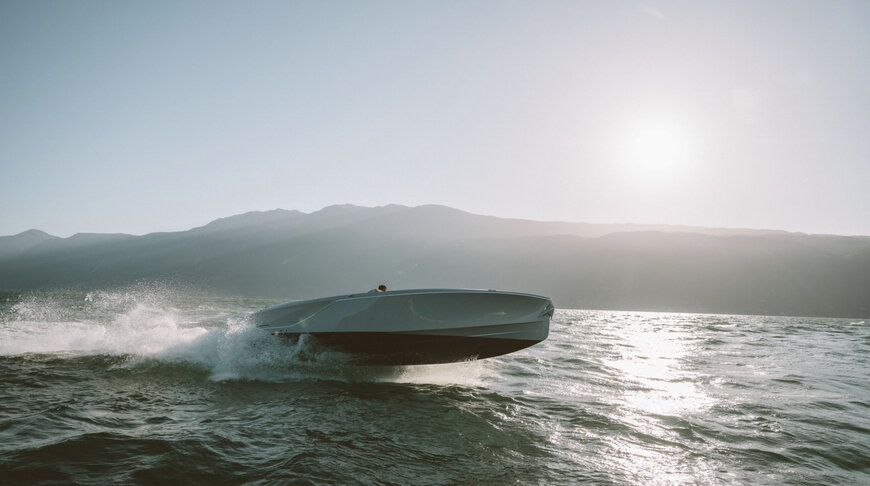
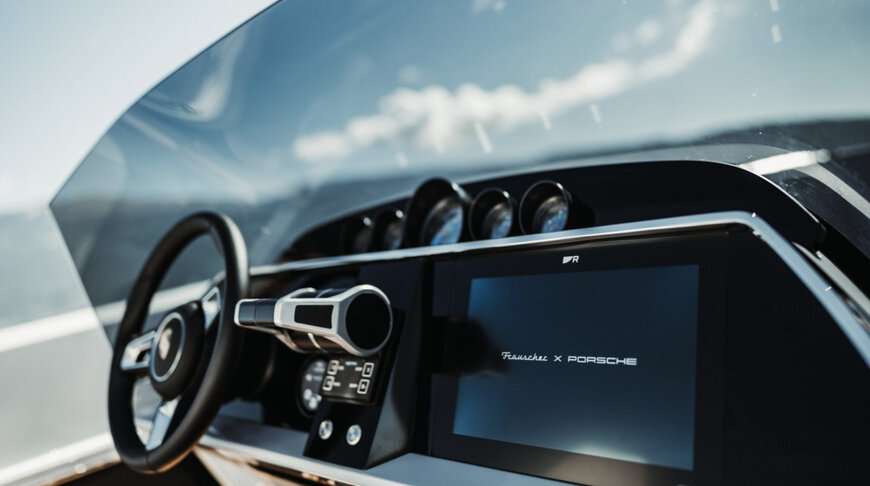
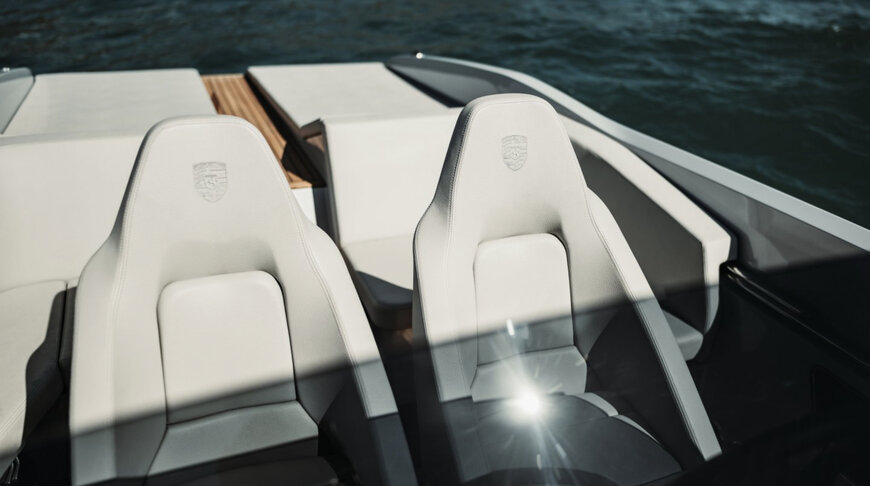
In the marine propulsion and electric powertrain systems sectors, Porsche Engineering has transferred automotive high-voltage technology to a sports boat application. Together with Porsche AG, Studio F. A. Porsche and Austrian boat manufacturer Frauscher, the company developed the 850 Fantom Air—an electric boat powered by key components from the Porsche Macan Turbo.
The project demonstrates how an 800-volt electric powertrain originally designed for road vehicles can be adapted to meet marine engineering requirements, including continuous high loads, vibration exposure and corrosion resistance.
Automotive 800-Volt Architecture Adapted for Marine Use
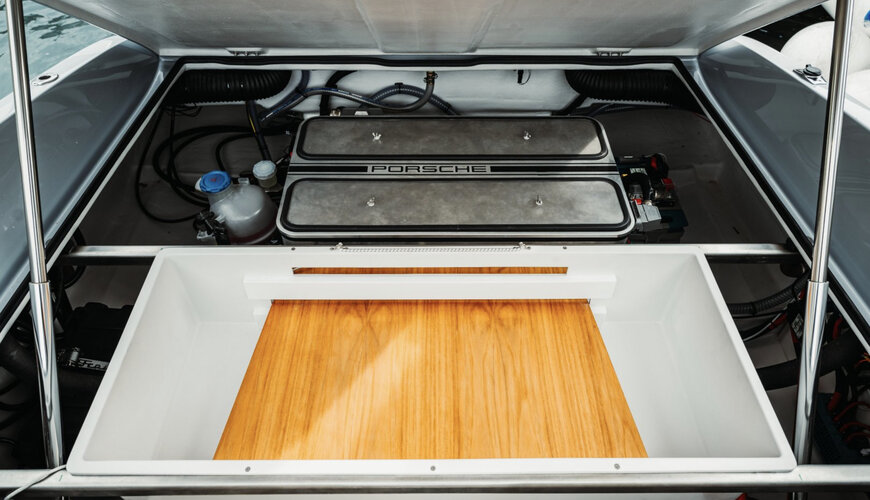
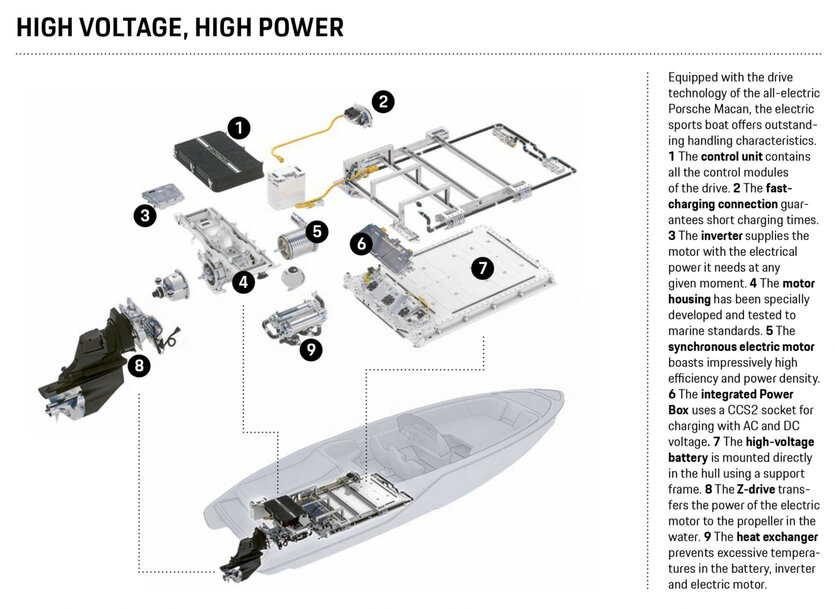
The propulsion system of the 850 Fantom Air is based on standard rear-axle drive components from the Macan Turbo. These include the lithium-ion battery (100 kWh), power electronics and a permanently excited synchronous motor (PSM).
In the boat configuration, the motor delivers up to 400 kW, with peak torque levels reaching approximately 700 Nm. Unlike the automotive application—where the motor operates at speeds exceeding 16,000 rpm with an integrated gearbox—the marine version runs at a maximum of 6,000 rpm, eliminating the need for internal reduction. Speed reduction to around 3,000 rpm is handled by a standard Z-drive before the propeller.
While stator and rotor assemblies were retained unchanged, the motor housing was newly developed to comply with marine standards, including salt spray, corrosion and leak testing. High continuous load operation on water required optimized cooling performance, achieved through adapted pump control strategies.
Mechanical Integration and Vibration Management
Marine applications differ fundamentally from automotive duty cycles. Whereas passenger vehicles typically experience dynamic load peaks, boats operate under prolonged high-load conditions. Additionally, wave impacts generate persistent vibration that can affect high-voltage components.
To protect the 100 kWh battery system, the development team implemented a load-bearing mounting frame with steel cable damping. Comparative measurements between vehicle and boat environments were conducted to quantify vibration differences and define countermeasures.
The coupling between motor and Z-drive required redesign after initial slip clutch prototypes proved insufficient for high torque gradients. The final solution uses a robust jaw coupling with elastomer insert, combined with adapted torque curves to ensure durability under marine loads.
Modular Electric Drive Concept for Boat Builders
A central engineering objective was simplifying integration into the hull. The team developed a modular electric propulsion system consisting of:
- A drive unit with cooling and control modules
- A separate battery unit with structural support frame
Both modules can be mounted at predefined installation points, reducing installation complexity and lowering development costs for boat manufacturers. This modularisation approach enables potential adaptation to other vessel classes, including boats exceeding ten metres in length, where parallel powertrain configurations could be implemented.
Adapted Electrical Architecture and AUTOSAR Integration
Significant adaptation was required for the electrical/electronic architecture. The low-voltage harness was redesigned to meet marine cross-section and protective sheathing requirements. High-voltage cabling was extended and adapted with a modified charging interface.
Porsche Engineering developed a dedicated gateway control module based on AUTOSAR to interface automotive powertrain electronics with marine-specific systems. Since boats lack automotive systems such as wheel speed sensors or parking brakes, rest-bus simulations were implemented to generate required signals for charging and powertrain control.
The control module was validated in accordance with relevant marine electromagnetic compatibility requirements, including EN 55016-2-3. Functional safety and software validation standards derived from automotive development processes were applied to the marine environment.
Performance Characteristics and Handling
With low central placement of the battery and powertrain in the hull, the boat achieves balanced weight distribution. The electric drive provides high torque from standstill and enables acceleration to speeds exceeding 85 km/h, while operating with significantly reduced noise compared to combustion engines.
The series-production model received industry recognition at the 2024 Boat Düsseldorf and Boat & Fun Berlin trade fairs. Following market demand, Frauscher initiated a limited production series of 25 units.
Transferable Technology Beyond Marine Applications
The project illustrates how automotive high-voltage platforms can be adapted to non-road sectors through targeted system integration, cooling redesign, vibration protection and software architecture modification. According to Porsche Engineering, the methodology used for transferring electric powertrain technology could also be applied to sectors such as construction machinery or other industrial equipment requiring high-performance electric drives.
By combining an 800-volt architecture, modular integration and marine-compliant engineering adaptations, the 850 Fantom Air demonstrates a practical example of cross-sector electrification based on established automotive components.
www.porsche.com
Adapted Electrical Architecture and AUTOSAR Integration
Significant adaptation was required for the electrical/electronic architecture. The low-voltage harness was redesigned to meet marine cross-section and protective sheathing requirements. High-voltage cabling was extended and adapted with a modified charging interface.
Porsche Engineering developed a dedicated gateway control module based on AUTOSAR to interface automotive powertrain electronics with marine-specific systems. Since boats lack automotive systems such as wheel speed sensors or parking brakes, rest-bus simulations were implemented to generate required signals for charging and powertrain control.
The control module was validated in accordance with relevant marine electromagnetic compatibility requirements, including EN 55016-2-3. Functional safety and software validation standards derived from automotive development processes were applied to the marine environment.
Performance Characteristics and Handling
With low central placement of the battery and powertrain in the hull, the boat achieves balanced weight distribution. The electric drive provides high torque from standstill and enables acceleration to speeds exceeding 85 km/h, while operating with significantly reduced noise compared to combustion engines.
The series-production model received industry recognition at the 2024 Boat Düsseldorf and Boat & Fun Berlin trade fairs. Following market demand, Frauscher initiated a limited production series of 25 units.
Transferable Technology Beyond Marine Applications
The project illustrates how automotive high-voltage platforms can be adapted to non-road sectors through targeted system integration, cooling redesign, vibration protection and software architecture modification. According to Porsche Engineering, the methodology used for transferring electric powertrain technology could also be applied to sectors such as construction machinery or other industrial equipment requiring high-performance electric drives.
By combining an 800-volt architecture, modular integration and marine-compliant engineering adaptations, the 850 Fantom Air demonstrates a practical example of cross-sector electrification based on established automotive components.
www.porsche.com
