
www.aero-defence.tech
15
'26
Written on Modified on
Integrated Autonomy for Surface–Subsurface Operations
HII demonstrates coordinated unmanned surface and underwater operations using a shared autonomy architecture to extend operational reach across domains.
hii.com
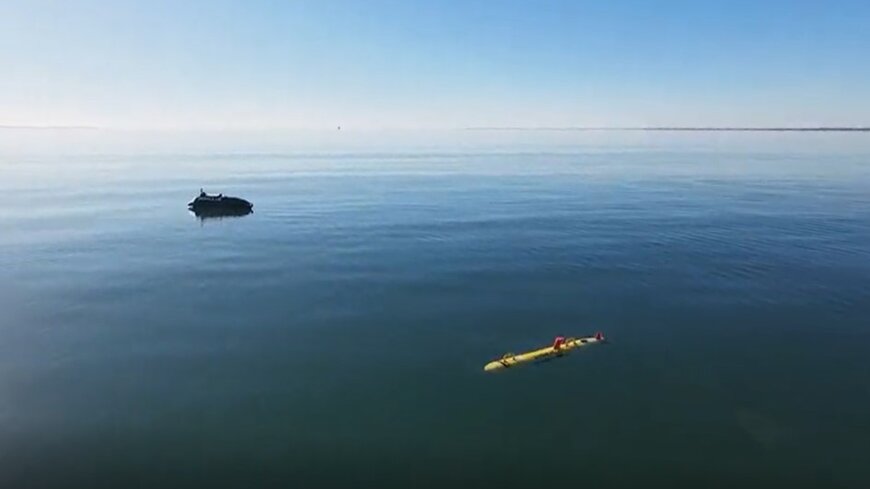
HII has demonstrated a multi-domain unmanned systems concept that links surface and subsurface platforms through a common autonomy and communications framework, addressing growing requirements for coordinated maritime operations.
Demonstration context and technical relevance
The demonstration focused on integrating a man-portable unmanned surface vessel (USV) with an unmanned underwater vehicle (UUV) using a single autonomy stack. The objective was to validate how surface platforms can act as communications and control intermediaries for submerged systems, a persistent challenge in unmanned maritime operations due to bandwidth constraints, latency, and limited underwater connectivity.
This approach is relevant for naval, expeditionary, and offshore security applications where distributed unmanned systems must operate with minimal operator intervention while maintaining situational awareness and data continuity.
Platform configuration and mission design
The surface platform used in the test was a seven-foot USV configured with two payload bays. These bays hosted mission equipment designed to support surface–subsurface collaboration, drawing on a modular architecture already fielded on the accompanying UUV. The compact form factor allowed deployment in expeditionary scenarios while still supporting multiple sensors and communications links.
During the mission, the USV and UUV executed coordinated tasks planned and managed through a unified mission interface. This architecture allowed operators to define objectives at the mission level rather than managing individual vehicle behaviors, reducing control complexity as system numbers increase.
Mobile surface gateway concept
A central technical element of the demonstration was the use of the USV as a mobile surface gateway. In this role, it provided real-time reach-back to an operations center while enabling high-rate data exfiltration from the submerged UUV. Acoustic communications were used to exchange data and commands underwater, with the USV then relaying information via surface communications links.
This gateway function extends operational reach by allowing the UUV to remain submerged and covert while still transmitting mission data, addressing a common trade-off between endurance, stealth, and data availability in underwater operations.
Autonomy and communications architecture
Both vehicles operated using the same autonomy software, enabling synchronized planning, monitoring, and execution across domains. This common autonomy backbone was critical for coordinating behaviors without increasing operator workload, particularly when managing heterogeneous unmanned systems.
The test also validated the USV’s standard communications and sensing suite, which included acoustic links for UUV collaboration, electro-optical cameras, Wi-Fi, satellite connectivity, mobile ad hoc network radios, and GPS. The combination of these systems demonstrated resilience through multiple redundant pathways, supporting continued operation in contested or degraded environments.
Implications for unmanned maritime systems
The results indicate that shared autonomy and modular communications architectures can support scalable, integrated unmanned operations across surface and subsurface domains. By combining a mobile gateway concept with standardized autonomy and interfaces, the demonstrated approach aligns with broader efforts to develop interoperable unmanned systems capable of operating as part of a networked maritime force rather than as isolated platforms.
www.hii.com
